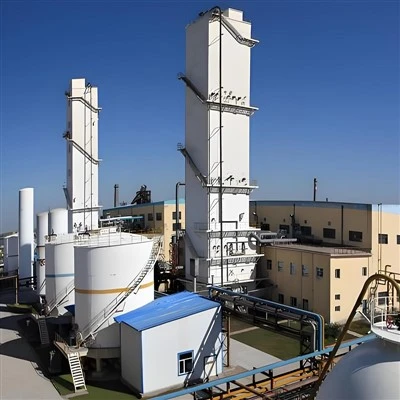
Air separation unit for steel industry Advantages
One of the key advantages of an air separation unit for steel applications is its ability to deliver high-capacity oxygen with consistent purity and pressure. Oxygen produced by the ASU significantly enhances combustion efficiency in blast furnaces and basic oxygen furnaces, reducing fuel consumption and increasing productivity. At the same time, high-purity nitrogen is widely used for inerting, purging, and protection of molten metal and process equipment, while argon supports secondary refining and continuous casting operations. Compared with external gas supply, on-site ASU operation ensures reliability, cost stability, and independence from logistics disruptions.
When operating an air separation unit in a steel plant, several important precautions must be observed. Maintaining clean air intake and effective pretreatment is essential to prevent dust, moisture, and hydrocarbons from entering the cryogenic system, where they could freeze and impair performance. Regular inspection and maintenance of compressors, cold box components, and safety systems are required to ensure long-term reliability. Adequate ventilation, continuous oxygen monitoring, and strict adherence to safety procedures are critical to managing risks associated with oxygen enrichment or oxygen-deficient environments. Operators should also follow standardized start-up and shutdown procedures to avoid thermal stress and ensure stable plant operation.

Why is an air separation unit essential for steel plants?
An air separation unit is essential for steel plants because it provides a continuous and reliable on-site supply of oxygen, nitrogen, and argon, which are critical to ironmaking and steelmaking processes. High-purity oxygen improves combustion efficiency and productivity in blast furnaces and basic oxygen furnaces, while nitrogen and argon are used for inerting, protection, and secondary refining. An on-site ASU ensures stable gas quality, reduces dependency on external suppliers, and lowers long-term operating costs.
What types of gases and purity levels can an ASU for the steel industry provide?
An ASU designed for steel applications can produce oxygen, nitrogen, and argon in both gaseous and liquid forms, depending on process requirements. Typical oxygen purity ranges from 99.5% to 99.9%, while nitrogen purity can reach up to 99.999%. Argon recovery systems can be integrated for secondary metallurgy and continuous casting operations. Output pressure, flow rate, and purity can be tailored to match specific steel plant demands.
What are the main safety considerations when operating an ASU in a steel plant?
Key safety considerations include maintaining clean air intake and effective pretreatment to prevent contamination and freezing in cryogenic equipment. Continuous monitoring is required to manage risks related to oxygen enrichment or oxygen-deficient atmospheres. Proper ventilation, routine maintenance of compressors and cold box components, and strict adherence to standardized operating procedures are essential. With advanced automation and safety systems in place, an ASU can operate safely and reliably within the demanding environment of a steel plant.
Hot Tags: air separation unit for steel industry, China air separation unit for steel industry manufacturers, suppliers