

In recent years, with the development of China's economy and technology, the scale of the chemical industry has become larger and larger, and more new air separation units have been used in the chemical industry. As one of the important equipment in petrochemical enterprises, it plays an important role in the development of the chemical industry. NEWTEK describes the types of air separation technology and focuses on the application strategies of air separation units, mainly including: application principles, application points and precautions, hoping to provide reference for enterprises that need air separation units.
Keywords: air separation unit; petrochemical industry; application analysis
Petrochemical industry mainly uses natural gas and oil as raw materials to process products. The petrochemical industry is a traditional economic pillar and has a profound impact on the national economy and national defense. The use of air separation units plays an important role in the safe operation of enterprises. Therefore, technical personnel are required to conduct in-depth research on the methods and precautions of air separation units in the process of use, so as to promote the long-term development of the chemical industry.
Air Separation Unit Manufacturer
1.Types of air separation technology
1.1 Low temperature separation method
1.2 Pressure swing adsorption method
1.3 Membrane separation method
2 Application of air separation unit in petrochemical industry
2.1 Application principles
2.2 Application points
2.3 Precautions
3 Conclusion

1 Types of air separation technology
1.1 Low temperature separation method
This separation technology mainly involves first compressing the product to cool it down, and then liquefying it. In combination with the differences in boiling points between different gases, in the distillation tower, the high-grade steam and the low-temperature liquid are brought into contact with each other, thereby obtaining liquid nitrogen and condensed oxygen, increasing the nitrogen content in the steam, and increasing the oxygen content in the downstream liquid, and on this basis, the analysis of the air is achieved. In addition, in order to achieve air liquefaction, the temperature of the air needs to be lowered. This refrigeration process is called deep freezing, and the form of separating air by using the boiling point difference of various molecules is called distillation. Low temperature separation technology mainly utilizes the fusion of the above two points to achieve the air separation technology that is now widely used.
1.2 Pressure swing adsorption method
This method mainly uses porous substances in the air for filling operations. Specifically, it uses molecular sieve adsorption towers, and uses the characteristics of different molecular adsorption. For example, some molecular sieves have strong adsorption for nitrogen, and oxygen molecules can pass through smoothly, so a gas with a higher purity of oxygen molecules is obtained. Some molecular sieves have strong adsorption for oxygen, and nitrogen molecules can pass through smoothly, so a gas with a higher purity of nitrogen molecules is obtained. In addition, because the performance of the adsorbent in the equipment is limited, that is, during the adsorption process of a certain substance, if the component is already in a saturated state, it can no longer continue to play an adsorption role. At this time, it is necessary to remove the adsorbed substances of the component before it can continue to work. This process is also called "regeneration". Therefore, in order to achieve continuous work, two or more adsorption towers should be used interchangeably during the actual process. The regeneration process also uses methods such as heating or depressurization according to the actual situation. This form is very convenient to operate and has a low investment cost. However, it should be noted that the purity of the product obtained by this method is not high, such as nitrogen purity is almost around 93%, and it is suitable for small-capacity separation devices. When actually used, it should be selected based on the actual situation.
1.3 Membrane separation method
Through the good permeability selection characteristics of organic polymer membranes, when air passes through thin films or hollow fiber membranes, the speed of oxygen molecules passing through is about five times higher than that of nitrogen molecules, thereby effectively separating nitrogen and oxygen. At present, this form of separation has the characteristics of low equipment technology content, convenient operation, low maintenance and cost investment. However, it should be noted that the oxygen enrichment concentration can be controlled between 29% and 26%, and the scale of use is small, so it is not widely used in petrochemical enterprises.

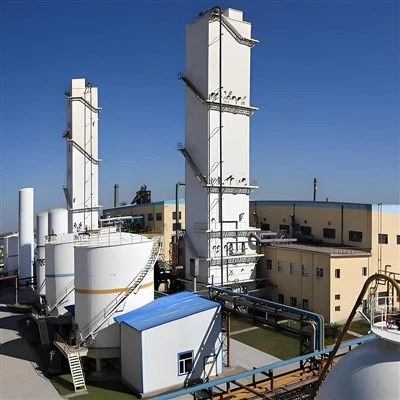

2 Application of air separation unit in petrochemical industry
2.1 Application principles
When air separation unit is used in petrochemical industry, first, it should be designed in strict accordance with the actual requirements of the plant to ensure that the unit and other units have certain coordination and unity in operation, meet the actual needs of petrochemical plants, minimize investment and floor space, and provide a solid foundation for safe production. In actual work, the air inlet of the air separation unit will be interfered by substances such as carbon dioxide, which will reduce the maximum load of the molecular sieve. After a long time, the unit may stop operating, which will bring hidden dangers to the normal operation of the factory. Therefore, when installing the unit, the outlet should be carefully checked to control the data such as carbon dioxide that affects the molecular sieve load within a safe range.
Second, when placing and using some special components in the air separation unit, the impact of the surrounding environment should be fully considered, and they should be scientifically arranged to ensure the normal operation of the unit. The operation of petrochemical enterprises is for profit, so when applying air separation units, the relationship between the ground zero elevation and the absolute elevation of the equipment should be fully considered, and the positions of the two should be clarified in combination with the equipment placement. When installing equipment with strong vibration or large bearing capacity, the geological conditions must be considered to shorten the length of the pipeline while ensuring stability, control costs, and reduce unnecessary waste.
2.2 Application points
First, the application of liquid tank area. In petrochemical enterprises, the application of this part is very simple. It only needs to follow the relevant operating procedures. In the liquid tank area, scientific layout can avoid the principle of hydraulic pump liquid out of the pipe, reduce the length of the pump inlet pipe and the amount of vaporization, etc., and reduce capital investment.
Second, the layout of piping. In petrochemical plants, the piping distribution and type of each equipment are very different, and the functions are also different. Therefore, when using air separation units, it is necessary to pay attention to the distribution design and use of piping, combine the specific requirements of the country for piping, install and use according to the actual situation, and choose materials with strong pressure resistance and damage resistance and economic and practical materials. This can not only improve the operating efficiency of the air separation unit, but also increase economic benefits.
Third, the use of the device. There are great dangers when the air separation unit is working, such as oxygen in the air can help combustion, nitrogen can cause suffocation, and liquid gas can cause frostbite. Therefore, when using it, technicians should strictly follow the specific standards to design separate protective walls and regulating valves for oxygen, try to avoid densely populated office areas when working to prevent steam from scalding employees, and install explosion-proof walls around highly flammable and explosive devices to reduce the probability of danger.
Fourth, equipment maintenance. When the air separation unit is working, it is necessary to pay attention to the maintenance and inspection links to ensure that technicians can improve work efficiency on the basis of safety. For example, when installing and using the steam turbine air compressor, it should be placed in a well-ventilated place and easy to repair. More space should be reserved on it for technicians to maintain, so as to avoid technicians being unable to perform maintenance work when the equipment fails, and reduce damage to the equipment. When installing the foundation column of the surface cooler, it is necessary to check each component in the equipment according to the actual situation. Only when it meets the standards can it continue to be used. The operation and maintenance personnel will regularly inspect it, find problems, report them in time and take appropriate strategies for maintenance to ensure the normal operation of the equipment.


2.3 Precautions
When using air separation units in oil companies, the following precautions should be noted:
First, optimize equipment. Air separation units are mainly used in the production of petrochemical enterprises. The requirements for equipment in work are very high. With the development of science and technology, the advancedness of many equipment in enterprises can no longer meet the development requirements of enterprises. This requires enterprises to innovate, increase research efforts, and develop air separation units and related equipment suitable for modern development, abandon the use of traditional technology and backward equipment, and promote the rapid development of enterprises.
Second, strengthen the training of talents. The development of enterprises is not only the development of technology, but also requires professional talents, so that they can not only innovate technology but also bring more economic benefits to enterprises. Therefore, petrochemical enterprises combine their own development needs, continuously train talents, regularly hold technical training, use network platforms, and communicate with talents from other enterprises on technology, strengthen school-enterprise cooperation, add chemical engineering and other related courses in higher technical schools, and train students in technology and the application of air separation units to improve students' professionalism and cultivate professional talents in line with the development of the times for enterprises. Oil companies should also do a good job in recruiting talents and lay a good foundation for the application of air separation units.
Third, strengthen the management of air separation unit piping. Petrochemical enterprises should create a special management department for air separation unit work and supervise every link in the work. Implement classified management of piping, classify the piping involved in the air separation unit, use professional information technology to manage it, install a monitoring system on the equipment, and report the fault location in time if the piping and other equipment are running or about to fail. If it is a simple fault, the intelligent monitoring equipment can take measures to correct it autonomously. If the cause of the fault is complicated, cut off the power supply in time and professional maintenance personnel will go to the site for maintenance to minimize the occurrence of hazards.
Fourth, pay attention to frequent faults and solutions. Under normal conditions, the air separation unit is sealed, semi-enclosed and completely open. In order to maintain the normal operation of the open system, lubricating oil is required. The pipeline often works for many years and is required to be started at any time. If wear and tear are found in the equipment, the technicians need to check whether there is a lack of lubricant; if the air separation unit is used improperly, it will cause wear of the motor. In the long run, the degree of integration will increase, which will cause damage to the equipment. Therefore, the staff needs to use the equipment scientifically and replace it in time once the equipment is damaged; various debris in the pipeline is blocked. The main reason is that during the flow of the pipeline, the temperature and pressure cause the debris to condense and gather in the pipeline mouth, resulting in blockage. If the oil pressure is too high, once it exceeds the pipeline delivery pressure, it will cause leakage or blockage at the interface of the air separation unit, and in severe cases, it will cause the pipeline to break. There are some simple methods to solve this problem, that is, use liquid detergent to clean the pipeline. This is also the most common method and the effect is obvious. However, if the pipeline is damaged due to aging, it is necessary to replace the pipeline or use powder solution for cleaning, because the powder detergent contains sodium hydroxide, which has weak corrosion to the pipeline and can quickly dredge the pipeline. The method of use is: first let the liquid pass through the pipe, then introduce the powder, let it stay in the pipe for two minutes, and finally use hot water to clean it.


3 Conclusion
In summary, the working environment of petrochemical enterprises is complex. When using air separation units, in order to ensure their long-term operation, it is necessary to manage them from the essence, combine the types of installed equipment, and strictly control them. Under the premise of meeting the operation of the equipment in the enterprise, fully tap the potential and maximize the benefits. Through the effective use of technical personnel, the rapid development of petrochemical enterprises can be promoted.