


When choosing an air separation plant manufacturer, parameters are a very important data. The parameters we can provide are.
1. Gas production parameters
2. Gas purity parameters
3. Pressure parameters
4. Temperature parameters
5. Device performance parameters
6. Other parameters

1. Gas production parameters
Oxygen production: ≥2500m³/h~30000m³/h.
Nitrogen production: ≥5000m³/h~70000m³/h.
Argon production: ≥200m³/h.
2. Gas purity parameters
Oxygen purity: The general industrial oxygen purity has standards such as 99.6%, and the medical oxygen purity requirements are higher.
Nitrogen purity: The purity can reach 99.99% or even higher, such as 99.999%.
Argon purity: Usually required to reach 99.99% As mentioned above, high-purity argon can be used in special fields.
3. Pressure parameters
Inlet pressure: The pressure when air enters the air separation unit will affect the compressor selection and energy consumption.
Product gas pressure: The output pressure of products such as oxygen, nitrogen, and argon. Different application scenarios have different requirements. For example, oxygen used for industrial cutting requires a certain pressure to meet the use.


4. Temperature parameters
Inlet temperature: The air temperature entering the air separation unit affects the design and energy consumption of the pre-cooling system.
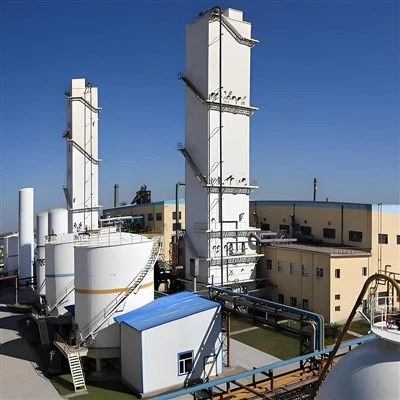
Cold box temperature: The low temperature environment in the cold box is the key to achieve air separation. For example, the temperature in the distillation tower needs to be controlled within a certain range.
5. Device performance parameters
Recovery rate: Oxygen recovery rate, nitrogen recovery rate, argon recovery rate, etc., reflect the efficiency of the device in extracting each gas.
Energy consumption index: Unit product energy consumption, such as the power consumption per 1m³ of oxygen or nitrogen produced, is related to the operating cost.
Automation degree: Whether an advanced DCS control system is used, whether remote monitoring, automatic parameter adjustment, fault diagnosis and alarm functions can be realized.
Continuous operation time: The time when the device can operate continuously and stably, such as continuous operation for 2 years, 3 Years, etc.
6. Other parameters
Device size and weight: Involves installation space and transportation conditions. Large air separation units are large in size and heavy in weight, so plant space and transportation methods must be considered.
Material and service life: The material of key equipment components, such as pipes in cold boxes and heat exchangers, affects the corrosion resistance, reliability and service life of the device.
Noise level: The noise level generated by the operation of the device is related to the working environment and noise reduction costs.
Select the theme of the query or request below, and then fill in the form. We will help you as soon as possible.

1.air separation plant design
2.air separation plant process
3.air separation plant construction
4.air separation plant cost
5.air separation plant installation
6.air separation plant maintenance
1. Air separation plant design
Air separation plant design is a complex project. NEWTEK introduces it in detail from the aspects of process design, equipment selection design, safety and environmental protection design, etc.
Process design
Air pretreatment
Filtration: Remove dust, impurities and other solid particles in the air by installing high-efficiency air filters to protect subsequent equipment and prevent them from clogging.
Compression: Use a suitable compressor to compress the air to the required pressure. Generally, large air separation plants use centrifugal compressors, and small plants can use piston compressors.
Cooling: Use a cooler to cool the compressed air to reduce its temperature and reduce the subsequent refrigeration load. Water cooling or air cooling is often used.
Air liquefaction
Refrigeration cycle: Use the classic Linde - Hampson cycle or Kraut cycle, etc., cool and liquefy the air through throttling expansion or isentropic expansion.
Heat exchange: Use high-efficiency heat exchangers, such as plate-fin heat exchangers, to exchange heat between air and low-temperature reflux gas to achieve cooling and liquefaction.
Distillation separation
Main distillation tower: Generally, a two-stage distillation tower is used, with the upper tower being a low-pressure tower and the lower tower being a high-pressure tower. Liquid air and liquid nitrogen undergo multiple gas-liquid mass transfer and heat transfer processes in the tower to achieve preliminary separation of oxygen, nitrogen and other components.
Argon tower: For devices that need to extract argon, an argon tower is also required to use the boiling point difference between argon and oxygen and nitrogen to further separate Argon.


Equipment selection and design
Compressor
Choose the appropriate type and specification according to the air flow, pressure requirements and device scale. Centrifugal compressors are suitable for large flow, medium and low pressure scenarios; piston compressors are used for small flow, high pressure occasions.
Heat exchanger
Plate-fin heat exchangers are widely used in air separation units due to their high heat transfer efficiency and compact structure. The selection and design should be based on parameters such as heat load, fluid flow and pressure drop.
Distillation tower
Determine the tower diameter, tower height, number of plates or packing height of the distillation tower according to the requirements of processing volume, product purity and operating pressure.
Pump and Valves
Choose appropriate liquid oxygen pumps, liquid nitrogen pumps, etc. to ensure the delivery of cryogenic liquids. Valves must be selected according to different media, pressure and temperature conditions, such as cryogenic stop valves, regulating valves, etc.
Safety and environmental protection design
Safety design
Fire and explosion prevention: strictly control the contact between oxygen and combustible substances, properly ground equipment and pipelines, prevent static electricity accumulation, and set up explosion-proof pressure relief devices.
Prevent low temperature frostbite: insulate low-temperature equipment and pipelines, set up warning signs, and equip operators with cold-proof clothing, anti-freeze gloves and other protective equipment.
Monitoring and alarm: install oxygen content monitoring Instruments, temperature and pressure alarms, etc., monitor operating parameters in real time, and issue alarms and take measures in time when abnormalities occur.
Environmental design
Waste gas treatment: Treat the small amount of waste gas discharged, such as high-altitude discharge through the vent pipe to ensure that the discharged gas meets environmental protection standards.
Noise control: Select low-noise equipment, take vibration reduction and noise reduction measures for compressors, pumps and other equipment, and set up sound insulation covers.
Wastewater treatment: Treat the small amount of wastewater generated by the device, such as using neutralization, precipitation and other methods to remove impurities and harmful substances in the water, and discharge it after meeting the standards.
In addition, as an air separation plant supplier, NEWTEK also needs to carry out the plane layout design of the device in the design of the air separation device, consider the operation of the equipment, maintenance space, and reasonably plan the pipeline direction to ensure that the entire device operates reliably, is easy to operate, and is convenient to maintain, and complies with relevant standards and specifications.

2.air separation plant process
Air filtration and compression: The air first passes through the filter to remove dust and other impurities, and then enters the compressor to compress the air to the required pressure.
Air purification: The compressed air enters the molecular sieve purifier to remove water vapor, carbon dioxide and other gases that are easy to solidify at low temperatures.
Heat exchange cooling: The purified air is cooled by the product nitrogen and oxygen in the first heat exchanger, and then the air is divided into two paths. One path continues to cool through the second heat exchanger and then reduces the pressure through the throttle valve; the other path is reduced in pressure by the expander. The temperature of the air after expansion in both paths is reduced to about 103K.
Distillation separation: The cooled air enters the bottom of the lower tower of the double-stage distillation tower. The air is distilled through multiple layers of tower plates in the lower tower, so that the nitrogen concentration gradually increases and condenses into liquid nitrogen in the condenser evaporator tube. Part of the liquid nitrogen is used as reflux liquid in the lower tower, and part of it is used as reflux liquid at the top of the upper tower after decompression. The oxygen-rich liquid air at the bottom of the lower tower enters the middle of the upper tower through the throttle valve. In the upper tower, the oxygen content in the downstream liquid increases from top to bottom, and finally accumulates between the condenser evaporator tubes, and the product oxygen can be drawn out. The product nitrogen is drawn out from the top of the upper tower. If argon-rich gas is extracted at an appropriate position in the middle of the upper tower, it can be used as a raw material for argon extraction, neon and helium can be extracted from the liquid nitrogen as raw materials for neon and helium extraction, and krypton and xenon can be extracted from the liquid oxygen and gas oxygen at the bottom of the upper tower as raw materials for krypton and xenon extraction.
3.air separation plant construction
Preliminary preparation for the project
Feasibility study: Conduct a comprehensive technical and economic analysis of the air separation unit construction project, including market demand, raw material supply, process flow, equipment selection, investment estimation, economic benefits, etc., to provide a basis for project decision-making.
Project approval: According to relevant national regulations, handle the approval, verification or filing procedures for the project and obtain legal permission for project construction.
Fund raising: Determine the source of funds for the project, including own funds, bank loans, equity financing, etc., to ensure that the project construction has sufficient financial support.
Site selection and planning: Select a suitable construction site, considering factors including geographical location, transportation convenience, surrounding environment, land resources, etc. At the same time, according to the equipment The process flow and equipment layout of the plant are determined, the overall planning of the plant is carried out, and the functional areas such as production area, auxiliary production area, office area, etc. are reasonably divided.
Engineering design
Basic design: Determine the process flow of the air separation unit, the selection of main equipment, process parameters, etc., draw preliminary design drawings such as process flow chart, equipment layout diagram, pipeline layout diagram, and prepare design instructions and budget estimates.
Detailed design: On the basis of basic design, further refine the design content, including detailed design of equipment, stress calculation of pipelines, design of instrument control system, design of electrical system, etc., draw detailed construction drawings, and prepare detailed design documents and budgets.
Construction
Construction preparation: Complete the construction site "Three connections and one leveling" (water, electricity, access and leveling of the site), build temporary facilities, organize construction personnel and equipment to enter the site, conduct construction technology briefing and safety training.
Civil construction: Carry out the construction of civil engineering projects such as factory buildings, equipment foundations, pipe corridors, trenches, etc. according to the design drawings to ensure the quality and progress of civil engineering projects.
Equipment installation: Carry out equipment installation of air separation devices, including installation and commissioning of compressors, heat exchangers, distillation towers, pumps, valves and other equipment. Equipment installation should be carried out strictly in accordance with operating procedures and installation specifications to ensure the quality of equipment installation.
Pipeline installation: Install and connect process pipelines, instrument pipelines, electrical pipelines and other pipelines. Pipeline installation should pay attention to the slope of the pipeline, welding quality, sealing performance, etc. to ensure the safety and reliability of the pipeline system.
Electrical and instrument installation: Install and wire electrical equipment, as well as install and debug instrument control systems to achieve air separation device Automatic control and monitoring.
Commissioning and acceptance
Single-machine commissioning: Carry out single-machine commissioning on the installed equipment, check the operation status of the equipment, whether the performance parameters meet the design requirements, and adjust and optimize the equipment.
Linkage commissioning: On the basis of qualified single-machine commissioning, carry out linkage commissioning of the system, check the coordinated work between the equipment, the smoothness of the process flow, the stability of the instrument control system, etc., and debug and optimize the system as a whole.
Performance assessment: Under the condition of full-load operation of the device, carry out performance assessment to test whether the production capacity, product quality, energy consumption and other performance indicators of the device meet the design requirements.
Completion acceptance: After completing the performance assessment, organize relevant departments and experts to carry out completion acceptance, conduct a comprehensive inspection and acceptance of the project's construction quality, equipment performance, environmental protection indicators, safety facilities, etc., and handle the project completion acceptance procedures after qualified acceptance.
NEWTEK-cryogenic air separation plant manufacturer, during the construction process, will strictly abide by the relevant national standards and industry specifications to ensure the quality, safety and progress of the project construction. At the same time, it will ensure the management and coordination of the project, ensure close cooperation between various links, and successfully complete the project construction tasks.
4.air separation plant cost
The cost of air separation unit mainly includes initial investment cost and operating cost
Initial Investment Cost-equipment Purchase Cost
Core equipment: such as compressor, distillation tower, heat exchanger, adsorber, membrane module, etc., the cost of these equipment varies greatly for different technologies and scales. Taking large-scale air separation unit with deep freezing method as an example, a complete set of core equipment may cost tens of millions or even hundreds of millions of yuan; for small pressure swing adsorption or membrane separation unit, the cost of core equipment may be from millions to millions of yuan.
Auxiliary equipment: including pumps, valves, pipelines, instrument control systems, etc., generally accounting for 20%-30% of the equipment purchase cost.
Installation project cost
Equipment installation: involves the lifting, positioning, connection, etc. of large equipment, which requires professional construction teams and equipment, and the cost accounts for 10%-20% of the equipment purchase cost.
Pipeline laying: process pipelines need to be installed and welded according to the process flow and design requirements, and the cost of pipelines and installation materials may account for 30%-40% of the total installation cost.
Electrical and instrument installation: the cost of electrical wiring, instrument commissioning, etc. accounts for the installation project cost. 20%-30%.
Civil engineering costs
Plant construction: Depending on the scale and requirements of the device, a steel or concrete structure plant may be constructed, and the cost per square meter may be around 1,000-3,000 yuan.
Equipment foundation: Provide stable support for the equipment. The cost depends on the number, weight and foundation structure of the equipment, and may account for 20%-30% of the civil engineering costs.
Pipeline corridors, trenches, etc.: Used for laying pipes and cables, accounting for 10%-20% of the civil engineering costs.
Design and technical service costs
Engineering design: Basic design and detailed design costs generally account for 3%-5% of the total project investment.
Technical consulting: Obtain technical support and consulting services from process technology providers, accounting for about 2%-3%.
Other costs
Project pre-investment costs: Feasibility studies, project approval and other costs, accounting for 1%-2% of the total project investment.
Staff training costs: The training costs of operators and maintenance personnel may be in the hundreds of thousands of yuan.
Operating costs
Energy consumption costs
Electricity consumption: Compressors, pumps, refrigeration units and other equipment consume electricity when running. The deep freezing air separation unit produces 1 Cubic meter of oxygen, the power consumption may be 0.5-1.0 kWh; pressure swing adsorption and membrane separation are relatively low, generally 0.3-0.6 kWh.
Steam and other energy consumption: Some processes require steam for heating or purging, and the cost of steam depends on the amount and price.
Maintenance cost
Equipment maintenance: Regular inspection and replacement of wearing parts, annual maintenance costs may account for 3%-5% of the equipment purchase cost.
Consumables replacement: Adsorbents, membrane components and other consumables have a service life and need to be replaced regularly, which is costly.
Labor cost
Operators: Operators are required to perform daily monitoring and operation. Depending on the scale of the device, the labor cost may be tens of thousands to hundreds of thousands of yuan per month.
Technicians and managers: Technicians are responsible for equipment maintenance and troubleshooting, and managers are responsible for production operation management, and the cost accounts for 30%-40% of the labor cost.
Other operating costs
Raw material cost: Air separation basically has no raw material cost, but pretreatment requires the consumption of chemical agents, etc., which is relatively low in cost.
Safety and environmental protection costs: Safety facility maintenance, environmental monitoring and treatment costs, etc., account for 5%-10% of operating costs
Contact our engineers in time and we will give you a solution as soon as possible.
Our address
Room 8008-8016, Flat No.2, Taotiandi Business Plaza, Hangzhou, China.
Phone Number/WHATSAPP
+86-15888864725
sales@newtek-group.com


5.air separation plant installation
The installation of air separation unit is a complex and technically demanding job
Preparation before installation
Technical preparation: Be familiar with construction drawings, installation instructions and relevant specifications and standards, conduct technical briefing, and clarify installation requirements and quality standards. Provide professional training for construction personnel to enable them to master installation technology and key points of operation.
Site preparation: Ensure that the construction site is flat, clean, and has sufficient space and carrying capacity. Complete the "three connections and one leveling" work, that is, water, electricity, access and leveling of the site, and build temporary facilities such as warehouses, offices, lounges, etc.
Equipment and material inspection: Unpack and inspect the equipment, parts and materials that have arrived, check whether their models, specifications, and quantities are consistent with the design requirements, check whether the equipment appearance has defects or damage, whether the parts are complete, and whether the random information is complete. Conduct quality inspection on materials such as pipes and valves, check whether their materials, sizes, pressure levels, etc. meet the requirements, and conduct necessary non-destructive testing and pressure tests.
Foundation construction and acceptance
Foundation construction: Carry out the construction of equipment foundation according to design requirements, including foundation excavation, steel bar binding, formwork support, concrete pouring and other processes. During the construction process, the foundation must be strictly controlled. Dimensions, elevations, flatness and verticality to ensure that the strength and stability of the foundation meet the design requirements.
Foundation acceptance: After the foundation construction is completed, the foundation acceptance work is carried out. Check the appearance quality of the foundation, and there must be no defects such as honeycombs, pits, cracks, etc. Measure the dimensions, elevations, levelness and other parameters of the foundation, and their deviations should meet the design and specification requirements. At the same time, check whether the position and size of the embedded parts and reserved holes on the foundation are correct.


Equipment installation
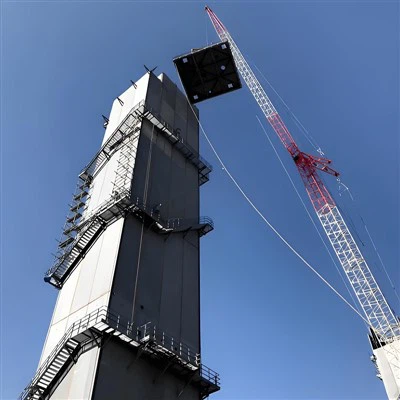
Equipment placement: Use appropriate lifting equipment and hoisting methods to accurately lift the equipment to the foundation. During the equipment placement process, pay attention to the direction and position of the equipment to make it consistent with the design requirements. Use shims to adjust the levelness and elevation of the equipment to meet the specified accuracy requirements.
Equipment fixing :After the equipment is in place and aligned, fix the equipment. For equipment with anchor bolts, correctly install the anchor bolts in the reserved holes of the foundation, adjust the position and verticality of the bolts, and then perform secondary grouting to firmly combine the anchor bolts with the foundation. For some large equipment or equipment with special requirements, other fixing methods may also be required, such as welding, anchoring, etc.
Installation of internal components: For some equipment that requires on-site installation of internal components, such as the tray and packing of the distillation tower, the operation must be carried out in accordance with the requirements of the installation instructions. During the installation process, pay attention to the installation order, position and clearance of the components to ensure that the installation quality meets the requirements. After the installation is completed, internal cleaning and inspection work is carried out to ensure that the equipment There is no debris or damage inside.
Pipeline installation
Pipeline prefabrication: Prefabricate the pipeline according to the construction drawings and actual site conditions. During the prefabrication process, attention should be paid to the cutting, beveling, bending and other processes of the pipeline to ensure that the size and shape of the pipeline meet the requirements. The prefabricated pipelines are numbered and marked for on-site installation.
Pipeline installation: Pipeline installation should be carried out according to the principle of large pipes first, small pipes later, main pipes first, and branches later. During the installation process, attention should be paid to the slope, slope direction, connection method, etc. of the pipeline to ensure that the installation quality of the pipeline meets the design and specification requirements. The connection between the pipeline and the equipment should adopt a stress-free connection method to avoid the stress of the pipeline being transferred to the equipment and affecting the normal operation of the equipment.
Pipeline welding and inspection: Pipeline welding is the pipe As a key process in pipeline installation, welding personnel must have the corresponding qualifications and skills. During the welding process, the welding process must be strictly followed, the welding parameters must be controlled, and the welding quality must be ensured. After welding is completed, the pipeline welds are visually inspected and non-destructively tested to ensure that the welds are defect-free.
Pipeline purging and cleaning: After the pipeline is installed, the pipeline is purged and cleaned to remove debris, rust, etc. in the pipeline. The purging and cleaning methods vary depending on the material and medium of the pipeline. Generally, compressed air purging, water flushing, etc. are used. After purging and cleaning, the pipeline is inspected to ensure that the pipeline is clean and free of debris.
Electrical and instrument installation
Electrical installation: Installation of electrical equipment, including transformers, power distribution Installation and wiring of cabinets, motors and other equipment. During the installation process, attention should be paid to the grounding and lightning protection measures of electrical equipment to ensure the safety and reliability of the electrical system. The laying of electrical cables must comply with the specifications to avoid mechanical damage and corrosion of the cables.
Instrument installation: Install various instruments, such as temperature instruments, pressure instruments, flow meters, liquid level meters, etc. The installation location of the instrument should be convenient for operation and observation, and the installation height should comply with the specifications. Connect the signal cable and pressure pipe of the instrument to ensure accurate and stable signal transmission.
System debugging: After the electrical and instrument installation is completed, the system debugging work is carried out. Power supply debugging of the electrical system is carried out to check whether the operating status and parameters of the electrical equipment are normal. Calibrate and debug the instrument system , check whether the measurement accuracy and control function of the instrument meet the requirements.
Anti-corrosion and thermal insulation
Anti-corrosion treatment: Anti-corrosion treatment is carried out on the outer surface of equipment and pipelines, generally by painting, galvanizing and other methods. Before anti-corrosion treatment, the surface of equipment and pipelines should be pre-treated by rust removal, degreasing and other pre-treatment to ensure the adhesion and anti-corrosion effect of the anti-corrosion coating.
Insulation construction: According to design requirements, insulation construction is carried out on equipment and pipelines that need insulation. The selection of insulation materials must meet the design requirements, and the thickness and construction quality of the insulation layer must meet the specifications and standards. During the insulation construction process, attention should be paid to the fixing and sealing of the insulation layer to avoid shedding and heat leakage of the insulation layer.
System debugging and acceptance
Single-machine debugging: Single-machine debugging is carried out on each installed device, Check the equipment's operating status and whether its performance parameters meet the design requirements. During the stand-alone debugging process, adjust and optimize the equipment to ensure that it can operate normally.
Linkage debugging: On the basis of qualified stand-alone debugging, conduct linkage debugging of the system. Check the coordination between the equipment, the smoothness of the process flow, the stability of the instrument control system, etc. During the linkage debugging process, adjust and optimize the system as a whole to ensure that the system can meet the designed production capacity and product quality requirements.
Acceptance: After completing the system debugging, organize relevant departments and experts to conduct acceptance. The acceptance content includes equipment installation quality, pipeline installation quality, electrical and instrument installation quality, system debugging effect, etc. After qualified acceptance, go through the acceptance procedures and deliver it for use.



6.air separation plant maintenance
Maintenance of air separation devices is important to ensure stable operation, extend service life and ensure product quality.
Daily maintenance
Operation parameter monitoring: Pay close attention to the key operating parameters of the device, such as temperature, pressure, flow, and liquid level, to ensure that they fluctuate within the specified range. If abnormal parameters are found, analyze the causes in time and take corresponding measures. For example, the parameters of each part are monitored in real time through the DCS system, and data is recorded every hour for easy comparison and analysis.
Equipment appearance inspection: Perform daily inspections on the appearance of the equipment to check whether the equipment and pipelines have leakage, corrosion, wear, etc., check whether the valve switch status is correct, and whether the flange connection parts are tight. If a slight leak is found in the pipeline, it should be repaired in time; for severely corroded parts, records should be kept and repairs and replacements should be arranged.
Lubrication and cooling system inspection: Check the lubrication system of rotating equipment such as compressors and pumps to ensure that the oil level and oil quality of the lubricating oil are normal, and replace the lubricating oil on time. At the same time, check the operation of the cooling system to ensure that the cooling water volume is sufficient and the water temperature is normal to avoid damage to the equipment due to overheating.
Instrument and control system inspection: Check the display of the instrument Whether the display is accurate, whether the sensor is working properly, and whether the control system's instructions are executed smoothly. Calibrate the instrument regularly to ensure the reliability of the measurement data. Generally, the instrument calibration is performed once a quarter.
Regular maintenance
Filter cleaning and replacement: Regularly clean or replace the filter elements in air filters, molecular sieve adsorbers and other equipment to ensure their filtering effect and prevent impurities from entering the system and affecting the performance of the device. Air filters are generally cleaned once a month, and molecular sieve adsorbers are replaced or regenerated every six months to a year according to the adsorption effect.
Heat exchanger cleaning: Clean the heat exchanger regularly to remove dirt and impurities in the heat exchange tubes and improve the heat exchange efficiency. Chemical cleaning or physical cleaning methods can be used. Depending on the scaling of the heat exchanger, it is generally cleaned 1-2 times a year.
Equipment comprehensive inspection and maintenance: At regular intervals (usually 1-2 ), conduct a comprehensive inspection and maintenance of the device. This includes disassembly inspection of key equipment such as compressors and expanders, inspection of the wear of impellers, bearings, seals and other components, and replacement of severely worn components. At the same time, conduct a comprehensive non-destructive inspection of the pipeline to check for cracks, corrosion and other defects.
Electrical system maintenance: Regularly inspect and maintain the electrical system, including checking the insulation performance of the motor, whether the electrical components in the distribution cabinet are normal, tightening the electrical connections, and preventing electrical failures. Generally, a comprehensive inspection of the electrical system is carried out every six months.
Special maintenance
Fault repair: When a device fails, it should be repaired in a timely manner. The maintenance personnel should accurately determine the cause of the failure and take effective maintenance measures. For some complex failures, it may be necessary to organize professionals to carry out Consult and formulate a detailed maintenance plan. After the maintenance is completed, a trial run should be carried out to ensure that the equipment returns to normal operation.
Shutdown maintenance: During the shutdown period of the device, in addition to routine inspection and maintenance work, the equipment should also be fully maintained. For example, the inside of the equipment should be cleaned and dried to prevent the equipment from getting damp and rusting. For devices that are shut down for a long time, appropriate sealing measures should also be taken, such as filling with nitrogen for protection.
Renovation and upgrading: With the development of technology and changes in production needs, it may be necessary to transform and upgrade the air separation device. For example, replace high-efficiency packing, optimize process flow, upgrade control system, etc. to improve the performance and competitiveness of the device. When carrying out renovation and upgrading, it is necessary to strictly follow the design requirements and construction specifications to ensure that the modified device is safe, reliable and stable in operation.
What is an Air Separation Unit (ASU)
An Air Separation Unit (ASU) is a complex industrial facility used to separate atmospheric air into its main components, primarily oxygen, nitrogen and argon. It operates on the principle of cryogenics and distillation.
The air is first compressed and cooled. Then, it passes through a series of heat exchangers and distillation towers. In the towers, the gases are separated due to their different boiling points. Oxygen, nitrogen (-196°C) and argon (-186°C) with a boiling point of -183°C are gradually separated.
ASU is widely used in various industries. In steelmaking, oxygen is used to enhance the combustion process. The chemical industry requires these gases for different reactions. The electronics industry requires high purity gases for manufacturing processes.
How Does A Cryogenic Air Separation Plant Work
The working principle of the cryogenic air separation unit is mainly based on the different boiling points of the components in the air, and separation is achieved through processes such as low-temperature freezing and distillation.
Air filtration and compression: The air first passes through the filter to remove impurities such as dust, and then enters the compressor to be compressed to increase the pressure for subsequent processing.
Precooling and purification: The compressed air enters the precooling system for cooling, and then passes through the molecular sieve purifier to remove impurities such as carbon dioxide and water vapor to prevent them from freezing and blocking pipelines and equipment at low temperatures.
Refrigeration and liquefaction: The purified air enters the cold box and is cooled to a low temperature through the heat exchanger, and part of the air is liquefied.
Distillation separation: The liquefied air enters the distillation tower and undergoes multiple gas-liquid exchanges in the tower. Due to the different boiling points of components such as oxygen, nitrogen, and argon, components with lower boiling points such as nitrogen will be enriched at the top of the tower, and components with higher boiling points such as oxygen will gather at the bottom of the tower, thereby achieving the separation of the components.
Product output: The separated oxygen, nitrogen, argon and other products are output in gaseous or liquid form according to demand.
improving agility of cryogenic air separation plants
What Refrigerant Is Used In An Air Separation Plant
Liquid nitrogen: With a boiling point as low as -196℃, it can provide a deep cold environment, cool the air by absorbing heat through evaporation, and has stable chemical properties, is non-toxic, non-flammable and non-explosive.
Liquid oxygen: It is mainly used to react with combustible substances to generate energy to drive chemical reactions in some refrigeration cycles, and its boiling point is -183℃.
Freon: It was once widely used, such as R22, with low evaporation temperature and good refrigeration effect, but its use has been gradually restricted due to its damage to the ozone layer.
Carbon dioxide: It is used as a refrigerant in the transcritical cycle, with a low critical temperature, stable chemical properties, safe and non-toxic, and environmentally friendly.
What Is Effective Air Separation?
Effective air separation refers to the process of efficiently and accurately separating the main components of air, such as oxygen, nitrogen, and argon, through specific technologies and equipment to meet different industrial and life needs. Effective air separation must have the characteristics of high purity, high recovery rate, and low energy consumption. It can produce gas products that meet the purity requirements of different application scenarios, while maximizing the extraction rate of each gas, reducing energy consumption and costs in the production process, and ensuring feasibility and sustainability at both the economic and technical levels. Common methods include cryogenic distillation, pressure swing adsorption, and membrane separation.
Air Separation Plant Working Principle
The deep cryogenic air separation equipment works based on the different boiling points of the air components, using the principles of cryogenics and distillation.
Air pretreatment: The air is first filtered to remove mechanical impurities, then compressed to increase the pressure, cooled by the precooling system, and enters the molecular sieve purification system to remove impurities such as carbon dioxide and water vapor to prevent ice blockage in the subsequent low-temperature process.
Low-temperature refrigeration: The pretreated air enters the cold box, exchanges heat with the cold fluid in the heat exchanger, cools to a very low temperature, and uses refrigeration principles such as the Joule-Thomson effect to liquefy part of the air.
Distillation separation: The liquefied air enters the distillation tower. In the distillation tower, after multiple vapor-liquid heat and mass transfers, the low-boiling point nitrogen is first vaporized and enriched at the top of the tower, the high-boiling point oxygen is concentrated at the bottom of the tower, and components such as argon are separated in the middle of the tower, thereby realizing the separation of various components in the air.
How Does a Cryogenic Air Separation Unit Work?
The working principle of the cryogenic air separation unit is based on the different boiling points of the components in the air. The main process is as follows:
Air compression: The air is compressed by the compressor to increase the pressure.
Pre-cooling purification: The compressed air is cooled and impurities such as moisture and carbon dioxide are removed.
Deep freezing: The purified air is cooled by the heat exchanger, throttling expansion and cooling to a low-temperature liquefied state.
Distillation separation: In the distillation tower, the boiling point difference of oxygen, nitrogen and other components is used to separate oxygen, nitrogen and other components through multiple gas-liquid exchanges, and finally high-purity oxygen, nitrogen and other products are obtained.
Air Separation Plant Operator Jobs
The work of an ASU operator involves a variety of duties and requires specific skills and qualifications.
Operation and Monitoring
Operate the ASU, compressors, coolers, expanders and other equipment to ensure the normal operation of the process.
Monitor process parameters such as temperature, pressure, gas purity in real time and make timely adjustments to ensure product quality.
Equipment Maintenance
Inspect equipment regularly to check for potential safety hazards and reliability issues, and report equipment operation information to supervisor.
Participate in equipment maintenance and repair work under the guidance of supervisor and assist in the implementation of equipment preventive maintenance.
Safety Management
Comply with government and factory safety regulations and requirements to ensure safety in high pressure and low temperature environments.
Respond quickly and take effective measures in emergencies such as equipment failure and gas leaks.
Production Management
Fill out various production reports and records accurately and promptly.
Adjust production according to customer needs and production instructions.
Air Separation Plant Condensing Temps
The condensation temperature of the air separation unit refers to the temperature at which gaseous air or its components are cooled to liquefaction during the air separation process. Generally speaking, among the main components of air, the condensation temperature of oxygen is about -183°C, nitrogen is about -196°C, and argon is about -186°C. In a cryogenic air separation unit, the air needs to be cooled to an extremely low temperature to partially liquefy it, and the different condensation temperatures of each component are used for distillation separation. In actual operation, the condensation temperature will be affected by factors such as pressure, air composition, and device operating conditions, and needs to be precisely controlled to achieve efficient and stable air separation.
Cryogenic Air Separation Plants Improving Flexibility
Equipment and process optimization
Adopt advanced distillation technology: such as high-efficiency structured packing tower, which can improve separation efficiency and can flexibly adjust operation according to different product requirements.
Optimize heat exchanger design: adopt efficient and compact plate-fin heat exchangers, etc. to enhance heat exchange effect, so that the device can quickly adapt to different loads and working conditions.
Configure variable reflux ratio system: by adjusting the reflux ratio, the device can maintain the best separation effect under different production requirements.
Control system upgrade
Install advanced DCS system: realize accurate monitoring and control of various parameters of the device, and can quickly respond and adjust operating parameters.
Apply intelligent control algorithms: such as model predictive control, etc., automatically optimize operations according to real-time working conditions, and improve the adaptability of the device.
Operation and management improvement
Strengthen operator training: improve their operating skills and emergency handling capabilities of the device, and ensure that they can flexibly respond to various situations.
Establish a flexible production plan: arrange production tasks reasonably according to market demand and device operation status, and improve the utilization rate and flexibility of the device.
Air Separation Plants Market
The global air separation equipment market was valued at USD 5.4 billion in 2023. It is expected to reach USD 6.8 billion by 2028, growing at a CAGR of 4.6% from 2023 to 2028. It is expected to reach USD 9,993.5 million by 2032, growing at a CAGR of 5.1% from 2024 to 2032. The growth of the market is driven by the growing demand for industrial gases in industries such as steel, chemicals, and oil and gas.
Distillation Column In A Cryogenic Air Separation Plant
The distillation tower of the cryogenic air separation unit is the core equipment for separating the various components of air.
Structural features
Tower body: It is usually a tall vertical cylindrical shape. The height and diameter vary according to production requirements and the characteristics of the processed materials, providing space for gas-liquid contact, mass transfer and heat transfer.
Padding and tray: Packings such as Raschig rings and Ball rings have large specific surface areas and good fluid mechanics. The liquid flows down along its surface and the gas flows upward through the gaps to achieve efficient material exchange. The trays include bubble trays, sieve trays, etc., which are equipped with special structures such as bubbles and sieve holes. The gas passes through the tray liquid layer to form a large number of bubbles, increasing the gas-liquid contact area.
Condenser and reboiler: The condenser is located at the top of the tower, condensing the rising steam at the top of the tower into liquid, part of which is extracted as a product and part is returned to the tower as reflux liquid. The reboiler is located at the bottom of the tower, providing vaporization energy for the liquid at the bottom of the tower. The generated steam enters the tower body and provides gas phase power for distillation.
Feed port and discharge port: The feed port is generally in the middle or upper part of the tower body to ensure uniform distribution of materials. The light component product is taken out from the top outlet of the tower, and the heavy component product or the residual liquid at the bottom outlet of the tower is discharged.
Working principle
Using the boiling point difference of gases such as oxygen, nitrogen, and argon, the gas-liquid two-phase contacts multiple times in different temperature and pressure areas for mass transfer and heat transfer. The specific process is as follows:
Gas-liquid mass transfer and heat transfer: The air after pretreatment, compression, cooling, and purification is cooled to a liquefied state and enters the distillation tower. In the tower, the rising steam contacts the descending liquid on the surface of the tower plate or the packing, and the high-boiling point components in the steam (such as oxygen) are partially condensed into the liquid, and the low-boiling point components in the liquid (such as nitrogen) are partially vaporized into the steam.
Multiple distillation separation: After multiple mass transfer and heat transfer of multiple tower plates or multiple layers of packing, the low-boiling point nitrogen is gradually enriched at the top of the tower, and the high-boiling point oxygen is enriched at the bottom of the tower. If argon is to be separated, since its boiling point is close to that of oxygen, a side stream can be extracted at the highest argon concentration for further separation.
Common types
Single tower: The structure is relatively simple, generally used when only nitrogen needs to be separated or the product purity requirement is not particularly high.
Double tower: Usually divided into an upper tower and a lower tower, the lower tower has a higher operating pressure, and the upper tower is close to normal pressure. The air first enters the lower tower for preliminary separation, and then enters the upper tower for further distillation, and high-purity oxygen, nitrogen and other products can be obtained.
Baffle distillation tower: It is a fully thermally coupled distillation tower with the advantages of energy saving and low investment. By setting baffles in the tower, the space in the tower is reasonably divided, so that different components can be separated and purified more efficiently in different areas.
Air Separation Unit (ASU): Applications
Air separation units (ASUs) are widely used in various industries, and their main applications are as follows:
Metallurgical industry
Steelmaking: The oxygen produced by the air separation unit is blown into the blast furnace to improve the combustion efficiency of coke, which helps to increase the furnace temperature and accelerate the reduction reaction of iron ore, thereby improving the quality and production efficiency of steel. At the same time, nitrogen is used to purge and protect the molten steel, prevent oxidation, and improve the purity of steel.
Non-ferrous metal smelting: In the smelting process of non-ferrous metals such as copper, aluminum, and zinc, oxygen is used for oxidation and impurity removal, while argon is often used as a shielding gas during electrolysis and welding to ensure the stability and quality of the process.
Chemical industry
Chemical synthesis: Oxygen is an important raw material for the production of chemicals such as ammonia, methanol, and ethylene oxide. For example, in the production of ammonia, the air separation unit provides nitrogen and oxygen for the production of hydrogen by reaction with hydrocarbons and then the synthesis of ammonia.
Polymer production: In the polymerization process of plastics and rubbers, nitrogen is used as a shielding gas to create an inert atmosphere, prevent oxidation of the reaction materials, and ensure the quality and performance of polymer products.
Electronics Industry
Semiconductor Manufacturing: High purity oxygen, nitrogen, and argon are required. Oxygen is used in processes such as oxidation and chemical vapor deposition to form oxide layers on semiconductor wafers. High purity nitrogen is used for purging and protection to maintain a clean and inert environment to prevent contamination of semiconductor materials. Argon is often used in sputtering processes to deposit thin films.
Flat Panel Display Production: In the production of liquid crystal displays (LCDs) and organic light emitting diode displays (OLEDs), ASU gases are used in various processes such as cleaning, etching, and deposition to ensure the quality and performance of the displays.
Medical Industry
Medical Oxygen Supply: Air separation units produce high purity oxygen for use in hospitals and healthcare facilities. It is used to treat patients with respiratory diseases and those who require oxygen therapy, helping to improve their oxygen supply and relieve symptoms.
Medical Equipment Cleaning and Sterilization: Nitrogen can be used to clean and purge medical equipment, and in some cases, it is combined with other gases for sterilization processes.
Others
Glass and Ceramic Industry: Oxygen-enriched air is used in glass furnaces to improve combustion efficiency, reduce energy consumption, and improve glass quality. Nitrogen is used to protect the surface of molten glass from oxidation.
Food and Beverage Industry: Nitrogen is widely used in packaging in the food and beverage industry to displace air and extend the shelf life of products. It can also be used in the production of beer and wine to improve the taste and quality of the product.
Hot Tags: Air Separation Plant, China Air Separation Plant manufacturers, suppliers, oxygen plant air separation unit, ASU oxygen plant, Liquid Co2 Plant, Co2 Recycling Plant, Co2 Generation Plant, liquid oxygen plant and liquid nitrogen plant


