

Introduction
Overview of Non-cryogenic Industrial Gas Processing Technology
2.1 Adsorption Technology
2.2 Polymer Membrane System
Cryogenic Industrial Gas Processing Technology
3.1 Overview of Cryogenic Processing
3.2 Compression Cycle
3.3 Pumping Liquid Cycle
3.4 Low-pressure and High-pressure Cycle
Comparison of Process Alternatives and Technical Improvement
References
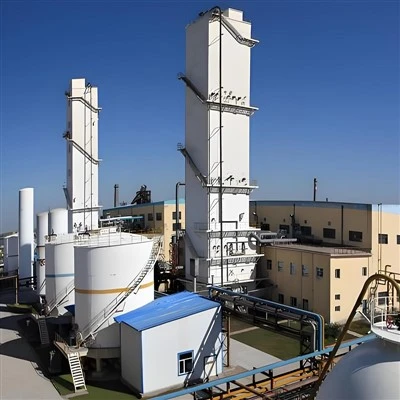
Air separation technology is a key link in chemical production. It is mainly used to extract industrial gases such as oxygen and nitrogen from air and is widely used in fuel production, chemical synthesis and energy fields. Cryogenic air separation technology has become the preferred method for large-scale gas production due to its high efficiency and economy. In recent years, with the advancement of technology, non-cryogenic methods such as adsorption and membrane separation have gradually attracted attention. This paper aims to explore the process optimization and technical improvement of traditional and emerging air separation technologies, analyze their economy and integration potential, and provide reference for the industry.
2. Overview of Non-cryogenic Industrial Gas Processing Technology
2.1 Adsorption Technology
Adsorption technology is based on the selective adsorption ability of materials for gas molecules, and zeolite or carbon molecular sieve is often used as an adsorbent. Its core principle is to achieve separation by using the differential adsorption of gas molecules on the surface of the adsorbent. For example, nitrogen molecules are more easily adsorbed by zeolites due to their strong polarization, while oxygen forms an oxygen-rich gas flow through the adsorption bed.
Adsorption technology is mainly divided into two categories:
Temperature swing adsorption (TSA): The adsorbent is regenerated by heating, which is suitable for high-purity oxygen production (93%~95%).
Pressure swing adsorption (PSA/VSA): Regeneration is achieved by decompression, with a short operating cycle, suitable for small and medium-scale applications.
Optimization directions include pretreatment to remove water/carbon dioxide, multi-bed pressure energy recovery and vacuum operation to improve efficiency and reduce energy consumption.
2.2 Polymer membrane system
Membrane separation technology uses the difference in the permeation rate of gas through the polymer membrane to achieve separation. Oxygen molecules are smaller and have higher permeability than nitrogen, so the membrane system can produce oxygen-enriched air (25%~50%). Its advantages are simple operation, continuous operation and low energy consumption, but the product purity is limited, and it needs to be combined with an active carrier membrane to improve selectivity.
Membrane systems are suitable for small-scale applications (≤20 tons/day) and have a high tolerance for carbon dioxide and water. Future material improvements may expand its application range.
3. Cryogenic industrial gas processing technology
3.1 Overview of cryogenic processing
Cryogenic distillation is the mainstream technology for large-scale production of high-purity industrial gases, which can simultaneously produce gaseous/liquid oxygen, nitrogen and argon. Its core is to achieve separation through cooling and fractionation of compressed air, with the advantages of high recovery rate and low incremental cost.
3.2 Compression cycle
Cryogenic devices usually use centrifugal compressors to pressurize gases to 3.5~70MPa to meet transportation needs. Large plants reduce unit costs through economies of scale, while IGCC (integrated coal gasification combined cycle) facilities further optimize energy efficiency through gas turbine extraction.
3.3 Pumping liquid cycle
Gas compression energy consumption can be reduced by pumping liquid products (such as liquid oxygen) to intermediate pressures. Partial pumping cycles can recover refrigerants, reducing equipment size and operating costs.
3.4 Low-pressure and high-pressure cycles
Low-pressure cycle (LP): Feed pressure 360~600MPa, suitable for scenarios with low demand for nitrogen byproducts.
High-pressure cycle (HP): Pressure exceeds 700MPa, suitable for high-purity nitrogen production or integration with other processes (such as gas turbines).
4. Comparison of process alternatives and technical improvements
Adsorption and membrane technology: Suitable for small and medium-sized scales, but cannot challenge the position of cryogenic technology in the field of large-scale high purity. Both require additional deoxygenation devices or cryogenic backup systems.
Cryogenic technology: Energy efficiency can be significantly improved through heat integration (such as gas turbine extraction) and pumping cycle optimization. For example, using the heat of extraction to pretreat air or regenerate solvents can further reduce energy consumption.
Future development directions include:
Performance improvement of adsorbents and membrane materials.
Heat integration of cryogenic processes and chemical plants.
Application of emerging technologies such as chemical or ion transport membranes (ITM).
Cryogenic air separation technology is still the mainstream choice for industrial gas production due to its maturity and economy. Through process optimization (such as heat integration, pumping circulation) and technical improvements (such as material research and development), efficiency can be further improved and costs can be reduced. Non-cryogenic technology has potential in small-scale applications, but it needs to break through the purity and scale limitations. In the future, multi-technology collaboration and cross-domain integration will be the key to the development of the industry.


