

At present, argon is mainly obtained by deep-cold separation of air. Whether a large-scale deep-cold air separation unit is equipped with an argon system is related to the investment and energy consumption of the unit. For a newly built unit, whether to configure an argon system should be based on the argon market situation in the area where the unit is located, combined with the unit investment and energy consumption level, and then select a configuration scheme suitable for the project. Only in this way can the role of an air separation unit be fully utilized, and then the product structure of the factory can be optimized to obtain the best benefits.
Keywords: argon system; market; energy consumption; benefit
Content Menu
1. Introduction
2. Introduction to a large air separation unit
3. Process flow and characteristics of argon production
4. Research and analysis of the argon market in a certain area
5. Risk and energy efficiency analysis of argon production
6. Conclusion
7. Suggestions
1. Introduction
Rare gases mainly refer to gases with low content in the atmosphere, including helium, neon, argon, krypton, xenon, etc., among which argon has the highest content, accounting for about 0.932%. Argon is a rare gas widely used in industry. It is very inactive and neither burns nor supports combustion. Argon is mainly used in manufacturing, electronics, metal smelting and other industries. For example, when welding aluminum, magnesium, copper and its alloys and stainless steel, argon is often used as welding shielding gas to prevent the welded parts from being oxidized or nitrided by air. In actual industrial production, the setting of the argon system is related to the product structure, investment and energy consumption of the device.


2. Introduction to a large air separation unit
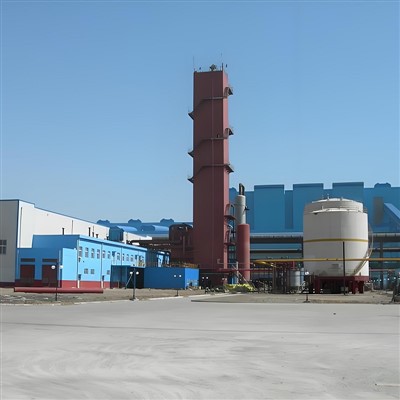
A large coal chemical project in a certain region plans to build an air separation unit with an oxygen production capacity of 50,000 Nm3/h. The unit plans to use normal temperature molecular sieve adsorption purification, air pressurization, oxygen and nitrogen product internal compression process, regular packing tower and full distillation argon production process, and air compressor unit motor drive.
3. Process flow and characteristics of argon production
The method commonly used for the production of argon is full distillation argon production, which has the advantages of simple process, convenient operation, safety, stability and high argon extraction rate. The full distillation argon production is to take the argon-rich fraction from the middle and lower parts of the upper tower and enter the argon distillation system, separate oxygen and argon in the crude argon tower, and directly obtain crude argon with an oxygen content of <1.5 × 10⁻⁶. Then, separate argon and nitrogen in the refined argon tower to obtain a high-purity argon product with a purity of 99.999% (argon content).
4. Research and analysis of the argon market in a certain region
According to the survey, there are 9 air separation units with a scale of more than 6000 Nm3/h in operation, under construction, and planned in a certain region, as shown in Table 1. Among them, there are 6 units that have been put into production and produce argon, with a total capacity of 5860 Nm3/h (according to the designed capacity), that is, 84,000 t/a. In addition, due to the fact that the argon system of some projects has not been put into use or the output is low, the actual output is about 63,000 t/a. In general, the argon production capacity in this region is relatively small.
It is understood that the unit transportation cost of liquid argon is 0.8 to 1.0 yuan/(t·km). The price difference between markets within 200 km is theoretically about 160 yuan/t; similarly, the price difference between two markets 500 km apart exceeds 400 yuan/t, and the markets are connected. It is understood that the market price of argon in this region is 800 to 1900 yuan/t (calculated based on the annual average price of 1000 yuan).
For 50,000-grade air separation, argon is a by-product. Theoretically, the energy consumption is mainly composed of separation work and liquefaction work (the compression work is all distributed on oxygen and nitrogen). It is known that the theoretical minimum liquefaction work of argon is 0.2391 kW·h/Nm3 (calculated at 0.3 kW·h/Nm3), and the liquefaction work is calculated to be 560 × 0.3 = 168 kW·h/t. Separation work is calculated according to the formula:W = RT(nO2ln + nN2ln + nAr ln) In the formula, R is the universal gas constant; T is the ambient temperature; nO2, nN2, nAr are the amounts of oxygen, nitrogen, and argon substances respectively; pO2, pN2, pAr are the partial pressures of oxygen, nitrogen, and argon components respectively; p is the total pressure.
Through calculation, it can be obtained that the theoretical minimum separation work of 1 Nm3 of air is about 0.017 44 kW·h/Nm3 (calculated as 0.02 kW·h/Nm3), and 8% of the separation work exists in argon, so the separation work = 248,000 × 0.02 × 8% × (560 ÷ 1500) = 148 kW·h/t. In summary, the production cost of argon is about 316 kW·h/t, or 139 yuan/t.
Covering customers within 200 and 500 km, plus transportation costs, the total cost is about 299 and 539 yuan/t respectively, which still has certain cost advantages.
The transportation radius of this area from the industrial zone of the provincial capital is only 100 km. In the future, with the province's "Strong Capital" development strategy planning, the manufacturing industry, especially the electronics and photovoltaic industries, will usher in major development opportunities, and the market demand for argon will also increase accordingly.

5. Risk and energy efficiency analysis of argon production
For the production of argon, the current full distillation argon production process is technically mature and reliable, and will not increase the safety risk of the device. The configuration of the argon system will also increase the oxygen extraction rate and have a significant energy-saving effect. For 50,000-level air separation, the argon extraction volume is about 1500 Nm3/h (argon extraction rate is 70%). A comparison is made in terms of energy consumption, investment, and income, as shown in Table 2.
|
Project |
No argon | Additional efficiency tower | Configure argon system |
| Oxygen extraction rate/% |
90.4 |
97 |
96.4 |
| Energy saving effect/% | 0 (calculation base) | About 5 |
About 2.5 |
| Investment/10,000 yuan | 0 (calculation base) |
800 ~1000 |
About 1500 |
| Energy saving benefit/ (10,000 yuan · a-1) | 0 (calculation base) |
800 |
400 |
| Product volume/t |
0 |
0 |
21 000 |
| Product benefit/ (10,000 yuan · a-1) |
0 |
0 |
1500 |
| Comprehensive benefit payback period/a | 0 (calculation base) |
1 |
1 |
| Annual income during operation 10,000 yuan · a-1 | 0 (calculation base) |
0 |
1500 |
Table 2 Comparison of schemes for configuring argon system
Since more than 90% of the energy consumption of the air separation unit is generated by the air compressor and the booster, we calculate the energy consumption reduction by configuring the argon system. The faster the feed rate, the faster the temperature at the bottom of the tank drops, and the greater the temperature difference between the inner and outer walls, which causes the inner wall of the tank to bear greater tensile stress. Under the superposition of several stresses, the local high stress is aggravated. This local high stress provides favorable conditions for the formation and expansion of cracks. In the straight edge of the head where the low-temperature toughness is the weakest, the surface grains near the heat-affected zone of the weld form intergranular cracks. Under the action of local high stress, the cracks continue to expand along the grain or transgranular cleavage brittleness, and finally penetrate and cause the tank to fail.
6. Suggestions
1. The failure cracking of the cryogenic tank head is a low-temperature brittle crack caused by the stress inside the tank. The crack originates from the inner surface of the straight edge section of the head outside the heat-affected zone of the circumferential weld. The cracks in the crack source area and the inner surface are mainly intergranular cracks, and the extension area is intergranular and transgranular cleavage brittle cracking.
2. During the forming process of the straight edge section of the head, deformation-induced martensitic phase transformation occurred, resulting in a large deformation hardening, which significantly deteriorated the low-temperature toughness of the material, and the large residual stress was the main cause of the low-temperature brittle cracks in the cryogenic tank head.
3. The excessive deformation of the strain strengthening of the cryogenic tank increases the hardening of the material and makes the material brittle, while causing large residual stress, which accelerates the generation of cracks.
4. The temperature difference stress generated by the intermittent filling of liquid nitrogen during the use of the tank also accelerates stress concentration and crack extension.
7. Conclusion
1. The strain-induced martensite phase transformation caused by cold deformation of austenitic stainless steel is related to the plastic deformation temperature, deformation amount and deformation rate. It is recommended that warm forming be used for head forming to reduce the generation of deformation martensite and material deformation hardening caused by cold deformation. After the head is formed, the equivalent ferrite content can be detected by magnetic detection method. The equivalent ferrite content should generally be controlled below 15%. For the head whose equivalent ferrite of the straight edge section exceeds the requirement, the solid solution treatment method can be used to save it, so that the plasticity and toughness of the material can be partially restored or improved;
2. When strain strengthening the storage tank, the deformation amount should be strictly controlled, and the temperature and deformation rate of the pressurized liquid should be controlled to avoid high-speed deformation at low temperature, effectively reduce the generation of deformation martensite, and reduce deformation residual stress.


