

Contents
1.Introduction
2.Overview of air separation unit
3.Main safety risks and control measures of each system of air separation unit
3.1 Risk and control of abnormal adsorption function of molecular sieve purification system
3.2 Risk and control of hydrocarbon accumulation in main condenser evaporator
3.3 Risk and control of cold box leakage
3.4 Risk and control of combustion and explosion of oxygen-related system
3.5 Risk and control of frostbite caused by low-temperature medium
4.Main safety hazard management and accident prevention measures of air separation unit
4.1 Air precooling and molecular sieve purification system
4.2 Cold box system
4.3 Oxygen delivery system
4.4 Backup cryogenic liquid storage tank area
Conclusion
1 Introduction
On July 19, 2019, the air separation unit of Yima Gasification Plant in Henan Province was operated for a long time due to a cold box leakage, resulting in the explosion of the C set of the unit, causing 15 deaths, 16 serious injuries and heavy losses. This accident changed the industry's perception of the safety risks of air separation units and prompted chemical companies to pay attention to their safe operation. This article takes three 70,000 m³/h air separation units of a coal chemical enterprise as an example to identify safety risks, troubleshoot hidden dangers, and propose control and prevention measures to ensure the safe, stable, long-term, full and optimal operation of the unit.
2 Overview of air separation units
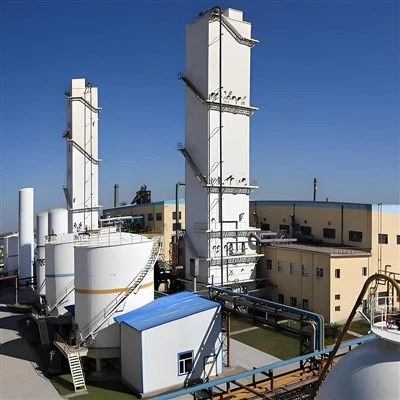
The company has three 70,000 m³/h air separation units (1#, 2#, 3#), which are responsible for providing oxygen, nitrogen, instrument gas, factory air, and have liquid oxygen, liquid nitrogen, liquid argon storage and filling facilities and supporting systems. The oxygen production unit adopts German Linde technology and produces products through air compression, precooling, purification, expansion refrigeration and cryogenic distillation separation. The unit coexists high temperature and high pressure (9.3 MPa/530℃ steam) and cryogenic medium (liquid nitrogen - 196℃, liquid oxygen - 183℃, etc.), and the equipment includes large units, expanders, cryogenic pumps, etc., with complex processes and high risks.
3 Main safety risks and control measures of each system of the air separation unit
3.1 Risk and control of abnormal adsorption function of molecular sieve purification system
Risk: Failure of adsorbent leads to excessive CO₂ in outlet gas, freezing and blockage in the cold box, static electricity accumulation or hydrocarbon accumulation in the main condenser evaporator.
Control measures:
Control outlet gas CO₂<0.6×10⁻⁶ and adjust the operation cycle.
Optimize unit load distribution and reduce the load of "problem unit".
Stabilize the circulating water system and reduce the air temperature at the outlet of the air cooling tower.
3.2 Risk and control of hydrocarbon accumulation in the main condenser evaporator
Risk: Hydrocarbons in liquid oxygen condense and precipitate, and static electricity generated by friction causes explosion.
Control measures:
Set up online CₙHₘ monitoring (high report 250×10⁻⁶), control the content to <20×10⁻⁶, and conduct manual sampling every day.
Monitor the CO₂, N₂O, and CₙHₘ of the molecular sieve outlet gas online, and reduce the load or stop the car when the standard is exceeded.
The main condenser evaporator is fully immersed in operation (liquid level 120%~220%), and a low-low interlock is set (stop at <80%).
Strictly implement the drainage regulations, and strengthen monitoring and drainage during the shutdown and start-up stages.
3.3 Risk and control of cold box leakage
Risk: Low-temperature liquid leaks and vaporizes, causing a sudden increase in the pressure of the cold box, triggering "sand explosion" and explosion.
Control measures:
Set up 4 temperature measurement points on the cold box foundation (alarm lower limit - 50℃) to monitor temperature changes in real time.
The cold box interlayer is filled with dry nitrogen, and 4 pressure monitoring points are set (top/bottom pressure control and alarm interlock value).
Prepare an inspection table to check the interlayer gas pressure, pearl sand falling, cold box condensation and valve vibration.
Regularly check the breathing valve, discharge facilities and box corrosion conditions, and deal with abnormalities in time.
3.4 Risks and control of explosions in oxygen-related systems
Risk: Impurities or grease in oxygen pipelines may cause combustion and explosion.
Control measures:
Special oxygen valves and stainless steel pipes are used, and refractory materials are used for sealing fillers and gaskets, with smooth inner walls and no burrs.
The oxygen pipeline valve group is equipped with 5 oxygen valve rooms (explosion-proof walls), and the valves are divided into zones to ensure safe operation.
Clear degreasing standards during maintenance, and degreasing, purging, and target shooting must be qualified before commissioning.
It is strictly forbidden to operate the oxygen pipeline at overpressure and overflow, and equalize the pressure before delivering oxygen.
3.5 Risks and control of frostbite caused by low-temperature media
Risk: Frostbite caused by leakage of low-temperature liquid or poor cold preservation.
Control measures:
Cryogenic liquids are transported by vacuum tubes or jackets, and filled with pearl sand for cold preservation.
Cold boxes and low-temperature pump boxes are filled with pearl sand, and "cold runaway" is checked regularly and refilled.
Protective fences and warning signs are set up in the low-temperature discharge area.
Filling personnel must hold a certificate before taking up their posts, and wear antifreeze gloves, face shields and other protective equipment during operation.
4 Major safety hazards and accident prevention measures for air separation units
4.1 Air precooling and molecular sieve purification system
Hazard: CO₂ at the inlet of 3# air separation compressor exceeds the standard (affected by boiler exhaust gas), and the adsorption effect of molecular sieve B cylinder is poor.
Control measures:
Adjust the molecular sieve regeneration cycle to ensure that the outlet gas CO₂ < 0.6×10⁻⁶.
Screening and replenishing molecular sieve B cylinder adsorbent, clean the precooling system equipment during overhaul.
4.2 Cold box system
Hazard: The original design does not have online monitoring of interlayer gas, and manual inspections are delayed.
Control measures:
Invest in installing an online oxygen content analyzer, and the signal is transmitted to the DCS for real-time monitoring.
Improve video monitoring and anti-corrosion treatment of rusted outer walls.
4.3 Oxygen delivery system
Hazard: The root valve of the pressure gauge is in the oxygen valve room, there is no monitoring in the confined space, and there is a lack of static electricity removal facilities at the inlet.
Control measures:
The technical transformation will move the root valve to the outside of the oxygen valve room, and add video surveillance and convex mirrors.
An electrostatic discharge facility will be installed at the entrance, and a GDS alarm will be installed in the oxygen valve room.
4.4 Backup cryogenic liquid storage tank area
Hazards: There is no emergency shut-off valve and flow meter in the filling pipeline, and there is a risk of overfilling and leakage.
Control measures:
The filling pipeline will be equipped with a flow meter and a pull-off valve, and the liquid oxygen filling pump valve will be equipped with a pneumatic head for remote control.
Prepare operating methods and train personnel, and install an inlet regulating valve before the liquid nitrogen filling pump.
5 Conclusion
The air separation unit has complex processes, diverse media characteristics, and high safety risks. By identifying risks, implementing control measures, and thoroughly investigating and controlling hidden dangers, the company has achieved long-term stable operation of the air separation unit. The relevant experience can provide a reference for the safety management of air separation units in the industry.


