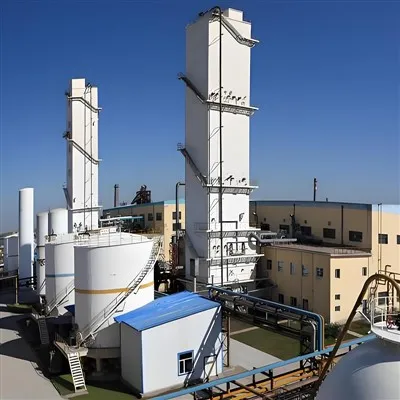
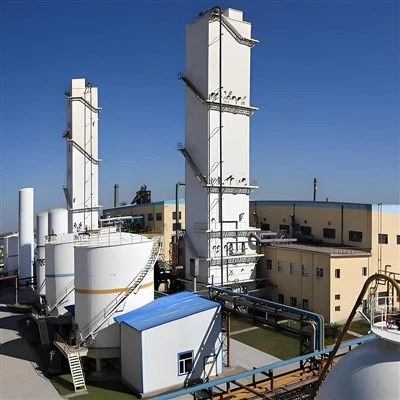
Cryogenic air separation units (ASU)
Large-scale air separation units can produce high-purity oxygen, nitrogen, argon and other gases with cryogenic air separation technology. The purity of oxygen exceeds 99.6%, and nitrogen reaches more than 99.99%. The product variety is rich, and the extraction of rare gases meets high-end needs, with large output and diverse forms. The advanced automatic control system ensures stable quality and provides a reliable gas source for many industries such as metallurgy and chemical industry.
Oxygen purity:99.9% Nitrogen purity: 99.9999%
Technical Features
Oxygen output
50Nm3/h~30,000Nm3/h
Nitrogen output
300Nm3/h~60,000Nm3/h
Argon gas output
5Nm3/h~3,000Nm3/h
Air Separation Units Application

Electronics Industry
Chemical Industry

New Energy

Steel Plant
What is the typical product gas pressure of a large air separation unit?
The product gas pressure of large air separation units varies depending on the product and user needs. Generally speaking, the oxygen product pressure is usually around 0.8 - 5.0MPa. For example, the oxygen pressure used in steel smelting may be 1.0 - 1.5MPa, while the oxygen pressure used in chemical synthesis may be higher, at 3.0 - 5.0MPa. The nitrogen product pressure is generally 0.5 - 1.0MPa, but the nitrogen used in some special processes such as high-pressure nitrogen sealing can reach a pressure of 2.0MPa or higher. The argon product pressure is usually around 0.6 - 1.6MPa.
What impact does excessively high or low pressure have on the quality and use of product gas from large air separation units?
1.Oxygen
Quality Impact
Pressure is too high: it may cause a relative increase in the impurity content in oxygen. Because too high pressure will cause some impurities that are not easy to be separated under normal pressure to be compressed along with oxygen, thus affecting the purity of oxygen.
Pressure is too low: it will reduce the condensation temperature of oxygen. During the distillation process, it may cause the gas-liquid balance to be unbalanced, and some oxygen cannot be fully condensed, thereby increasing the nitrogen content in oxygen and affecting the purity.
Use Impact
Pressure is too high: for some processes that require oxygen at a specific pressure, such as converter steelmaking in steel plants, oxygen with too high a pressure may make the blowing process too intense and difficult to control, increasing equipment wear and safety risks.
Pressure is too low: it cannot meet some process requirements that have strict requirements on oxygen pressure. For example, in chemical synthesis, too low a pressure may cause a decrease in reaction rate and conversion rate, affecting production efficiency and product quality.
2.Nitrogen
Quality Impact
Pressure is too high: it may change the solubility of trace oxygen, water and other impurities in nitrogen, resulting in the precipitation of these impurities during subsequent use, affecting the quality of nitrogen.
Too low pressure: The saturated vapor pressure of nitrogen will be reduced, which may cause incomplete gasification, resulting in liquid nitrogen being brought into gaseous nitrogen, affecting the purity and stability of nitrogen.
Impact of use
Too high pressure: When used as a protective gas, excessive pressure may have an adverse effect on the protected object or process, such as in the manufacture of electronic chips, it may blow away tiny chip components.
Too low pressure: It cannot meet the application scenarios that require nitrogen pressure, such as nitrogen filling and preservation in food packaging. Too low pressure cannot effectively remove the air in the package and cannot achieve a good preservation effect.
3.Argon
Quality impact
Too high pressure: It will increase the partial pressure of other gas impurities in argon, which may increase the solubility of impurities in argon, thereby reducing the purity of argon.
Too low pressure: Similar to nitrogen, it will reduce the saturated vapor pressure of argon, which may cause incomplete gasification, causing liquid argon to be brought into gaseous argon, affecting the quality of argon.
Impact of usage
Pressure is too high: In the field of welding, too high argon pressure will make the welding arc unstable, affect the welding quality, and may also cause argon waste.
Pressure is too low: In some processes that require stable argon protection, such as metal smelting, the pressure is too low to form an effective protective gas layer, making the metal easily oxidized and affecting product quality.
Hot Tags: Large scale air separation units, China Large scale air separation units manufacturers, suppliers, liquid air separation plant, Air Separation Plant, Small Air Separation Unit, liquid oxygen plant and liquid nitrogen plant, nitrogen air separation unit, air products air separation unit