CO2 ≤400 ppm
CH4 ≤5 ppm
C2H2 ≤0.5 ppm
CnHm ≤8 ppm
Mechanical impurities 30 mg/m3
Inlet temperature 32°C
Inlet pressure 0.4 MPa(G)
Outlet pressure 0.25 MPa(G)
pH 7-8
Suspended solids ≤20 mg/L
Total hardness 3.2 mmol/L
Fouling coefficient 1.72-3.44 × 10⁻⁴ m2/K/W
Cl- ≤300 mg/L
Ca+ 30-200 mg/L
Petroleum ≤5 mg/L


Core device
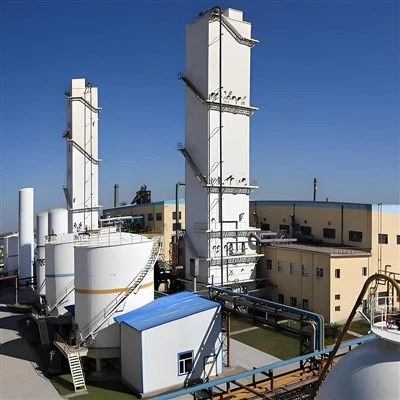
In an air separation unit, the purifier and fractionator system are critical components for ensuring stable operation and producing high-purity gas products.
The purifier removes moisture, carbon dioxide, and other impurities from the air, providing clean feed gas for subsequent cryogenic separation.
The fractionator system, on the other hand, is the core device for achieving the precise separation of gases such as oxygen, nitrogen, and argon, directly determining product purity and yield.
FAQ
What is the difference between oxygen and nitrogen separation?
Oxygen has a lower boiling point than nitrogen, so in cryogenic systems, it condenses first. The system is designed to isolate and collect each gas at specific temperatures and pressures.
Is the oxygen produced from separation systems safe for medical use?
Yes, if the system meets medical-grade standards and includes purification steps, the oxygen is suitable for healthcare applications.
What industries use oxygen nitrogen separation systems?
They are widely used in metallurgy, petrochemicals, healthcare, welding, electronics, and food processing industries.
Hot Tags: oxygen nitrogen separation system, China oxygen nitrogen separation system manufacturers, suppliers