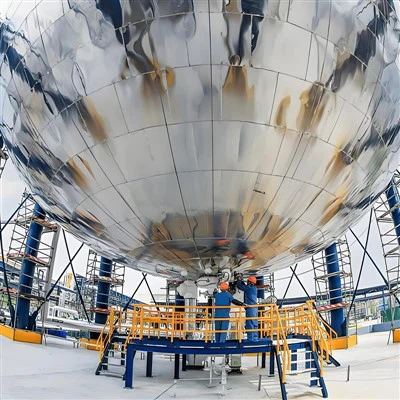
Introduction to Oxygen Plant
An oxygen plant is a facility designed to produce oxygen on a large scale. Oxygen is a vital gas with numerous applications across various industries. In the medical field, it is used for patient respiration support, especially in intensive care units and emergency situations. In the metal industry, oxygen is used in steelmaking to enhance the combustion process and increase the efficiency of smelting. It is also widely used in the chemical industry for oxidation reactions, in the wastewater treatment industry for aeration, and in the glass industry for improving the melting process.
There are mainly two methods for oxygen production in oxygen plants: cryogenic distillation and pressure swing adsorption (PSA). Cryogenic distillation is a process that separates air into its components (oxygen, nitrogen, and argon) by cooling the air to extremely low temperatures and then distilling it. This method can produce high - purity oxygen, usually above 99%. PSA, on the other hand, uses adsorbent materials to selectively adsorb nitrogen from the air under pressure, leaving oxygen as the product. PSA is more suitable for small - to medium - scale oxygen production and can produce oxygen with a purity of around 90 - 95%.
Top 10 Oxygen Plant Factories in 2025
1. Newteck (Hangzhou) Energy Technology Co., Ltd
Newteck (Hangzhou) Energy Technology Co., Ltd is a leading player in the oxygen plant manufacturing industry. The company is committed to providing high - quality cryogenic equipment and oxygen production solutions. With a team of experienced engineers and technicians, Newteck has the ability to design, manufacture, and install oxygen plants that meet the diverse needs of customers.
One of the key features of Newteck's oxygen plants is their high energy efficiency. The company uses advanced cryogenic technology to minimize energy consumption during the oxygen production process. This not only reduces the operating costs for customers but also makes the plants more environmentally friendly.
Newteck's oxygen plants are also known for their high reliability. The company uses high - quality materials and strict quality control measures during the manufacturing process. Each component of the oxygen plant is carefully tested to ensure its performance and durability. This results in oxygen plants that can operate continuously for long periods without major breakdowns.
In addition, Newteck provides excellent after - sales service. The company has a professional after - sales team that can provide timely technical support and maintenance services to customers. Whether it is troubleshooting, spare parts replacement, or equipment upgrading, Newteck's after - sales team can offer effective solutions.
Website: https://www.newtekcryogenic.com/
2. Linde plc
Linde plc is a global industrial gases and engineering company with a long - standing reputation in the oxygen plant industry. The company has a vast global presence, with operations in over 100 countries. Linde's oxygen plants are used in a wide range of industries, from healthcare to heavy manufacturing.
IntroductionLinde has a rich history dating back to the 19th century. The company was one of the pioneers in the development of cryogenic technology for air separation. Over the years, Linde has continuously invested in research and development to improve its oxygen plant technology. The company's engineering expertise allows it to design and build large - scale, high - performance oxygen plants.
In the healthcare sector, Linde's oxygen plants play a crucial role in providing a reliable supply of medical - grade oxygen. The company's oxygen purification technology ensures that the oxygen produced meets the strict quality standards required for medical use. In the industrial sector, Linde's oxygen plants are used in processes such as steelmaking, chemical production, and glass manufacturing.
Features and Advantages
- Advanced Technology: Linde uses state - of the - art cryogenic and PSA technologies in its oxygen plants. The company's research and development efforts have led to the development of more efficient and reliable oxygen production processes.
- Global Support Network: With its extensive global presence, Linde can provide local support to its customers. The company has service centers and technical teams in different regions, ensuring that customers can get timely assistance.
- Customization: Linde can customize oxygen plants according to the specific needs of customers. Whether it is a small - scale oxygen plant for a local hospital or a large - scale industrial oxygen plant, Linde can design a solution that meets the customer's requirements.
3. Air Liquide S.A.
Air Liquide S.A. is another major player in the global oxygen plant market. The company has a strong focus on innovation and sustainable development.
IntroductionAir Liquide has been at the forefront of the industrial gases industry for over a century. The company's oxygen plants are used in various applications, including aerospace, energy, and food processing. In the aerospace industry, Air Liquide's oxygen plants provide high - purity oxygen for aircraft engines and life - support systems. In the energy sector, the company's oxygen is used in power generation and oil refining processes.
The company invests heavily in research and development to develop new technologies for oxygen production. Air Liquide is also committed to reducing the environmental impact of its operations. For example, the company is exploring the use of renewable energy sources to power its oxygen plants.
Features and Advantages
- Innovation - Driven: Air Liquide's continuous investment in R & D results in the development of new and improved oxygen plant technologies. This allows the company to offer more efficient and environmentally friendly solutions to its customers.
- Sustainable Practices: The company's focus on sustainability is reflected in its oxygen plant operations. Air Liquide aims to reduce greenhouse gas emissions and energy consumption in its oxygen production processes.
- Safety - First Approach: Air Liquide places a high priority on safety in the design and operation of its oxygen plants. The company has strict safety protocols and training programs to ensure the safety of its employees and customers.
4. Praxair, Inc. (now part of Linde plc)
Praxair was a well - known name in the oxygen plant industry before its merger with Linde. The company had a strong presence in North and South America.
IntroductionPraxair had a long history of providing industrial gases and related equipment. Its oxygen plants were widely used in the mining, metals, and chemical industries. In the mining industry, Praxair's oxygen plants were used for underground ventilation and in the extraction of precious metals. In the chemical industry, the company's oxygen was used in various chemical reactions.
The company was known for its customer - centric approach. Praxair worked closely with its customers to understand their needs and provide customized solutions.
Features and Advantages
- Customer - Focused Service: Praxair's sales and service teams were dedicated to meeting the needs of customers. The company provided on - site training and technical support to ensure that customers could operate their oxygen plants effectively.
- Quality Products: Praxair's oxygen plants were built to high quality standards. The company used advanced manufacturing techniques and quality control measures to ensure the reliability and performance of its products.
- Market Knowledge: With its long - standing presence in the North and South American markets, Praxair had in - depth knowledge of the local industries. This allowed the company to offer solutions that were well - suited to the specific requirements of these markets.
5. Messer Group GmbH
The Messer Group is a family - owned company that has been in the industrial gases business for over 100 years.
IntroductionMesser's oxygen plants are used in a variety of industries, including automotive, metalworking, and food packaging. In the automotive industry, the company's oxygen is used in the welding and cutting processes. In the food packaging industry, Messer's oxygen is used to create modified atmosphere packaging to extend the shelf life of food products.
The company has a strong commitment to innovation and quality. Messer invests in new technologies and processes to improve the efficiency and performance of its oxygen plants.
Features and Advantages
- Family - Owned Values: The family - owned nature of the Messer Group gives it a long - term perspective. The company is focused on building long - term relationships with its customers and employees.
- Local Presence with Global Reach: Messer has a network of local production facilities and sales offices around the world. This allows the company to provide local support while leveraging its global resources.
- Diverse Product Portfolio: In addition to oxygen plants, Messer offers a wide range of other industrial gases and related equipment. This gives customers the convenience of sourcing multiple products from a single supplier.
6. Taiyo Nippon Sanso Corporation
Taiyo Nippon Sanso Corporation is a leading industrial gases company in Japan.
IntroductionThe company's oxygen plants are used in the semiconductor, electronics, and healthcare industries in Japan and globally. In the semiconductor industry, high - purity oxygen is required for the manufacturing process. Taiyo Nippon Sanso's oxygen purification technology can produce oxygen with extremely high purity levels.
The company has a strong R & D base in Japan, which allows it to develop advanced oxygen plant technologies. Taiyo Nippon Sanso also focuses on international expansion and has a presence in several Asian and European countries.
Features and Advantages
- High - Purity Oxygen Production: Taiyo Nippon Sanso's expertise in producing high - purity oxygen makes it a preferred supplier for industries with strict purity requirements, such as the semiconductor industry.
- Japanese Quality Standards: The company adheres to high - quality Japanese manufacturing standards. This ensures the reliability and performance of its oxygen plants.
- International Expansion: Taiyo Nippon Sanso's global presence allows it to serve customers in different regions and adapt to local market needs.
7. Inox Air Products Limited
Inox Air Products Limited is an Indian company that has made significant contributions to the oxygen plant industry in India and the South Asian region.
IntroductionThe company provides oxygen plants for various industries, including steel, chemicals, and healthcare in India. Inox Air Products has a large manufacturing facility in India, which enables it to produce oxygen plants at a competitive cost.
The company is also involved in the development of new technologies for oxygen production. Inox Air Products is working on improving the energy efficiency of its oxygen plants and reducing the environmental impact of its operations.
Features and Advantages
- Cost - Effective Solutions: Inox Air Products' local manufacturing and sourcing capabilities allow it to offer cost - effective oxygen plant solutions to its customers in India and the South Asian region.
- Local Market Understanding: The company has a deep understanding of the Indian and South Asian markets. This enables it to design oxygen plants that are suitable for the local industrial and economic conditions.
- R & D Initiatives: Inox Air Products' investment in R & D ensures that it can keep up with the latest technological trends and offer innovative solutions to its customers.
8. Air Products and Chemicals, Inc.
Air Products and Chemicals, Inc. is a global leader in the industrial gases and related equipment industry.
IntroductionThe company's oxygen plants are used in a wide range of industries, including energy, chemicals, and materials. In the energy sector, Air Products' oxygen is used in gasification processes to convert coal and other carbon - based fuels into clean energy. In the materials industry, the company's oxygen is used in the production of advanced ceramics and composites.
Air Products has a strong focus on research and development, and it has developed several proprietary technologies for oxygen production.
Features and Advantages
- Proprietary Technologies: Air Products' proprietary technologies give it a competitive edge in the oxygen plant market. These technologies allow the company to produce oxygen more efficiently and at a lower cost.
- Global Reach: With its operations in over 50 countries, Air Products can provide global support to its customers. The company has a large network of production facilities and distribution centers.
- Diverse Industry Experience: Air Products' experience in serving multiple industries allows it to understand the unique requirements of different sectors and offer customized solutions.
9. Gulf Cryo
Gulf Cryo is a leading industrial gases company in the Middle East and North Africa (MENA) region.
IntroductionThe company's oxygen plants are used in the oil and gas, construction, and healthcare industries in the MENA region. In the oil and gas industry, Gulf Cryo's oxygen is used in well - stimulation and enhanced oil recovery processes. In the construction industry, the company's oxygen is used for welding and cutting operations.
Gulf Cryo has a strong local presence in the MENA region and is well - aware of the specific needs and challenges of the local markets.
Features and Advantages
- Local Market Expertise: Gulf Cryo's in - depth knowledge of the MENA markets allows it to offer solutions that are tailored to the local industries. The company understands the regulatory environment, cultural factors, and economic conditions in the region.
- Logistics and Distribution: The company has an efficient logistics and distribution network in the MENA region. This ensures that customers can receive a timely supply of oxygen and related products.
- Customer Service: Gulf Cryo places a high priority on customer service. The company provides 24/7 support to its customers and is committed to resolving any issues promptly.
10. BASF SE (in relation to oxygen - related processes)
BASF SE is a global chemical company that also has an interest in oxygen - related processes.
IntroductionAlthough not a traditional oxygen plant manufacturer, BASF uses oxygen in many of its chemical production processes. The company is involved in the development of new catalysts and processes that use oxygen more efficiently.
BASF's research in this area has led to the development of more sustainable and cost - effective chemical production methods. For example, the company is working on using oxygen in the oxidation of organic compounds to produce high - value chemicals.
Features and Advantages
- Chemical Expertise: BASF's extensive chemical knowledge allows it to optimize the use of oxygen in its production processes. The company can develop new reaction pathways that are more efficient and environmentally friendly.
- R & D Capabilities: BASF's large - scale research and development facilities enable it to conduct in - depth studies on oxygen - related processes. This can lead to the discovery of new technologies and applications.
- Sustainable Development: The company's focus on sustainable development means that its oxygen - related research aims to reduce the environmental impact of chemical production while improving efficiency.
Conclusion
The top 10 oxygen plant factories in 2025 represent a diverse group of companies with different strengths and areas of expertise. From global giants like Linde and Air Liquide to regional players like Inox Air Products and Gulf Cryo, each company brings unique value to the oxygen plant market.
These companies are driving innovation in oxygen production technology, whether it is through the development of more energy - efficient processes, higher - purity oxygen production methods, or more sustainable manufacturing practices. They are also committed to providing high - quality products and excellent customer service.
As the demand for oxygen continues to grow in various industries, these top 10 oxygen plant factories will play a crucial role in meeting the needs of customers around the world. Their ability to adapt to new market trends, regulatory requirements, and technological advancements will determine their success in the future.