As a seasoned supplier of CO2 production plants, I've witnessed firsthand the remarkable advancements in the field of carbon dioxide production and storage. The process of storing the produced CO2 is a critical aspect that not only ensures the efficient operation of the plant but also plays a significant role in environmental sustainability. In this blog, I'll delve into the various methods employed by CO2 production plants to store the produced CO2, exploring the science behind each approach and highlighting their respective advantages and challenges.
Compression and Liquefaction
One of the most common methods of storing CO2 is through compression and liquefaction. This process involves compressing the gaseous CO2 to high pressures, typically around 70 - 80 bar, and then cooling it to a temperature below its critical point (-31°C at 73.8 bar). At this stage, the CO2 transitions from a gas to a liquid state, which significantly reduces its volume and makes it easier to store and transport.
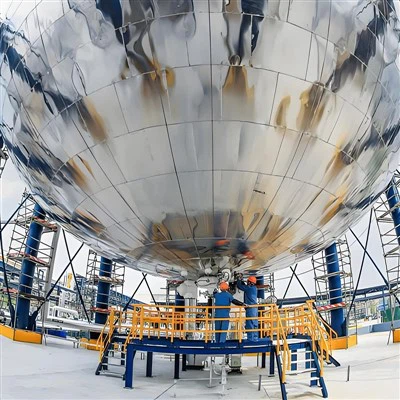
Liquefied CO2 can be stored in large storage tanks made of high - strength steel or other suitable materials. These tanks are designed to withstand the high pressures and low temperatures associated with the liquefied state. The advantage of this method is its high storage density, which allows for large amounts of CO2 to be stored in a relatively small space. Additionally, liquefied CO2 can be easily transported via pipelines, trucks, or ships, making it a versatile option for distribution.
However, compression and liquefaction require a significant amount of energy, which can increase the operational costs of the CO2 production plant. Moreover, maintaining the low temperatures and high pressures in the storage tanks requires careful monitoring and control to prevent leaks and ensure safety.
Adsorption
Adsorption is another method used for CO2 storage. This process involves using porous materials, such as activated carbon, zeolites, or metal - organic frameworks (MOFs), to adsorb CO2 molecules onto their surfaces. The porous nature of these materials provides a large surface area for CO2 adsorption, allowing for effective storage.
When the CO2 - laden gas comes into contact with the adsorbent material, the CO2 molecules are attracted to the surface of the pores and adhere to them. The adsorption process is typically reversible, meaning that the CO2 can be desorbed from the adsorbent by changing the temperature, pressure, or gas composition. This allows for the reuse of the adsorbent material and the release of the stored CO2 when needed.
Adsorption has several advantages. It is a relatively low - energy process compared to compression and liquefaction, and it can operate at ambient temperatures and pressures in some cases. Additionally, adsorbent materials can be tailored to have high selectivity for CO2, which means they can effectively separate CO2 from other gases in the mixture. However, the storage capacity of adsorbents is generally lower than that of liquefied CO2, and the regeneration of the adsorbent can be time - consuming and energy - intensive.
Geological Storage
Geological storage, also known as carbon capture and storage (CCS), is a long - term solution for CO2 storage. This method involves injecting the captured CO2 deep underground into geological formations, such as depleted oil and gas reservoirs, saline aquifers, or unmineable coal seams.
Once injected into the geological formation, the CO2 is trapped by a combination of physical and chemical processes. The overlying rock layers act as a cap, preventing the CO2 from escaping to the surface. Additionally, the CO2 can dissolve in the pore fluids of the rock or react with the minerals in the rock to form stable carbonate compounds, further ensuring its long - term storage.
Geological storage has the potential to store large amounts of CO2 for thousands of years, making it an attractive option for reducing greenhouse gas emissions. It also provides an opportunity to enhance oil and gas recovery in depleted reservoirs through a process called enhanced oil recovery (EOR), where the injected CO2 helps to displace the remaining oil and gas. However, geological storage requires careful site selection and monitoring to ensure the safety and effectiveness of the storage. There are also concerns about the potential for CO2 leakage, which could have environmental and safety implications.
Chemical Conversion and Storage
Chemical conversion is an emerging method for CO2 storage. This process involves converting the CO2 into other chemical compounds, such as methanol, formic acid, or carbonates, which can then be stored or used as feedstocks in various industrial processes.


For example, CO2 can be reacted with hydrogen in the presence of a catalyst to produce methanol. Methanol is a valuable chemical that can be used as a fuel, a solvent, or a feedstock for the production of other chemicals. By converting CO2 into methanol, not only is the CO2 stored in a stable form, but it also has economic value.
Chemical conversion has the advantage of providing a sustainable way to utilize CO2 and reduce its environmental impact. However, the conversion processes often require high - energy inputs and the development of efficient catalysts. Additionally, the scale - up of these processes to industrial levels is still a challenge.
Conclusion
In conclusion, there are several methods available for CO2 production plants to store the produced CO2, each with its own advantages and challenges. Compression and liquefaction offer high storage density and easy transportation but require significant energy inputs. Adsorption is a low - energy option but has lower storage capacity. Geological storage provides long - term storage but requires careful site selection and monitoring. Chemical conversion offers a sustainable way to utilize CO2 but faces challenges in scale - up and energy efficiency.
As a supplier of Commercial CO2 Capture Plant, Co2 Gas Plant, and Co2 Manufacturing Plant, we understand the importance of selecting the right storage method based on the specific needs and requirements of our customers. We are committed to providing innovative solutions that not only ensure efficient CO2 storage but also contribute to environmental sustainability.
If you are interested in learning more about our CO2 production plants and the associated storage solutions, or if you have any questions regarding the procurement of these systems, please feel free to reach out. Our team of experts is ready to assist you in making the best decision for your business.
References
- IPCC Special Report on Carbon Dioxide Capture and Storage.
- "Carbon Capture and Storage" by Stuart Haszeldine.
- Journal articles on CO2 storage technologies in journals such as Energy & Environmental Science, Chemical Reviews, etc.