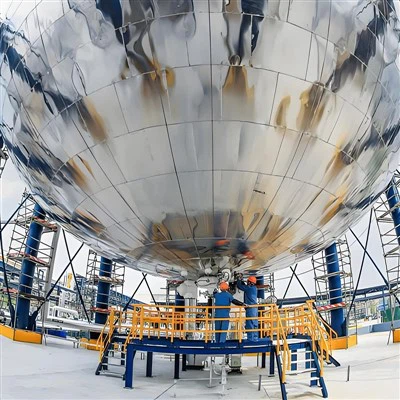
As a supplier of Co2 Factories, I've been closely monitoring the industry's evolution. In this blog, I'll explore the future trends of Co2 Factories, offering insights that are both scientifically grounded and relevant to our business.
1. Environmental Sustainability and Carbon Neutrality
One of the most prominent trends in the future of Co2 Factories is the drive towards environmental sustainability and carbon neutrality. With the increasing global concern about climate change, industries are under pressure to reduce their carbon footprint. Co2 Factories are no exception.
Many Co2 Factories are now focusing on capturing and utilizing carbon dioxide rather than releasing it into the atmosphere. This process, known as carbon capture and utilization (CCU), not only reduces greenhouse gas emissions but also creates valuable products. For example, captured CO2 can be used in the production of chemicals, plastics, and building materials.
The development of more efficient carbon capture technologies is also a key area of research. New methods are being explored to capture CO2 from industrial exhaust gases at a lower cost and with higher efficiency. This will make CCU more economically viable for Co2 Factories, encouraging wider adoption.
Moreover, Co2 Factories are likely to integrate renewable energy sources into their operations. Solar, wind, and hydroelectric power can be used to power the production processes, further reducing the carbon emissions associated with CO2 production. By achieving carbon neutrality, Co2 Factories can not only meet environmental regulations but also enhance their brand image and market competitiveness.
2. Technological Advancements
Technological advancements will play a crucial role in shaping the future of Co2 Factories. Automation and digitalization are already transforming the manufacturing industry, and Co2 Factories are no different.
Automation can improve the efficiency and reliability of Co2 production processes. Robots and automated systems can perform tasks such as monitoring, control, and maintenance, reducing human error and increasing productivity. For example, automated sensors can continuously monitor the quality and quantity of CO2 produced, ensuring that the factory operates at optimal levels.
Digitalization also enables better data management and analysis. Co2 Factories can collect and analyze data from various sources, such as production equipment, sensors, and environmental monitoring systems. This data can be used to optimize production processes, predict maintenance needs, and improve overall efficiency. For instance, predictive analytics can help identify potential equipment failures before they occur, minimizing downtime and reducing costs.
In addition, emerging technologies such as artificial intelligence (AI) and machine learning (ML) are expected to have a significant impact on Co2 Factories. AI and ML algorithms can be used to optimize production schedules, control energy consumption, and improve product quality. These technologies can also help Co2 Factories adapt to changing market demands and environmental conditions more quickly.
3. Market Expansion and Diversification
The demand for CO2 is expected to grow in the future, driven by various industries. In addition to the traditional applications in the food and beverage industry, CO2 is increasingly being used in other sectors such as agriculture, healthcare, and energy.
In the agricultural sector, CO2 can be used for greenhouse enrichment, promoting plant growth and increasing crop yields. It can also be used in the preservation of fruits and vegetables, extending their shelf life. In the healthcare industry, CO2 is used in medical applications such as laparoscopic surgery and respiratory therapy.
The energy sector is another area where the demand for CO2 is likely to increase. CO2 can be used in enhanced oil recovery (EOR) techniques, which involve injecting CO2 into oil reservoirs to increase the amount of oil that can be extracted. This not only helps to recover more oil but also provides a way to store CO2 underground, reducing its emissions into the atmosphere.
To meet the growing demand, Co2 Factories are likely to expand their production capacity and diversify their product offerings. They may also explore new markets and applications for CO2, such as in the production of biofuels and carbon-based materials. By expanding their market reach and diversifying their product portfolio, Co2 Factories can reduce their dependence on a single market or application and increase their revenue streams.
4. Regulatory and Policy Changes
Regulatory and policy changes will also have a significant impact on the future of Co2 Factories. Governments around the world are implementing various policies and regulations to address climate change and reduce greenhouse gas emissions. These policies can create both challenges and opportunities for Co2 Factories.
On the one hand, stricter environmental regulations may require Co2 Factories to invest in new technologies and equipment to reduce their carbon emissions. This can increase the cost of production and pose a challenge for smaller factories. On the other hand, governments may also provide incentives and subsidies for Co2 Factories to adopt sustainable practices and invest in carbon capture and utilization technologies.
In addition, international agreements such as the Paris Agreement are likely to influence the future of Co2 Factories. The agreement aims to limit global warming to well below 2 degrees Celsius above pre-industrial levels and to pursue efforts to limit the temperature increase to 1.5 degrees Celsius. To achieve these goals, countries are expected to reduce their greenhouse gas emissions, which will require the decarbonization of various industries, including the Co2 production industry.
Co2 Factories need to stay informed about the latest regulatory and policy changes and adapt their operations accordingly. By complying with environmental regulations and taking advantage of government incentives, they can not only reduce their environmental impact but also improve their long-term viability and competitiveness.
5. Collaboration and Partnerships
In the future, Co2 Factories are likely to engage in more collaboration and partnerships. This can involve partnerships with other Co2 Factories, suppliers, customers, and research institutions.


Collaboration among Co2 Factories can help to share knowledge, resources, and best practices. By working together, they can develop more efficient production processes, reduce costs, and improve product quality. For example, multiple Co2 Factories can share the cost of building a carbon capture and utilization facility, making it more economically viable.
Partnerships with suppliers can also be beneficial. By collaborating with suppliers of raw materials, energy, and equipment, Co2 Factories can ensure a stable supply chain and access to the latest technologies. This can help to improve the efficiency and reliability of their operations.
In addition, partnerships with customers can help Co2 Factories to understand market demand and develop products and services that meet the needs of their customers. By working closely with customers, they can also identify new opportunities for growth and innovation.
Finally, partnerships with research institutions can play a crucial role in driving technological advancements in the Co2 production industry. By collaborating with universities and research centers, Co2 Factories can access the latest research findings and develop new technologies and processes. This can help them to stay ahead of the competition and meet the challenges of the future.
Conclusion
The future of Co2 Factories is full of opportunities and challenges. The trends towards environmental sustainability, technological advancements, market expansion, regulatory changes, and collaboration are likely to shape the industry in the coming years. As a supplier of Co2 Factories, we are committed to staying at the forefront of these trends and providing our customers with the latest technologies and solutions.
If you are interested in learning more about our Co2 Factories or would like to discuss potential partnerships, please feel free to contact us. We look forward to the opportunity to work with you and contribute to the sustainable development of the Co2 production industry.
References
- International Energy Agency (IEA). (2021). Global Energy Review 2021.
- Intergovernmental Panel on Climate Change (IPCC). (2021). Climate Change 2021: The Physical Science Basis.
- United Nations Framework Convention on Climate Change (UNFCCC). (2015). Paris Agreement.
- World Economic Forum (WEF). (2020). The Future of the Chemicals Industry.