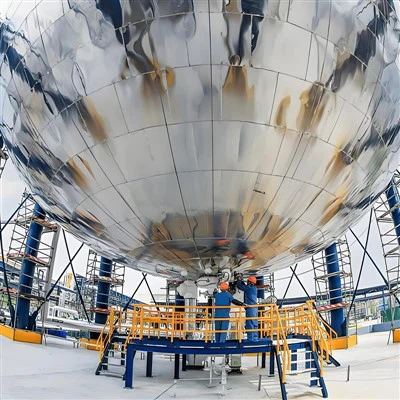
As a reputable supplier of [Liquid Co2 Plant], understanding the raw materials used in these plants is crucial for both our company and our clients. Liquid CO2 plants play a vital role in various industries, from food and beverage to industrial applications. In this blog, we will delve into the key raw materials that are essential for the operation of a Liquid CO2 Plant.
Primary Source: Carbon Dioxide (CO2)
The most fundamental raw material for a Liquid CO2 Plant is carbon dioxide itself. CO2 can be sourced from a variety of places, each with its own characteristics and suitability for different plant operations.

Industrial Processes
Many industrial processes produce CO2 as a by - product. For example, in the chemical industry, ammonia production generates a significant amount of CO2. The Haber - Bosch process, which is used to produce ammonia from nitrogen and hydrogen, releases CO2 as a by - product during the steam reforming of natural gas or other hydrocarbons. Another source is the fermentation process in the brewing and bioethanol industries. Yeast converts sugars into ethanol and CO2. This CO2 can be captured and used as a raw material in a Liquid CO2 Plant.
Flue Gas
Flue gas from power plants, especially those burning fossil fuels such as coal, oil, or natural gas, contains a substantial amount of CO2. However, flue gas also contains other contaminants like nitrogen oxides (NOx), sulfur oxides (SOx), particulate matter, and trace amounts of heavy metals. Before using the CO2 from flue gas in a Liquid CO2 Plant, a series of purification steps are required. These purification processes are designed to remove the impurities and ensure that the CO2 meets the quality standards for liquefaction. You can learn more about the purification and liquefaction processes in our [CO 2 Purification and Liquefaction Plants].
Natural Sources
Some natural sources of CO2 exist, such as CO2 - rich springs and volcanic emissions. Although these sources can provide relatively pure CO2, they are not as commonly used due to their limited availability and geographical constraints. The extraction of CO2 from natural sources also requires careful consideration of environmental impacts.
Other Essential Raw Materials
Water
Water is an important raw material in a Liquid CO2 Plant. It is used in various cooling processes. During the compression and liquefaction of CO2, a large amount of heat is generated. Cooling water is circulated through heat exchangers to remove this heat and maintain the proper operating temperature of the equipment. Additionally, water is used in some purification steps, such as scrubbing processes to remove certain impurities from the CO2 stream.
Chemicals for Purification
To ensure the quality of the liquid CO2 produced, several chemicals are used in the purification process. For example, activated carbon is often used to adsorb organic contaminants and odorous substances from the CO2 stream. Molecular sieves are employed to remove water vapor and other small molecules. Additionally, alkaline solutions can be used to remove acidic impurities like SOx and NOx. The choice of purification chemicals depends on the specific composition of the raw CO2 source and the desired quality of the final product.
Lubricants
In the mechanical components of a Liquid CO2 Plant, such as compressors and pumps, lubricants are necessary to reduce friction and wear. These lubricants need to be carefully selected to be compatible with the CO2 and the operating conditions of the equipment. Synthetic lubricants are often preferred due to their excellent performance and stability in high - pressure and low - temperature environments.
Quality Requirements for Raw Materials
The quality of the raw materials used in a Liquid CO2 Plant directly affects the quality of the final liquid CO2 product. For CO2, the purity level is of utmost importance. In applications such as food and beverage, the CO2 must meet strict purity standards to ensure the safety and quality of the end - products. Typically, food - grade CO2 requires a purity of at least 99.9%. The presence of impurities such as oxygen, nitrogen, and hydrocarbons can affect the taste, smell, and chemical stability of the products in which the CO2 is used.
For water used in cooling and purification processes, it should be relatively free of contaminants such as suspended solids, dissolved salts, and microorganisms. Impurities in the water can cause scaling and corrosion in the heat exchangers and other equipment, reducing their efficiency and lifespan.
The chemicals used for purification must also meet specific quality standards. For example, activated carbon should have a high surface area and good adsorption capacity, and molecular sieves should have the appropriate pore size and selectivity for the target impurities.
Sourcing and Supply Chain Management
As a Liquid CO2 Plant supplier, we understand the importance of a reliable and efficient supply chain for raw materials. We work closely with our clients to help them source the right raw materials for their specific plant requirements. When it comes to CO2 sourcing, we can assist in evaluating different sources based on factors such as availability, cost, and quality.
For industrial by - product sources, we can help clients establish partnerships with nearby industries to ensure a stable supply of CO2. In the case of flue gas, we can provide solutions for the design and installation of CO2 capture and purification systems.
We also offer guidance on the procurement of other raw materials such as water treatment chemicals and lubricants. Our extensive network of suppliers allows us to provide high - quality materials at competitive prices.
Conclusion
In conclusion, the raw materials used in a Liquid CO2 Plant are diverse and each plays a crucial role in the overall operation of the plant. From the primary source of CO2 to water, purification chemicals, and lubricants, the quality and availability of these raw materials are essential for producing high - quality liquid CO2.
As a leading supplier of [Liquid Co2 Plant] and [Liquid CO2 Refinery Plant], we are committed to providing our clients with comprehensive solutions that include not only the plant equipment but also support in raw material sourcing and supply chain management. If you are interested in learning more about our products or have specific requirements for a Liquid CO2 Plant, we encourage you to contact us for procurement discussions. We look forward to working with you to meet your CO2 production needs.

References
- Kohl, A. L., & Nielsen, R. B. (1997). Gas Purification. Gulf Publishing Company.
- Seider, W. D., Seader, J. D., & Lewin, D. R. (2017). Product and Process Design Principles: Synthesis, Analysis, and Evaluation. Wiley.