

With the growing demand for high-purity gases in the industrial and medical fields, air separation units are increasingly used in modern production. Air separation units separate oxygen, nitrogen and rare gases from the air by physical or chemical methods, providing indispensable raw materials for industries such as steel metallurgy, chemical production, and medical health. However, the efficient and stable operation of air separation units depends not only on their advanced technical design, but also on scientific and reasonable installation and layout principles. Every detail in the installation process may directly affect the performance and safety of the device. Therefore, it is particularly necessary to discuss the layout and installation precautions of air separation units in detail.
Content
1. Overview of air separation unit
2 Layout principles of air separation units
3 Precautions for the installation of air separation units
1. Overview of air separation unit
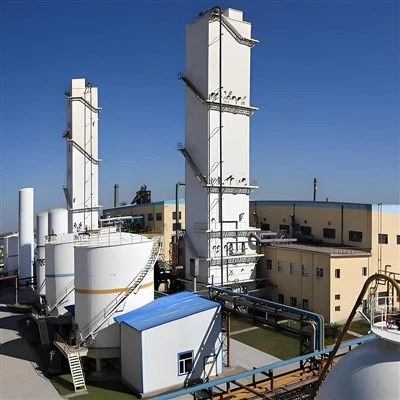
The air separation unit, which is widely used in the industrial field, mainly functions to separate oxygen, nitrogen and other inert gases from the air. Such units are generally composed of several key components such as compressors, precooling systems, purification systems, expanders, heat exchangers, distillation towers and storage tanks. The compressor in the air separation unit, as its key component, is responsible for raising the gas to a suitable pressure to facilitate subsequent separation operations. The compressed air cooled by the precooling system is designed to remove moisture and carbon dioxide inside it to prevent impurities from crystallizing under low temperature conditions, thereby ensuring that the separation efficiency is not disturbed. The purification system further removes tiny particles and harmful gases in the air mainly through physical adsorption or chemical reaction to ensure that the gas entering the distillation tower is pure. The expander in the device plays a vital role. It expands high-pressure air to low pressure, causing the temperature to drop sharply, thereby creating an indispensable environmental condition for the condensation and separation process. Inside the recovery unit, the heat exchanger is responsible for capturing and utilizing cold energy to optimize the efficiency of energy utilization and significantly reduce energy consumption.
2 Layout principles of air separation units

2.1 Environmental Factors Consideration
When arranging an air separation unit, environmental factors are key considerations. Air temperature, humidity, dust content, and harmful gas concentrations will affect the operating efficiency and service life of the unit. In a high-temperature environment, the energy consumption of the compressor increases and the overall efficiency of the system decreases; in a low-temperature environment, insulation measures must be taken to ensure smooth startup and operation of the equipment. When the humidity is high, the amount of moisture in the air increases, increasing the burden on the precooling and purification systems and affecting the long-term operation of the equipment. Dust and harmful gases in the air, such as hydrogen sulfide and chlorine, will accelerate equipment wear and shorten its life. Especially in a high-dust environment, high-efficiency filtration devices should be configured and regularly maintained to ensure the safety of equipment and personnel and to ensure stable operation of the unit.
2.2 Safety distance and isolation requirements
The layout of the air separation unit must strictly comply with safety regulations to ensure the safety of personnel and the environment. High-pressure equipment such as compressors and storage tanks should be kept away from crowded areas and flammable and explosive materials, and equipped with leak detection and emergency pressure relief systems to reduce the risk of gas leakage. Low-temperature equipment such as expanders and heat exchangers produce low-temperature gases and liquids during operation. Leakage may cause air frost and increase safety hazards. These devices should be installed in well-ventilated areas, take insulation and anti-condensation measures, and set up safety fences and warning signs to remind people to keep a safe distance to prevent frostbite and other accidents.
3 Precautions for the installation of air separation units
3.1 Preparation and inspection before installation
Before installing the air separation unit, comprehensive preparations must be made. The site needs to evaluate the geological conditions, drainage system and layout planning to ensure that the foundation is stable, the drainage is unobstructed, and sufficient operating space is reserved, and the relevant construction permit approval is completed. Equipment acceptance must be strictly carried out, including factory inspection, transportation protection and arrival inspection to ensure that the equipment is in good condition. For personnel, technical training should be organized to make operators familiar with the installation process, debugging methods and maintenance points; safety training focuses on high-altitude operations, fire prevention and explosion prevention, and detailed emergency plans are formulated to conduct drills for emergencies such as gas leaks and fires. In addition, it is necessary to reasonably plan the equipment spacing and air intake and exhaust directions, stay away from flammable and explosive items, and eliminate safety hazards from the source. Through systematic preparation and standardized management, the installation process is guaranteed to be safe and efficient.
3.2 Key points for equipment foundation construction
The foundation construction quality of the air separation unit is directly related to the stability and service life of the equipment, and must strictly follow the specifications and standards. Before construction, the static and dynamic loads of the equipment must be accurately calculated to ensure that the foundation bearing capacity meets the requirements. Material selection is particularly critical. Steel bars, concrete, etc. must meet quality standards and avoid the use of non-standard materials. During construction, the design drawings must be strictly followed to ensure that parameters such as position, size, and elevation are accurate. Concrete pouring must control the ratio and speed to ensure density, and fully maintain after pouring to achieve the design strength. After the construction is completed, the foundation flatness, elevation and bearing capacity must be tested, and unqualified ones must be rectified immediately. In addition, the site environment must be cleaned before construction to ensure that the installation and maintenance space is unobstructed. Through standardized basic construction management, a solid foundation is laid for the long-term and stable operation of the equipment.


3.3 Equipment installation and connection
The equipment installation and connection of the air separation unit is the core link of the project and must strictly follow the design requirements. Precise positioning is required during installation, and tools such as levelers are used to ensure the accurate position of the equipment, and high-strength anchor bolts are used to firmly fix it. The pipeline must be thoroughly cleaned and inspected before connection, and standard connectors such as flanges are used. After installation, a pressure test must be performed to verify the sealing. Fireproof and explosion-proof materials must be used for electrical system connections, and the integrity of the line must be checked before wiring. Insulation and grounding tests must be performed after completion. After installation, each link should be debugged initially to check the connection firmness and sealing to ensure no leakage or looseness. The entire installation process should focus on precision control and safety protection to lay the foundation for subsequent debugging and operation.
3.4 Degreasing construction
The degreasing link of the air separation unit is a key step to ensure the safe operation of the equipment, and the process requirements must be strictly controlled. The selection of degreasing solvents must be strictly classified: oil content ≤50mg/L is used for fine degreasing, 50-350mg/L is limited to coarse degreasing, and more than 350mg/L is prohibited. Degreasing operations should be carried out after the pressure test is qualified to prevent leakage risks. For equipment with complex structures, disassembly or special tools are required to ensure full coverage of the degreasing agent. Special attention should be paid to the use of highly toxic solvents such as ethylene dichloride. The equipment must be kept dry and avoid contact with moisture to prevent the production of highly toxic phosgene and corrosive hydrochloric acid. The working environment requires good ventilation, and protective facilities such as wind and sand, rain and snow must be set up to ensure safe operation. Safety regulations must be strictly implemented throughout the process to prevent equipment corrosion and explosion risks.
4. Conclusion
In summary, as an indispensable key equipment in modern industry and medical field, the efficient and stable operation of air separation unit is directly related to production efficiency and safety. The research in this paper not only provides practical operation guidelines for engineers and technicians in related fields, but also provides strong support for the sustainable development of enterprises. It is hoped that through the discussion in this article, the application and development of air separation unit technology can be further promoted, and it can contribute to the progress of industry and medical fields. In the future, with the continuous advancement of technology and the increase in application demand, the installation and layout of air separation units will face more new challenges and opportunities. We look forward to constantly summarizing experience in practice, optimizing the installation process, improving the performance and safety of the device, and injecting new impetus into the sustainable development of the industry.


