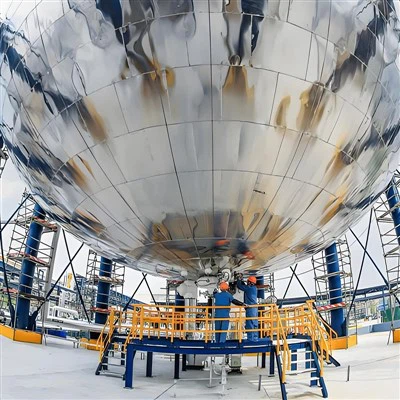
Hey there! I'm a supplier of Carbon Capture Plants, and today I wanna chat about how these plants affect air quality. It's a super important topic, especially in our world where we're constantly looking for ways to make the air cleaner and our planet healthier.
First off, let's understand what carbon capture plants are all about. These are facilities designed to capture carbon dioxide (CO2) emissions from industrial processes or power generation. Instead of letting this CO2 escape into the atmosphere, where it contributes to the greenhouse effect and climate change, the plants trap it. There are different types of carbon capture technologies, but the main goal is the same: to reduce the amount of CO2 in the air.
One of the most significant ways carbon capture plants impact air quality is by reducing the concentration of CO2. CO2 is a major greenhouse gas, and high levels of it in the atmosphere lead to global warming. When a carbon capture plant captures CO2 from a power plant's exhaust or an industrial facility's emissions, it stops that CO2 from being released into the air. This directly helps in slowing down the rate of climate change, which in turn has a positive effect on air quality.
For instance, as the planet warms due to high CO2 levels, it can lead to more extreme weather events like heatwaves, droughts, and wildfires. These events can have a terrible impact on air quality. Wildfires, for example, release large amounts of particulate matter (PM), carbon monoxide (CO), and other pollutants into the air. By reducing CO2 emissions, carbon capture plants can help prevent or reduce the frequency and intensity of these extreme weather events, thus keeping the air cleaner.
Another way carbon capture plants help is by reducing the formation of smog. Smog is a type of air pollution that forms when pollutants like nitrogen oxides (NOx) and volatile organic compounds (VOCs) react with sunlight. High CO2 levels can contribute to changes in the atmosphere that make smog formation more likely. When carbon capture plants reduce CO2 emissions, they can indirectly reduce the conditions that lead to smog formation. This means clearer skies and better air to breathe, especially in urban areas where smog is a common problem.
Now, let's talk about the different types of carbon capture plants and how they work. There are post - combustion capture plants, pre - combustion capture plants, and oxy - fuel combustion capture plants. Post - combustion capture plants work by capturing CO2 from the flue gases after the fuel has been burned. This is a common method used in many existing power plants. Pre - combustion capture plants, on the other hand, remove CO2 before the fuel is burned. Oxy - fuel combustion capture plants burn the fuel in pure oxygen instead of air, which produces a flue gas that is mostly CO2 and water vapor, making it easier to capture the CO2.
As a supplier of carbon capture plants, I know that these technologies are constantly evolving. We're always looking for more efficient and cost - effective ways to capture CO2. For example, some new carbon capture plants are using advanced solvents that can capture CO2 more effectively and with less energy consumption. This not only makes the process more environmentally friendly but also more economically viable for industries.
If you're interested in learning more about the different types of carbon capture plants, you can check out these links. The Carbon Dioxide Factory provides detailed information about how carbon dioxide is recovered and processed. The Co2 Air Separation Unit is another important part of the carbon capture process, and you can find out more about it through this link. And if you're curious about how CO2 is generated in a plant, the Co2 Generation Plant link has all the details.
Carbon capture plants also have an impact on air quality in terms of reducing acid rain. Acid rain is formed when pollutants like sulfur dioxide (SO2) and NOx react with water, oxygen, and other chemicals in the atmosphere to form sulfuric acid and nitric acid. These acids then fall to the ground as rain, snow, or fog. High CO2 levels can contribute to changes in the atmosphere that affect the formation and distribution of acid rain. By reducing CO2 emissions, carbon capture plants can help reduce the amount of acid rain, which is beneficial for the environment, including forests, lakes, and soil.
In addition to the environmental benefits, carbon capture plants can also have economic benefits for industries. Many countries and regions are implementing regulations to reduce carbon emissions. By using carbon capture technology, industries can comply with these regulations and avoid costly fines. Moreover, as the demand for clean energy and low - carbon products increases, companies that invest in carbon capture plants can gain a competitive edge in the market.
If you're an industry looking to improve your environmental performance and air quality in your area, consider investing in a carbon capture plant. As a supplier, I can offer you high - quality carbon capture solutions that are tailored to your specific needs. Whether you're a power plant, a chemical factory, or any other industrial facility that emits CO2, we have the technology and expertise to help you reduce your carbon footprint and improve air quality.


In conclusion, carbon capture plants play a crucial role in improving air quality. They reduce CO2 emissions, which helps in slowing down climate change, preventing extreme weather events, reducing smog formation, and minimizing acid rain. As the world continues to face the challenges of climate change and air pollution, carbon capture technology is becoming more and more important. If you're interested in learning more about our carbon capture plants or want to start a procurement discussion, don't hesitate to reach out. Let's work together to make the air cleaner and our planet a better place.
References:
- IPCC (Intergovernmental Panel on Climate Change) reports on climate change and its impacts on air quality.
- Research papers on carbon capture technology and its environmental benefits.
- Industry reports on the economic and regulatory aspects of carbon capture.