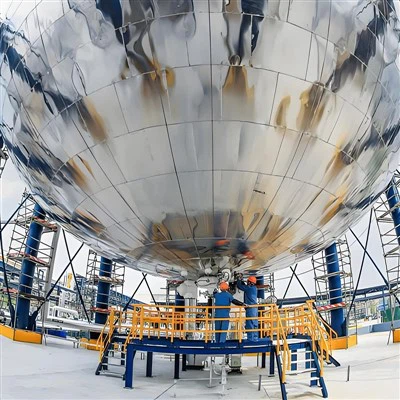
Carbon capture technology has emerged as a crucial strategy in the global fight against climate change. As a supplier of Carbon Capture Plants, I have witnessed firsthand how these facilities are reshaping the global carbon market. In this blog, I will explore the multifaceted impacts of carbon capture plants on the global carbon market, delving into both the challenges and opportunities they present.
The Basics of Carbon Capture Plants
Before discussing their influence on the carbon market, it's essential to understand what carbon capture plants are. A Carbon Capture Plant is a specialized facility designed to capture carbon dioxide (CO2) emissions from industrial processes or directly from the atmosphere. These plants use various technologies, such as absorption, adsorption, and membrane separation, to separate CO2 from other gases. Once captured, the CO2 can be stored underground (carbon sequestration) or utilized in various industrial applications, such as enhanced oil recovery or the production of synthetic fuels.
Another related technology is the Co2 Air Separation Unit, which is a key component in some carbon capture systems. This unit is responsible for separating CO2 from the air or industrial flue gases, making it easier to capture and process. Additionally, Carbon Removal Plant focuses on removing CO2 directly from the atmosphere, offering a more direct approach to reducing the overall carbon footprint.
Impact on Carbon Pricing
One of the most significant ways carbon capture plants affect the global carbon market is through their influence on carbon pricing. Carbon pricing mechanisms, such as carbon taxes and cap-and-trade systems, are designed to create economic incentives for reducing greenhouse gas emissions. By capturing and storing CO2, carbon capture plants can help companies meet their emission reduction targets more cost-effectively.
In a cap-and-trade system, companies are allocated a certain amount of emission allowances. If a company emits more CO2 than its allotted allowances, it must purchase additional allowances from other companies or invest in emission reduction projects, such as carbon capture. As more carbon capture plants come online, the supply of carbon credits (representing the amount of CO2 captured and stored) increases, which can potentially lead to a decrease in the price of carbon allowances.

On the other hand, carbon capture plants can also drive up the price of carbon credits in the long run. As the demand for carbon capture technology grows, the cost of building and operating these plants may increase. This, in turn, can lead to higher prices for carbon credits, as companies will need to pay more to offset their emissions through carbon capture projects.
Market Expansion and Investment Opportunities
The development of carbon capture plants has also opened up new market opportunities and attracted significant investment. As governments around the world implement stricter climate policies and set ambitious emission reduction targets, the demand for carbon capture technology is expected to grow exponentially.
This growing demand has led to the emergence of a new market for carbon capture equipment and services. As a supplier of Carbon Capture Plants, I have seen an increasing number of companies expressing interest in purchasing our products and services. This trend is not limited to large industrial players but also includes small and medium-sized enterprises looking to reduce their carbon footprint and comply with environmental regulations.
In addition to the market for carbon capture equipment, there is also a growing market for carbon removal services. Carbon Removal Plant that directly remove CO2 from the atmosphere are particularly attractive to companies and investors looking for more sustainable solutions. These plants can generate carbon removal credits, which can be sold on the carbon market, providing an additional revenue stream for the operators.
The expansion of the carbon capture market has also attracted significant investment from both public and private sectors. Governments are increasingly investing in research and development of carbon capture technologies, as well as providing financial incentives for companies to adopt these technologies. Private investors are also showing interest in carbon capture projects, recognizing the potential for long-term returns and the positive impact on the environment.

Technological Innovation and Cost Reduction
The growth of the carbon capture industry has spurred technological innovation and cost reduction. As more companies invest in carbon capture research and development, new and more efficient technologies are being developed. These technologies are not only more effective at capturing and storing CO2 but also more cost-competitive, making carbon capture a more viable option for a wider range of industries.
For example, advancements in Co2 Air Separation Unit technology have led to more efficient and cost-effective separation of CO2 from the air or industrial flue gases. This has reduced the energy consumption and operating costs of carbon capture plants, making them more economically attractive.
Another area of innovation is in the development of new materials for carbon capture. Researchers are exploring the use of advanced sorbents and membranes that can selectively capture CO2 at a lower cost and with higher efficiency. These materials have the potential to revolutionize the carbon capture industry by significantly reducing the capital and operating costs of carbon capture plants.
As the cost of carbon capture technology continues to decline, it is becoming more accessible to a wider range of industries. This is particularly important for industries that are difficult to decarbonize, such as cement, steel, and chemical production. By adopting carbon capture technology, these industries can reduce their carbon emissions and contribute to the global effort to combat climate change.
Challenges and Barriers
Despite the many benefits of carbon capture plants, there are still several challenges and barriers that need to be overcome. One of the main challenges is the high cost of building and operating these plants. Carbon capture technology is still relatively expensive, and the upfront investment required to build a carbon capture plant can be significant. This can be a deterrent for many companies, especially small and medium-sized enterprises.
Another challenge is the lack of a well-established regulatory framework for carbon capture and storage. In many countries, there are still uncertainties regarding the legal and regulatory requirements for carbon capture projects, such as permitting, liability, and monitoring. This can create a barrier to investment and slow down the deployment of carbon capture technology.
In addition, there are also concerns about the environmental impact of carbon capture and storage. While carbon capture plants can help reduce greenhouse gas emissions, there are still some potential risks associated with the storage of CO2 underground, such as leakage and seismic activity. These risks need to be carefully evaluated and managed to ensure the long-term safety and effectiveness of carbon capture and storage projects.
Conclusion and Call to Action
In conclusion, carbon capture plants have a significant impact on the global carbon market. They can influence carbon pricing, expand the market for carbon capture equipment and services, drive technological innovation, and contribute to the global effort to combat climate change. However, there are still several challenges and barriers that need to be overcome to fully realize the potential of carbon capture technology.
As a supplier of Carbon Capture Plants, I am committed to working with companies and governments to overcome these challenges and promote the widespread adoption of carbon capture technology. We offer a range of high-quality and cost-effective carbon capture solutions, including Carbon Removal Plant and Co2 Air Separation Unit. Our team of experts can provide customized solutions to meet the specific needs of our clients and help them achieve their emission reduction targets.
If you are interested in learning more about our carbon capture products and services or would like to discuss a potential project, please do not hesitate to contact us. We look forward to working with you to create a more sustainable future.
References
- IPCC Special Report on Global Warming of 1.5°C.
- International Energy Agency (IEA). "Carbon Capture, Utilization and Storage: 2023 Status Report."
- Global CCS Institute. "Global Status of CCS 2023."