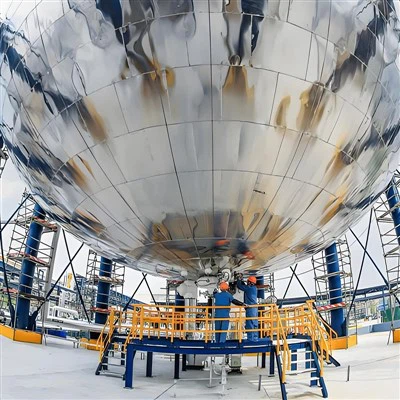
As a supplier of cryogenic gas plants, I've witnessed firsthand how these remarkable facilities play a pivotal role in various industries. Cryogenic gas plants are at the heart of modern industrial operations, providing essential gases that are crucial for a wide range of applications. In this blog, I'll delve into the ways cryogenic gas plants contribute to the industry and why they are indispensable.
1. Production of High - Purity Gases
One of the primary contributions of cryogenic gas plants is the production of high - purity gases. These plants use the principle of cryogenic distillation, which involves cooling air or other gas mixtures to extremely low temperatures. Different gases have different boiling points, and by carefully controlling the temperature, it's possible to separate individual gases from the mixture.
For instance, a Cryogenic Gas Plant can produce nitrogen, oxygen, and argon from the air. Nitrogen is widely used in the food and beverage industry to prevent oxidation and spoilage. It is also used in the electronics industry for purging and inerting processes during semiconductor manufacturing. High - purity oxygen is essential in the medical field for respiratory support and in the metal industry for cutting and welding operations. Argon, on the other hand, is used in the welding industry as a shielding gas to protect the weld from atmospheric contamination.
The ability to produce these gases with high purity is crucial. In the pharmaceutical industry, for example, even the slightest impurity in the gases used during the manufacturing process can have a significant impact on the quality and safety of the drugs. Cryogenic gas plants ensure that the gases meet the strict purity standards required by such industries.
2. Energy Efficiency
Cryogenic gas plants are designed with energy efficiency in mind. Modern plants use advanced technologies and engineering techniques to minimize energy consumption. For example, the use of heat exchangers allows for the recovery of cold energy from the liquefied gases, which can then be reused in the cooling process. This reduces the overall energy requirements of the plant and makes the production of gases more sustainable.
Moreover, the scale of production in cryogenic gas plants also contributes to energy efficiency. Large - scale plants can benefit from economies of scale, spreading the energy costs over a larger volume of gas production. This makes the cost of producing gases more competitive, which in turn benefits the industries that rely on these gases for their operations.
3. Reliable Supply
Industries need a reliable supply of gases to maintain their operations. Cryogenic gas plants offer a stable and continuous supply of gases. Once the plant is set up and operational, it can produce gases around the clock, ensuring that industries have access to the gases they need when they need them.
For industries with high - volume gas requirements, such as the chemical and petrochemical industries, a reliable supply is essential. Any interruption in the gas supply can lead to production downtime, which can result in significant financial losses. Cryogenic gas plants are designed with backup systems and redundant components to minimize the risk of supply disruptions.
4. Customization and Flexibility
Cryogenic gas plants can be customized to meet the specific needs of different industries. Whether it's the production capacity, the purity level of the gases, or the type of gases required, these plants can be tailored accordingly.
For example, a Cryogenic Liquid Nitrogen Plant can be designed to produce liquid nitrogen in different quantities and with different purity levels. Some industries may require a small - scale plant for on - site production, while others may need a large - scale centralized plant to supply multiple facilities.


In addition, cryogenic gas plants can also be designed to produce a combination of different gases according to the industry's requirements. This flexibility allows industries to optimize their gas usage and reduce costs.
5. Contribution to Environmental Sustainability
In today's world, environmental sustainability is a major concern for industries. Cryogenic gas plants contribute to environmental sustainability in several ways. Firstly, by producing gases on - site, industries can reduce the need for transportation of gases, which in turn reduces carbon emissions associated with transportation.
Secondly, the energy - efficient design of cryogenic gas plants helps to minimize their carbon footprint. The use of advanced technologies for gas separation and energy recovery reduces the overall energy consumption of the plant, resulting in lower greenhouse gas emissions.
Furthermore, the production of gases such as nitrogen and oxygen from the air is a natural and sustainable process. These gases are abundant in the atmosphere, and cryogenic gas plants simply extract and purify them for industrial use.
6. Support for Research and Development
Cryogenic gas plants also play a crucial role in supporting research and development activities in various industries. In the scientific research field, high - purity gases are often required for experiments and studies. For example, in materials science research, gases such as nitrogen and argon are used to create controlled environments for studying the properties of new materials.
In the aerospace industry, cryogenic gases are used in the testing and development of rocket engines. Liquid oxygen and liquid hydrogen, which can be produced by cryogenic gas plants, are used as rocket propellants. The availability of these gases in high - purity and large quantities is essential for the successful development and testing of advanced aerospace technologies.
7. Contribution to Safety
Safety is a top priority in industries, and cryogenic gas plants contribute to safety in multiple ways. The production of high - purity gases ensures that industries can use gases without the risk of contamination, which can be a safety hazard in some applications.
For example, in the food industry, the use of high - purity nitrogen to displace oxygen in food packaging helps to prevent the growth of aerobic bacteria, which can cause foodborne illnesses. In the medical field, the use of high - purity oxygen ensures the safety and effectiveness of respiratory support for patients.
Moreover, cryogenic gas plants are designed with strict safety standards in mind. They are equipped with safety systems such as pressure relief valves, temperature sensors, and emergency shutdown systems to prevent accidents and ensure the safety of the plant operators and the surrounding environment.
8. Economic Impact
The presence of cryogenic gas plants has a significant economic impact on industries and the regions where they are located. These plants create jobs in the construction, operation, and maintenance phases. Skilled workers are required to design, build, and operate cryogenic gas plants, which helps to boost the local economy.
In addition, the availability of a reliable and cost - effective supply of gases enables industries to grow and expand. This, in turn, leads to increased production, higher revenues, and more employment opportunities in related industries. For example, the growth of the electronics industry, which relies on high - purity gases from cryogenic gas plants, has a multiplier effect on the economy, creating jobs in manufacturing, logistics, and other support services.
Conclusion
In conclusion, cryogenic gas plants are an integral part of modern industries. Their ability to produce high - purity gases, offer energy - efficient and reliable supply, provide customization and flexibility, contribute to environmental sustainability, support research and development, enhance safety, and have a positive economic impact makes them indispensable.
If you are an industry looking for a reliable and efficient solution for your gas requirements, consider a Cryogenic Gas Plant, Cryogenic Liquid Nitrogen Plant, or Cryogenic Nitrogen Generator from our company. We have the expertise and experience to design and build customized plants that meet your specific needs. Contact us to start a discussion about your gas requirements and explore how our cryogenic gas plants can benefit your industry.
References
- Perry, R. H., & Green, D. W. (1997). Perry's Chemical Engineers' Handbook. McGraw - Hill.
- Kohl, A. L., & Nielsen, R. B. (1997). Gas Purification. Gulf Publishing Company.
- Stoecker, W. F. (1998). Refrigeration and Air Conditioning. McGraw - Hill.