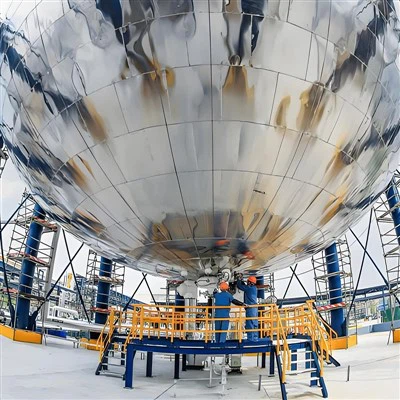
Hey there! I'm a supplier of cryogenic equipment, and today I want to chat about the cryogenic equipment requirements for cryogenic storage tanks. Cryogenic storage tanks are super important in a bunch of industries, like healthcare, energy, and manufacturing. They're used to store liquefied gases at extremely low temperatures, and getting the right equipment is crucial for safe and efficient operation.
First off, let's talk about insulation. Cryogenic storage tanks need top - notch insulation to keep the low temperatures stable. The insulation helps minimize heat transfer from the outside environment to the liquefied gas inside the tank. There are different types of insulation materials available. One common option is perlite insulation. It's lightweight and has good insulating properties. Another option is foam glass insulation, which is very durable and resistant to moisture. The insulation should be installed properly to ensure there are no gaps or weak spots that could allow heat to seep in.
Next up is the pressure control system. Cryogenic storage tanks operate under specific pressure conditions. A reliable pressure control system is essential to maintain the right pressure levels inside the tank. This system usually includes pressure relief valves. These valves are designed to open when the pressure inside the tank exceeds a certain limit, preventing over - pressurization and potential explosions. There are also pressure gauges that allow operators to monitor the pressure constantly. We need to make sure these pressure control components are regularly inspected and maintained to work effectively.
The temperature monitoring equipment is also a must - have. Since cryogenic storage involves extremely low temperatures, accurate temperature monitoring is vital. Thermocouples and resistance temperature detectors (RTDs) are commonly used to measure the temperature inside the tank. These sensors are placed at different locations within the tank to get an accurate reading of the temperature distribution. The data from these sensors is sent to a control panel where operators can keep an eye on it. If the temperature starts to rise above the acceptable range, it could indicate a problem with the insulation or other equipment, and immediate action can be taken.


Now, let's touch on the liquid level monitoring system. Knowing the amount of liquefied gas in the tank is important for inventory management and safe operation. There are different ways to monitor the liquid level. One method is using float - type level sensors. These sensors work based on the principle of buoyancy. As the liquid level in the tank changes, the float moves up or down, and this movement is translated into a level reading. Another option is ultrasonic level sensors. They use ultrasonic waves to measure the distance from the sensor to the liquid surface, and then calculate the liquid level.
In addition to these basic components, there are also some other important cryogenic equipment requirements. For example, the piping system connected to the cryogenic storage tank needs to be made of materials that can withstand low temperatures. Stainless steel is a popular choice because it has good low - temperature properties. The pipes should also be properly insulated to prevent heat gain and to ensure the efficient transfer of the liquefied gas.
When it comes to safety, emergency shutdown systems are critical. In case of an emergency, such as a major leak or a malfunction, these systems can quickly shut off the flow of liquefied gas and isolate the tank. They usually consist of valves and controls that can be activated manually or automatically.
Now, if you're in the market for cryogenic storage tank equipment, you might be interested in some of the related products we offer. We have Cryogenic Air Separation Plant, which is used to separate air into its components like oxygen, nitrogen, and argon at cryogenic temperatures. It's a key piece of equipment in many industrial processes. We also have Liquid Air Separation Plant, which is designed to produce liquid oxygen, liquid nitrogen, and other liquefied gases. And don't forget our Cryogenic Air Separation Unit, which is a compact and efficient solution for air separation.
All these products are designed with the highest quality standards in mind. We understand that cryogenic equipment needs to be reliable and safe, and we've put a lot of effort into making sure our products meet those requirements. Whether you're a small - scale business or a large industrial enterprise, we can provide you with the right cryogenic equipment for your cryogenic storage tanks.
If you're interested in learning more about our cryogenic equipment or have any questions about the requirements for cryogenic storage tanks, don't hesitate to reach out. We're here to help you make the best choices for your business. We can offer you detailed product information, technical support, and even customized solutions based on your specific needs. So, if you're looking to purchase cryogenic equipment for your cryogenic storage tanks, let's start a conversation and see how we can work together.
References
- Handbook of Cryogenic Engineering, edited by Richard W. Fast, provides in - depth knowledge about cryogenic processes and equipment.
- Cryogenic Technology by Arthur D. Little, which offers insights into the design and operation of cryogenic systems.