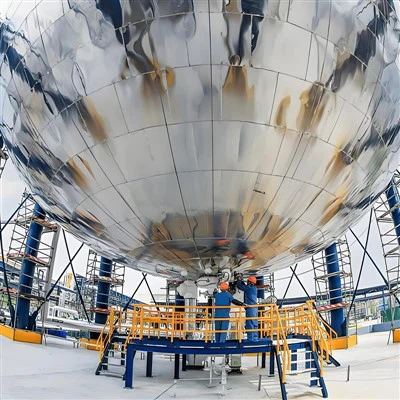
As a leading supplier of Cryogenic Equipment, I've had the privilege of witnessing firsthand the critical role that cryogenic valves play in various industrial applications. Cryogenic valves are essential components in systems that handle extremely low temperatures, such as Cryogenic Air Separation Plant, liquefied natural gas (LNG) facilities, and research laboratories. In this blog post, I'll delve into the specific requirements for cryogenic valves and how our Cryogenic Equipment meets these exacting standards.
Temperature Resistance
One of the primary requirements for cryogenic valves is their ability to withstand extremely low temperatures. Cryogenic applications typically involve temperatures ranging from -150°C to -273°C, which can cause significant material shrinkage and embrittlement. To ensure reliable operation under these conditions, cryogenic valves must be constructed from materials that maintain their mechanical properties at low temperatures.
Stainless steel is a commonly used material for cryogenic valves due to its excellent low-temperature toughness and corrosion resistance. Grades such as 304L and 316L are particularly suitable for cryogenic applications because they have a low carbon content, which helps prevent carbide precipitation and maintains the material's ductility at low temperatures. Additionally, some cryogenic valves may incorporate other materials, such as nickel alloys or titanium, for specific applications where higher strength or corrosion resistance is required.
Sealing Performance
Effective sealing is crucial for cryogenic valves to prevent leakage of cryogenic fluids, which can be hazardous and result in significant energy losses. At low temperatures, the materials used for seals and gaskets can become brittle and lose their elasticity, leading to seal failure. Therefore, cryogenic valves must be designed with seals that can maintain their sealing performance at extremely low temperatures.
Elastomeric materials, such as polytetrafluoroethylene (PTFE) and fluorocarbon rubber (FKM), are commonly used for cryogenic valve seals due to their excellent low-temperature flexibility and chemical resistance. These materials can withstand the extreme cold without becoming brittle and can provide a reliable seal even under high pressures. Additionally, some cryogenic valves may incorporate metal seals, such as spiral-wound gaskets or metal-to-metal seals, for applications where higher sealing integrity is required.
Flow Control
Cryogenic valves must also be capable of precise flow control to ensure the efficient operation of cryogenic systems. In many cryogenic applications, such as Cryogenic Air Separation Unit, the flow rate of cryogenic fluids needs to be carefully regulated to maintain the desired process conditions. Therefore, cryogenic valves must be designed with features that allow for accurate flow control, such as adjustable orifices, throttling disks, or modulating actuators.
Ball valves and globe valves are commonly used for cryogenic flow control applications due to their excellent flow characteristics and ability to provide precise control. Ball valves offer a full-bore design, which allows for unrestricted flow and minimal pressure drop, while globe valves provide a more precise flow control by using a plug or disk to regulate the flow through a seat. Additionally, some cryogenic valves may incorporate special features, such as anti-cavitation trim or noise reduction devices, to improve their performance in high-pressure or high-velocity applications.
Actuation
Cryogenic valves can be actuated manually, pneumatically, hydraulically, or electrically, depending on the specific application requirements. Manual actuation is suitable for applications where the valve needs to be operated infrequently or where a simple and reliable actuation method is required. Pneumatic and hydraulic actuation are commonly used for applications where fast and precise valve operation is required, while electric actuation is suitable for applications where remote control or automation is required.
When selecting an actuator for a cryogenic valve, it is important to consider the temperature range, pressure rating, and operating environment of the application. Actuators must be designed to operate reliably at low temperatures and must be able to withstand the harsh conditions of cryogenic systems. Additionally, some cryogenic valves may require special actuators, such as explosion-proof actuators or actuators with extended stems, for specific applications where safety or accessibility is a concern.
Maintenance and Serviceability
Cryogenic valves require regular maintenance and servicing to ensure their reliable operation and longevity. At low temperatures, the materials used for cryogenic valves can become brittle and prone to cracking, which can lead to valve failure. Therefore, cryogenic valves must be designed with features that allow for easy maintenance and servicing, such as removable seats, stems, and seals.
In addition to regular maintenance, cryogenic valves may also require periodic inspection and testing to ensure their continued performance. Non-destructive testing methods, such as ultrasonic testing or magnetic particle testing, can be used to detect any cracks or defects in the valve components. Additionally, cryogenic valves may be subjected to performance testing, such as flow testing or leak testing, to verify their compliance with the specified requirements.
Our Cryogenic Equipment Solutions
As a leading supplier of Cryogenic Equipment, we offer a wide range of cryogenic valves that are designed to meet the specific requirements of cryogenic applications. Our cryogenic valves are constructed from high-quality materials and are engineered to provide reliable performance at extremely low temperatures.
We offer a variety of cryogenic valve types, including ball valves, globe valves, gate valves, and check valves, to meet the diverse needs of our customers. Our cryogenic valves are available in a range of sizes, pressure ratings, and end connections to ensure compatibility with different cryogenic systems. Additionally, we can provide custom-designed cryogenic valves to meet the specific requirements of our customers' applications.
In addition to our cryogenic valves, we also offer a comprehensive range of cryogenic equipment and services, including Cryogenic Air Separation Plant, LNG storage tanks, and cryogenic pumps. Our team of experienced engineers and technicians can provide technical support and assistance to help our customers select the right cryogenic equipment for their applications and ensure its proper installation and operation.
Conclusion
Cryogenic valves are essential components in cryogenic systems, and they must be designed and manufactured to meet the specific requirements of these applications. Temperature resistance, sealing performance, flow control, actuation, and maintenance are all critical factors that need to be considered when selecting cryogenic valves. As a leading supplier of Cryogenic Equipment, we are committed to providing our customers with high-quality cryogenic valves that meet the most demanding requirements of cryogenic applications.
If you are in the market for cryogenic valves or other cryogenic equipment, we invite you to contact us to discuss your specific requirements. Our team of experts will be happy to provide you with detailed information about our products and services and help you select the right cryogenic equipment for your application. We look forward to working with you to meet your cryogenic equipment needs.


References
- ASME B31.3 Process Piping
- API 6D Pipeline Valves
- ISO 15848-1 Industrial Valves - Measurement, Test and Qualification Procedures for Fugitive Emissions
- NACE MR0175/SYSTEM 2 Sulfide Stress Cracking Resistant Metallic Materials for Oilfield Equipment