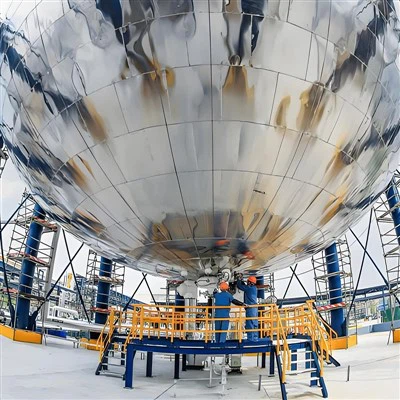
Hey there! I'm a supplier of Carbon Capture Plants, and I bet you're wondering if these plants are really environmentally friendly. Well, let's dive right into this hot topic and break it down.
First off, what the heck is a Carbon Capture Plant? Simply put, it's a facility designed to capture carbon dioxide (CO2) emissions from industrial processes or power generation before they're released into the atmosphere. You can learn more about Carbon Capture Plant on our website.
The main idea behind carbon capture is to reduce the amount of CO2 that goes up into the air. CO2 is a major greenhouse gas, and its increasing levels are causing global warming and climate change. By capturing this gas, we're trying to slow down these negative effects on our planet. Sounds great, right? But it's not as straightforward as it seems.
One of the biggest arguments in favor of carbon capture plants is that they can make a real difference in cutting down CO2 emissions. For industries that rely heavily on fossil fuels, like coal-fired power plants, these plants offer a way to continue operating while being more environmentally responsible. Instead of just letting all that CO2 escape, the capture plant can trap a large portion of it. This helps in meeting environmental regulations and reducing the overall carbon footprint of these industries.
Another cool thing is that the captured CO2 can actually be put to good use. It can be used in enhanced oil recovery (EOR), where the CO2 is injected into oil wells to help extract more oil. While this might seem a bit ironic since oil production is a major source of CO2 emissions, it does have its benefits. It can extend the life of oil fields and reduce the need for new drilling in some cases. Also, the CO2 can be used in the food and beverage industry, like in carbonating drinks. And there are even emerging technologies that aim to convert CO2 into useful chemicals and fuels.
But hold your horses, because there are also some downsides. One of the major concerns is the energy consumption of carbon capture plants. These plants need a lot of energy to operate. They have to run pumps, compressors, and other equipment to capture, transport, and store the CO2. In many cases, this energy comes from fossil fuels, which means that the process can end up generating more CO2 emissions in the background. It's like trying to solve a problem but creating a new one at the same time.
There's also the issue of storage. Once the CO2 is captured, it has to be stored somewhere. Usually, it's injected deep underground into geological formations. But there's always a risk of leakage. If the stored CO2 leaks back into the atmosphere, all the hard work of capturing it goes down the drain. And in some cases, it could even contaminate groundwater or cause other environmental problems.
The cost is another big factor. Building and operating a carbon capture plant is expensive. The initial investment is high, and the ongoing operational costs can be a burden for companies. This often makes it less attractive for businesses, especially when there are cheaper alternatives available.


Now, let's talk about some of the technologies involved. One of the key components is the Co2 Air Separation Unit. This unit is used to separate CO2 from other gases in the air or industrial emissions. It's a crucial part of the carbon capture process, but like the whole plant, it also has its own set of challenges. It needs to be efficient and reliable to work effectively.
There are also Carbon Removal Plant that focus on removing CO2 directly from the air. These are a bit different from traditional carbon capture plants that capture emissions at the source. They have the potential to make a bigger impact on reducing the overall CO2 levels in the atmosphere, but they're still in the early stages of development and face even more technical and cost challenges.
So, are carbon capture plants environmentally friendly? Well, it's a mixed bag. On one hand, they have the potential to significantly reduce CO2 emissions and have some useful applications for the captured gas. But on the other hand, they come with energy consumption, storage, and cost issues that can offset their environmental benefits.
In my opinion, carbon capture plants are a step in the right direction. They're not a perfect solution, but they can be an important part of the overall strategy to combat climate change. As technology improves, we can expect these plants to become more efficient, less energy-intensive, and more cost-effective.
If you're in an industry that's looking to reduce its carbon emissions or interested in the potential of carbon capture technology, I'd love to talk to you. We're a leading supplier of Carbon Capture Plants, and we can offer you the latest and most reliable solutions. Whether you have questions about the technology, the cost, or how it can fit into your business, don't hesitate to reach out. Let's work together to make our planet a greener place.
References
- IPCC Special Report on Carbon Capture, Utilization, and Storage
- International Energy Agency (IEA) reports on carbon capture technologies
- Academic research papers on the environmental and economic impacts of carbon capture plants