Nitrogen is an essential industrial gas with a wide range of applications, including food packaging, electronics manufacturing, and chemical processing. Cryogenic technology is one of the most efficient methods for large - scale nitrogen production. As a cryogenic equipment supplier, we understand the critical requirements for nitrogen production using cryogenic processes.


The Basics of Cryogenic Nitrogen Production
Cryogenic nitrogen production is based on the principle of air separation. Air is a mixture mainly composed of nitrogen (about 78%), oxygen (about 21%), and small amounts of other gases such as argon, carbon dioxide, and water vapor. By cooling the air to extremely low temperatures (cryogenic temperatures), the different components of air can be separated based on their boiling points. The boiling point of nitrogen is -195.8°C, while that of oxygen is -183°C.
Key Cryogenic Equipment for Nitrogen Production
1. Air Compressor
The first step in cryogenic nitrogen production is to compress the incoming air. An air compressor is used to increase the pressure of the air, typically to around 5 - 10 bar. This compression not only increases the density of the air but also provides the necessary energy for subsequent cooling and separation processes. High - efficiency air compressors are crucial as they consume a significant amount of energy. Rotary screw compressors and centrifugal compressors are commonly used in cryogenic nitrogen plants. Rotary screw compressors are suitable for small - to medium - scale plants due to their relatively simple design and reliable operation. Centrifugal compressors, on the other hand, are more appropriate for large - scale operations as they can handle high - volume air flow with high efficiency.
2. Air Pre - treatment System
Before the compressed air enters the cryogenic section, it must be pre - treated to remove impurities such as water vapor, carbon dioxide, and oil. Water vapor and carbon dioxide can freeze at cryogenic temperatures and block the pipes and heat exchangers in the cryogenic system. An air pre - treatment system usually consists of filters, dryers, and adsorbers. Filters are used to remove solid particles and oil droplets from the compressed air. Dryers, such as desiccant dryers, are employed to reduce the moisture content of the air to a very low level. Adsorbers filled with activated alumina or molecular sieves are used to remove carbon dioxide and remaining trace impurities.
3. Heat Exchangers
Heat exchangers play a vital role in cryogenic nitrogen production. They are used to cool the compressed and pre - treated air to cryogenic temperatures and to recover the cold energy from the separated nitrogen and oxygen streams. Plate - fin heat exchangers are widely used in cryogenic plants due to their high heat transfer efficiency and compact design. These heat exchangers consist of a series of thin metal plates separated by fins, which provide a large surface area for heat transfer. The incoming warm air is cooled by the cold product streams, and the cold energy is recycled, reducing the overall energy consumption of the plant.
4. Distillation Columns
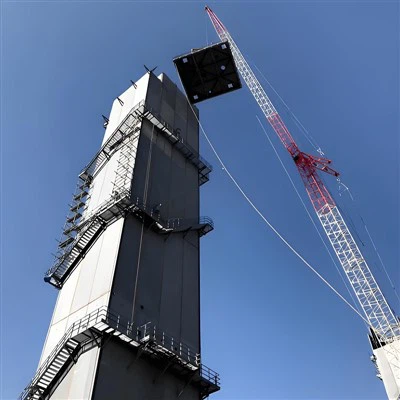
The heart of the cryogenic nitrogen production process is the distillation column. A distillation column is a tall vertical vessel where the separation of nitrogen and oxygen occurs based on their different boiling points. The cooled air enters the distillation column at a specific point, and through a series of vapor - liquid equilibrium stages, nitrogen is concentrated at the top of the column, while oxygen is concentrated at the bottom. The design and operation of the distillation column are critical for achieving high - purity nitrogen production. Factors such as the number of theoretical plates, reflux ratio, and feed composition need to be carefully optimized.
5. Liquid Storage Tanks
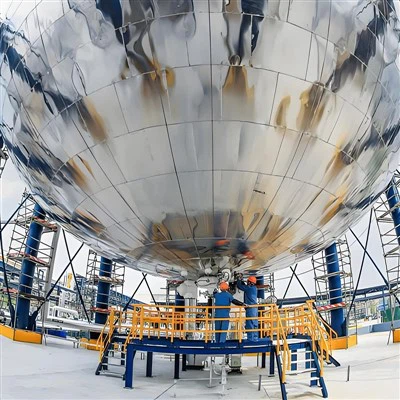
Once the nitrogen is produced, it can be stored in liquid form in cryogenic storage tanks. Liquid nitrogen has a much higher density than gaseous nitrogen, which allows for more efficient storage and transportation. These storage tanks are designed to minimize heat leakage and maintain the nitrogen in a liquid state at cryogenic temperatures. They are usually double - walled with an insulating layer in between, such as vacuum - insulated panels or perlite insulation. The tanks are also equipped with safety devices such as pressure relief valves to prevent over - pressurization.
Quality and Purity Requirements
The purity of nitrogen produced by cryogenic plants can vary depending on the application. For some general industrial applications, such as blanketing in food packaging, a nitrogen purity of 99% may be sufficient. However, in more demanding applications, such as electronics manufacturing, a purity of 99.999% or even higher may be required. To achieve high - purity nitrogen, additional purification steps may be necessary, such as catalytic oxidation to remove trace amounts of oxygen and hydrogen, followed by further adsorption to remove other impurities.
Energy Efficiency Considerations
Energy consumption is a major cost factor in cryogenic nitrogen production. As a cryogenic equipment supplier, we focus on providing energy - efficient solutions. This includes using high - efficiency compressors, optimizing the heat exchanger design, and implementing advanced control systems. Advanced control systems can adjust the operating parameters of the plant in real - time based on the demand for nitrogen, ensuring that the plant operates at its optimal efficiency. For example, variable - speed drives can be used for compressors to adjust the air flow rate according to the actual production needs, reducing energy waste.
Safety Requirements
Cryogenic equipment operates at extremely low temperatures and high pressures, so safety is of utmost importance. All cryogenic equipment must comply with relevant safety standards and regulations. This includes proper insulation to prevent cold burns and frostbite, pressure relief devices to prevent over - pressurization, and gas detection systems to monitor for leaks of nitrogen or oxygen. In addition, operators must be properly trained to handle cryogenic equipment safely.
Our Solutions as a Cryogenic Equipment Supplier
As a leading cryogenic equipment supplier, we offer a comprehensive range of products for nitrogen production. Our Cryogenic Air Separation Plant is designed to provide high - efficiency and reliable nitrogen production. It incorporates the latest technologies in air compression, pre - treatment, heat exchange, and distillation to ensure optimal performance. Our Cryogenic Air Separation Nitrogen systems are customizable to meet different purity and capacity requirements. Whether you need a small - scale plant for a local factory or a large - scale plant for an industrial complex, we can provide a tailored solution.
We also offer Liquid Air Separation Plant solutions for customers who require liquid nitrogen storage and distribution. These plants are designed with high - quality storage tanks and efficient transfer systems to ensure the safe and reliable supply of liquid nitrogen.
Contact Us for Procurement and Consultation
If you are in the market for cryogenic equipment for nitrogen production, we invite you to contact us for procurement and consultation. Our team of experts can help you select the most suitable equipment based on your specific requirements, such as production capacity, purity level, and budget. We are committed to providing high - quality products, excellent after - sales service, and cost - effective solutions for your nitrogen production needs.
References
- Kohl, A. L., & Nielsen, R. B. (1997). Gas Purification. Gulf Publishing Company.
- Perry, R. H., & Green, D. W. (1997). Perry's Chemical Engineers' Handbook. McGraw - Hill.
- Walas, S. M. (1985). Chemical Process Equipment: Selection and Design. Butterworth - Heinemann.