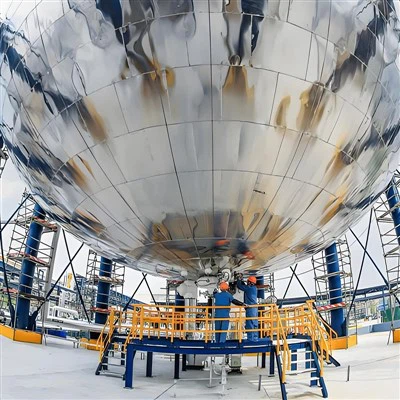
Hey there! As a supplier of Carbon Capture Plants, I've been diving deep into the world of carbon capture lately. It's an exciting field with tons of potential, especially when it comes to international cooperation. In this blog, I'm gonna share some of the cool international cooperation opportunities in Carbon Capture Plant development that I've come across.
The Global Need for Carbon Capture
First off, let's talk about why we even need carbon capture in the first place. The world's facing a huge climate crisis, and one of the main culprits is the high levels of carbon dioxide in the atmosphere. Carbon capture is a key technology that can help us reduce these emissions. It involves capturing carbon dioxide from industrial processes or power plants before it's released into the air and then storing or using it in some way.
Countries all around the world are starting to realize the importance of carbon capture. Many have set ambitious targets to reduce their carbon emissions, and carbon capture plants are gonna play a big role in helping them achieve these goals. This global push for carbon capture creates a great environment for international cooperation.
International Cooperation in Technology Sharing
One of the biggest opportunities for international cooperation in Carbon Capture Plant development is technology sharing. Different countries and companies have different strengths when it comes to carbon capture technology. For example, some might be really good at developing new capture materials, while others might have advanced storage techniques.
By sharing these technologies, we can speed up the development of more efficient and cost - effective carbon capture plants. For instance, a company in Europe that has developed a new type of carbon capture membrane could share this technology with a company in Asia. In return, the Asian company could share its expertise in large - scale plant construction. This kind of cooperation can lead to the creation of better carbon capture plants that are more suitable for different industrial needs around the world.
If you're interested in learning more about the different types of carbon capture plants, you can check out the Carbon Dioxide Factory and Co2 Generation Plant on our website. These links provide detailed information about the technology and processes involved.
Joint Research and Development Projects
Another great opportunity for international cooperation is joint research and development (R&D) projects. Carbon capture is still a relatively new field, and there's a lot of research that needs to be done. International research teams can work together to tackle some of the most challenging problems in carbon capture.


For example, a group of scientists from the United States, Canada, and Australia could collaborate on a project to develop a more sustainable and energy - efficient carbon capture process. They could pool their resources, knowledge, and expertise to make breakthroughs in areas like reducing the energy consumption of carbon capture plants or finding new ways to use the captured carbon dioxide.
These joint R&D projects not only benefit the participating countries but also the global community as a whole. The results of these projects can be shared and applied in different parts of the world to improve the overall effectiveness of carbon capture.
Investment and Funding Collaboration
Investment and funding are crucial for the development of Carbon Capture Plants. Building a carbon capture plant is expensive, and many countries and companies might not have the financial resources to do it alone. International cooperation in investment and funding can help overcome this challenge.
Countries can set up joint funds to support the construction and operation of carbon capture plants. For example, a group of developed countries could provide financial support to developing countries to help them build their own carbon capture infrastructure. This kind of cooperation can also involve private investors from different countries coming together to invest in large - scale carbon capture projects.
Moreover, international financial institutions can play a big role in facilitating these investments. They can provide loans and grants to support carbon capture projects, and also help in the risk assessment and management of these projects.
Policy and Regulatory Cooperation
Policy and regulatory frameworks are important for the development and operation of Carbon Capture Plants. Different countries have different policies and regulations regarding carbon capture, and this can sometimes create barriers to international cooperation.
By working together, countries can harmonize their policies and regulations. For example, they can agree on common standards for carbon capture technology, safety, and environmental protection. This will make it easier for companies to operate carbon capture plants across different countries.
International organizations can also play a role in promoting policy and regulatory cooperation. They can provide a platform for countries to discuss and develop common policies and regulations for carbon capture.
Market Expansion through International Cooperation
International cooperation can also help in expanding the market for Carbon Capture Plants. As more countries and industries become interested in carbon capture, there's a growing demand for these plants. By working together, suppliers like us can access new markets and customers.
For example, a supplier in South America could partner with a distributor in Africa to sell carbon capture plants in the African market. This kind of partnership can help both parties to expand their business and increase their market share.
If you're looking for a reliable Co2 Air Separation Unit, we've got you covered. Our products are designed to meet the highest standards and can be customized to fit your specific needs.
Conclusion and Call to Action
In conclusion, there are many exciting international cooperation opportunities in Carbon Capture Plant development. From technology sharing and joint research to investment and market expansion, the possibilities are endless.
As a supplier of Carbon Capture Plants, I'm really excited about the potential of these international partnerships. We believe that by working together, we can make a significant impact in the fight against climate change.
If you're interested in learning more about our Carbon Capture Plants or exploring potential cooperation opportunities, don't hesitate to reach out. We're always open to new partnerships and are looking forward to working with you to make the world a greener place.
References
- IPCC Special Report on Global Warming of 1.5°C
- International Energy Agency (IEA) reports on Carbon Capture, Utilization, and Storage (CCUS)
- Various academic journals on environmental science and engineering related to carbon capture technology.