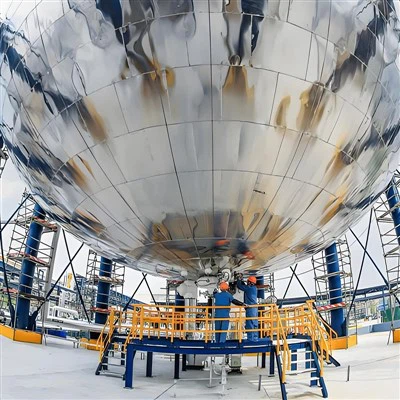
In the current industrial landscape, the market for CO2 derived from manufacturing plants is undergoing significant and dynamic changes. As a supplier of a CO2 manufacturing plant, I have witnessed firsthand these evolving trends and their implications for the industry. In this blog, I will explore the key market trends for CO2 from manufacturing plants, offering insights that can be valuable for businesses and stakeholders interested in this sector.
Growing Demand in Multiple Industries
One of the most prominent trends is the increasing demand for CO2 across various industries. In the food and beverage sector, CO2 is widely used for carbonation in soft drinks, beer, and sparkling wines. The global consumption of carbonated beverages continues to rise, especially in emerging economies where the middle - class population is growing. This growth is driven by changing consumer preferences towards ready - to - drink beverages and a growing culture of socializing.
In addition to the beverage industry, CO2 is also essential in the food preservation process. It is used to create a modified atmosphere in food packaging, which extends the shelf - life of products such as fresh meat, fruits, and vegetables. With the expansion of the global food supply chain and the increasing demand for high - quality, long - lasting food products, the need for CO2 in food packaging has been on the rise.


The medical industry is another area where the demand for CO2 is growing. CO2 is used in laparoscopic surgery, where it is insufflated into the abdominal cavity to provide a clear view for surgeons. As minimally invasive surgical techniques become more popular, the demand for medical - grade CO2 is expected to increase. Moreover, CO2 is also used in cryotherapy, a medical treatment that uses extreme cold to destroy abnormal cells.
Environmental Regulations and Sustainability Initiatives
Environmental regulations and sustainability initiatives are having a profound impact on the CO2 market. Governments around the world are implementing stricter regulations to reduce greenhouse gas emissions. Manufacturing plants are under pressure to capture and utilize the CO2 they produce, rather than releasing it into the atmosphere. This has led to the development of technologies for CO2 capture, storage, and utilization (CCUS).
As a CO2 manufacturing plant supplier, we are seeing a growing interest in Co2 Recycling Plant. These plants are designed to capture CO2 emissions from industrial processes and convert them into useful products. For example, CO2 can be recycled into chemicals, fuels, or building materials. This not only helps reduce greenhouse gas emissions but also creates new economic opportunities.
Sustainability initiatives by businesses are also driving the demand for CO2 from manufacturing plants. Many companies are committed to reducing their carbon footprint and are looking for ways to use recycled or low - carbon CO2 in their operations. This has created a market for CO2 that is produced in a more sustainable manner.
Technological Advancements in CO2 Production
Technological advancements are playing a crucial role in shaping the CO2 market. New and improved technologies are making it more efficient and cost - effective to produce CO2 from manufacturing plants. For example, advanced separation technologies are being developed to capture CO2 more effectively from industrial flue gases. These technologies can separate CO2 from other gases with high purity, which is essential for applications in the food, beverage, and medical industries.
In addition, there are ongoing research and development efforts to produce CO2 from renewable sources. For instance, some companies are exploring the use of biomass to produce CO2. This approach has the potential to reduce the carbon intensity of CO2 production and make it more sustainable.
The development of smart manufacturing technologies is also having an impact on CO2 manufacturing plants. These technologies enable real - time monitoring and control of the production process, which can improve efficiency, reduce waste, and enhance product quality.
Market Competition and Pricing
The CO2 market is becoming increasingly competitive. As the demand for CO2 grows, more suppliers are entering the market, which is putting pressure on prices. However, the cost of producing CO2 can vary significantly depending on the source and production technology.
Manufacturing plants that are able to produce CO2 at a lower cost and with higher quality will have a competitive advantage. This requires continuous investment in research and development, as well as the adoption of efficient production processes.
In addition, the price of CO2 is also affected by factors such as energy costs, transportation costs, and regulatory requirements. For example, an increase in energy prices can lead to an increase in the cost of producing CO2, which may be passed on to customers.
Global Market Dynamics
The CO2 market is a global market, and its dynamics are influenced by factors such as economic growth, trade policies, and geopolitical events. In emerging economies, rapid industrialization and urbanization are driving the demand for CO2. For example, countries in Asia and Africa are experiencing a significant increase in the consumption of carbonated beverages and processed foods, which is increasing the demand for CO2 in these regions.
Trade policies can also have an impact on the CO2 market. Tariffs and trade barriers can affect the cost of importing and exporting CO2, which can influence the competitiveness of suppliers in different regions. Geopolitical events, such as political instability or natural disasters, can disrupt the supply chain of CO2 and lead to price fluctuations.
Opportunities for Suppliers
As a supplier of a CO2 manufacturing plant, there are several opportunities in the current market. Firstly, there is a growing demand for customized CO2 solutions. Different industries have different requirements for the purity, quantity, and delivery mode of CO2. By offering customized solutions, suppliers can meet the specific needs of their customers and gain a competitive edge.
Secondly, there is an opportunity to collaborate with other stakeholders in the CCUS value chain. This includes technology providers, research institutions, and end - users. By forging partnerships, suppliers can access new technologies, share knowledge, and expand their market reach.
Thirdly, the increasing focus on sustainability presents an opportunity for suppliers to differentiate themselves. By offering CO2 products that are produced in a more sustainable manner, suppliers can attract customers who are committed to reducing their carbon footprint.
Conclusion
The market for CO2 from manufacturing plants is characterized by growing demand, increasing environmental regulations, technological advancements, market competition, and global dynamics. As a supplier, it is essential to stay ahead of these trends and adapt to the changing market conditions.
If you are interested in learning more about our CO2 manufacturing plant products or are considering purchasing CO2 for your business, we invite you to contact us for further discussions. Our team of experts is ready to provide you with detailed information and customized solutions to meet your specific needs.
References
- Smith, J. (2022). The Future of CO2 Markets. Journal of Industrial Gas Economics.
- Johnson, A. (2023). Environmental Regulations and the CO2 Industry. International Journal of Sustainable Manufacturing.
- Brown, C. (2023). Technological Advancements in CO2 Production. Proceedings of the Global Chemical Engineering Conference.