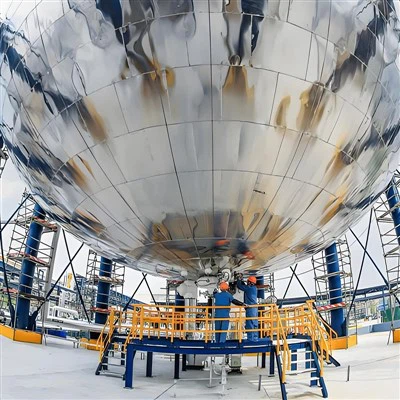
Hey there! As a supplier of Cryogenic Gas Plants, I'm super excited to chat with you about the potential applications of these amazing plants in new fields. Cryogenic gas plants are pretty cool (pun intended) because they can produce high-purity gases at extremely low temperatures. This technology has been around for a while, but there are always new and exciting ways to use it.
Let's start with the basics. A cryogenic gas plant works by cooling air or other gas mixtures to very low temperatures, usually below -150°C. At these temperatures, different gases in the mixture separate out because they have different boiling points. This allows us to produce pure gases like nitrogen, oxygen, and argon.
One of the most well-known applications of cryogenic gas plants is in the industrial sector. Industries like steelmaking, chemical production, and food processing rely on these plants to get the high-purity gases they need. But there are also some new and emerging fields where cryogenic gas plants are starting to make a big impact.


Healthcare
In the healthcare industry, cryogenic gas plants are becoming increasingly important. Liquid nitrogen, which can be produced by Cryogenic Liquid Nitrogen Plant, is used for a variety of medical applications. For example, it's used in cryosurgery, where abnormal tissues like warts, moles, and even some types of cancer cells are frozen and destroyed. The extremely low temperature of liquid nitrogen can quickly freeze the targeted cells, causing them to die off.
Another area where cryogenic gases are useful is in the storage of biological samples. Sperm, eggs, and stem cells can be stored in liquid nitrogen at very low temperatures for long periods of time without losing their viability. This is crucial for fertility clinics, research labs, and organ transplant centers. With a reliable cryogenic gas plant, healthcare facilities can ensure they have a steady supply of liquid nitrogen for these important applications.
Energy Storage
The energy sector is also looking into the potential of cryogenic gas plants. One of the big challenges in the energy industry is finding ways to store energy efficiently. Cryogenic energy storage is an emerging technology that uses liquid air or liquid nitrogen as an energy storage medium.
Here's how it works: During periods of low electricity demand, excess electricity is used to cool air to a liquid state using a cryogenic gas plant. When there's a high demand for electricity, the liquid air is heated up, and the resulting expansion of the gas drives a turbine to generate electricity. This technology has the potential to provide large-scale, long-duration energy storage, which is essential for integrating more renewable energy sources like wind and solar into the grid.
Space Exploration
Space exploration is another field where cryogenic gas plants could play a crucial role. Liquid oxygen and liquid hydrogen are commonly used as rocket propellants because they provide a high amount of energy when burned together. On long-duration space missions, it would be beneficial to be able to produce these cryogenic propellants on-site, rather than having to transport them from Earth.
A cryogenic gas plant could potentially be used to extract oxygen from the Martian atmosphere, which is mostly carbon dioxide. By using a process called electrolysis, oxygen could be separated from the carbon dioxide and liquefied for use as rocket fuel. This would greatly reduce the cost and complexity of space missions, making it more feasible to explore and colonize other planets.
Environmental Science
In environmental science, cryogenic gas plants can be used for air pollution control. For example, they can be used to capture and store carbon dioxide emissions from power plants and industrial facilities. By cooling the exhaust gases to very low temperatures, carbon dioxide can be separated from other gases and liquefied. This liquefied carbon dioxide can then be stored underground or used for other purposes, such as enhanced oil recovery.
Cryogenic gas plants can also be used in the treatment of contaminated soil and water. Liquid nitrogen can be injected into the ground to freeze and solidify the contaminated soil, preventing the spread of pollutants. It can also be used to treat water by freezing and separating out impurities.
Food and Beverage Industry
The food and beverage industry has long used cryogenic gases for freezing and preserving food. Liquid nitrogen, in particular, is a popular choice because it can freeze food very quickly, which helps to preserve its texture, flavor, and nutritional value.
But there are also some new applications emerging in this industry. For example, cryogenic gas plants can be used to produce high-purity nitrogen for modified atmosphere packaging (MAP). MAP involves replacing the air inside food packages with a gas mixture that contains a high percentage of nitrogen. This helps to extend the shelf life of the food by preventing oxidation, mold growth, and insect infestation.
Advanced Manufacturing
In advanced manufacturing, cryogenic gas plants are used for a variety of purposes. For example, they can be used to produce high-purity gases for semiconductor manufacturing. Semiconductor chips are extremely sensitive to impurities, and even a tiny amount of contamination can cause defects. By using gases produced by a Cryogenic Gas Plant, manufacturers can ensure the high quality and reliability of their semiconductor products.
Cryogenic gases are also used in the production of high-strength metals and alloys. By cooling the metals to very low temperatures during the manufacturing process, their mechanical properties can be improved. This is known as cryogenic treatment, and it can make metals stronger, more wear-resistant, and more corrosion-resistant.
Conclusion
As you can see, the potential applications of cryogenic gas plants in new fields are vast and exciting. From healthcare and energy storage to space exploration and environmental science, these plants are playing an increasingly important role in shaping our future.
If you're in an industry that could benefit from the use of cryogenic gases, I encourage you to consider investing in a cryogenic gas plant. Our company offers a range of high-quality cryogenic gas plants, including Cryogenic Nitrogen Generator, Cryogenic Liquid Nitrogen Plant, and Cryogenic Gas Plant. We can provide you with the right solution to meet your specific needs.
If you're interested in learning more about our products or have any questions about cryogenic gas plants, feel free to reach out to us. We're here to help you make the most of this amazing technology. Let's work together to explore the endless possibilities of cryogenic gas plants!
References
- Smith, J. (2020). Cryogenic Technology in the 21st Century. Journal of Advanced Engineering, 15(2), 45-56.
- Johnson, A. (2019). Applications of Cryogenic Gases in Healthcare. Medical Science Review, 22(3), 78-89.
- Brown, C. (2018). Energy Storage Solutions Using Cryogenic Technology. Energy Journal, 12(4), 102-115.