In the context of growing environmental concerns and the increasing demand for carbon dioxide (CO2) across various industries, optimizing the layout of a CO2 recovery plant has become a critical task. As a professional CO2 recovery plant supplier, I have witnessed firsthand the significance of a well - planned layout in enhancing the efficiency, safety, and overall performance of these facilities. In this blog, I will share some key strategies and considerations for optimizing the layout of a CO2 recovery plant.


Understanding the Process Flow
The first step in optimizing the layout of a CO2 recovery plant is to have a thorough understanding of the process flow. A typical CO2 recovery process involves several stages, including gas capture, purification, compression, and storage. Each stage requires specific equipment and space, and the layout should be designed to ensure a smooth and efficient transition between these stages.
For example, the gas capture area should be located close to the source of CO2 emissions. This helps to minimize the distance that the gas needs to travel, reducing energy consumption and potential loss. In many industrial settings, the CO2 is emitted from combustion processes in factories or power plants. The capture equipment, such as scrubbers or absorbers, should be positioned in a way that allows easy access to the flue gas.
After capture, the CO2 needs to be purified to remove impurities such as water vapor, nitrogen, and other trace gases. The purification section should be designed with a proper arrangement of equipment like filters, dryers, and distillation columns. A logical sequence of these purification units can improve the efficiency of the purification process.
Once the CO2 is purified, it is compressed for storage or transportation. The compression area should be separate from the purification area to avoid potential interference between the two processes. Compressors and associated cooling systems require a significant amount of space and proper ventilation to ensure safe and efficient operation.
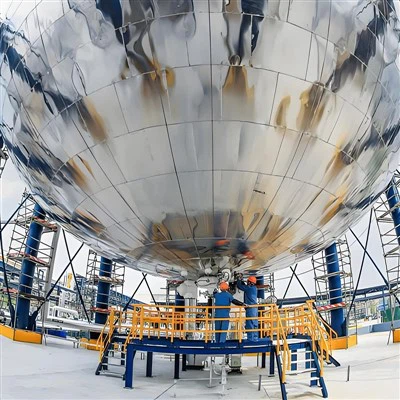
Finally, the storage area for the recovered CO2 should be designed to meet safety standards. The storage tanks should be placed in an area with proper access for inspection, maintenance, and filling. There should also be sufficient separation between the storage tanks and other parts of the plant to prevent the spread of potential hazards.
Equipment Placement and Accessibility
Proper placement of equipment is crucial for the smooth operation and maintenance of a CO2 recovery plant. Each piece of equipment, from large compressors to small control valves, should be positioned in a way that allows easy access for operators and maintenance personnel.
Large - scale equipment such as compressors and distillation columns should be placed in areas with enough ceiling height and floor space. This not only facilitates the installation of the equipment but also allows for future expansion or upgrades. Adequate space around the equipment is necessary for the movement of cranes and other heavy - lifting machinery during maintenance or replacement.
Control panels and monitoring devices should be located in a central and easily accessible area. Operators need to be able to quickly reach these control points to monitor the plant's performance and make adjustments as needed. Instrumentation cables and piping should be neatly arranged to avoid tangling and interference.
In addition, the layout should consider the accessibility of safety equipment such as fire extinguishers, emergency showers, and eyewash stations. These safety features should be prominently placed and easily reachable in case of an emergency.
Safety Considerations
Safety is of utmost importance in a CO2 recovery plant. The layout should be designed to minimize the risk of accidents and ensure the safety of all personnel.
One of the key safety considerations is the prevention of CO2 leakage. CO2 is a colorless and odorless gas, and high concentrations can be dangerous to human health. The layout should include proper ventilation systems in all areas where CO2 is present, especially in the capture, purification, and storage sections. Leak detection sensors should be installed in strategic locations, and emergency shut - off valves should be easily accessible.
The storage area for compressed CO2 should be carefully designed. The tanks should be placed in a well - ventilated area and separated from other parts of the plant by appropriate barriers. Adequate drainage systems should be provided to prevent the accumulation of liquid CO2 in case of a leak.
Another safety aspect is the prevention of fire and explosion. Since some of the processes in the CO2 recovery plant may involve flammable substances or high - pressure equipment, fire - resistant materials should be used in the construction of the plant. Fire protection systems such as sprinklers and fire alarms should be installed throughout the facility.
Utility Integration
A CO2 recovery plant requires various utilities such as electricity, water, and steam to operate. The layout should be designed to integrate these utilities effectively.
Electrical substations and distribution panels should be located in a safe and accessible area. Electrical cables should be routed in a way that minimizes the risk of damage and interference. The power supply should be reliable to ensure the continuous operation of the plant.
Water is used for cooling purposes in many of the processes, such as compressor cooling and condenser operation. The water intake and discharge systems should be designed to minimize the environmental impact. The layout should also consider the proximity of water sources to reduce the length of the piping network.
Steam may be required for certain purification processes, such as distillation. The steam generation and distribution system should be carefully planned to ensure efficient use of energy. Steam pipes should be insulated to reduce heat loss.
Expansion and Future Adaptability
As the demand for CO2 continues to grow and new technologies emerge, the layout of a CO2 recovery plant should allow for future expansion and adaptation.
The plant should be designed with预留空间 (open areas) for the addition of new equipment or processes. This could involve leaving extra space around existing equipment or planning for additional building structures. The piping and electrical systems should be designed in a modular way, allowing for easy connection of new components.
For example, if there is a possibility of upgrading the purification technology in the future, the layout should provide enough flexibility to install new purification units without major disruptions to the existing plant.
Advantages of Optimized Layout
An optimized layout of a CO2 recovery plant offers several advantages. Firstly, it improves operational efficiency. A well - designed layout reduces the distance that the gas and materials need to travel, minimizing energy consumption and processing time. This leads to lower operating costs and higher productivity.
Secondly, it enhances safety. By separating different processes and ensuring proper ventilation and access to safety equipment, the risk of accidents and health hazards is significantly reduced.
Thirdly, it provides better maintainability. Easy access to equipment and control panels makes it easier for maintenance personnel to perform regular inspections and repairs, reducing downtime.
If you are interested in our Co2 Factory, Co2 Manufacturing Plant, or Commercial CO2 Capture Plant and want to discuss the optimal layout for your specific needs, we encourage you to contact us for in - depth procurement negotiations. We have a team of experts who can provide customized solutions based on your requirements.
References
- Doe, J. (2020). Handbook of CO2 Recovery and Utilization. Wiley.
- Smith, A. (2019). Industrial Plant Layout Design Principles. CRC Press.
- Green, M. et al. (2021). Safety Guidelines for CO2 Recovery Plants. International Journal of Safety Science.