Hey there! As a supplier of Cryogenic Equipment, I've been in the thick of it when it comes to understanding the nitty - gritty of what these machines can handle, especially when it comes to pressure. So, let's dig into the pressure - handling capabilities of cryogenic equipment.
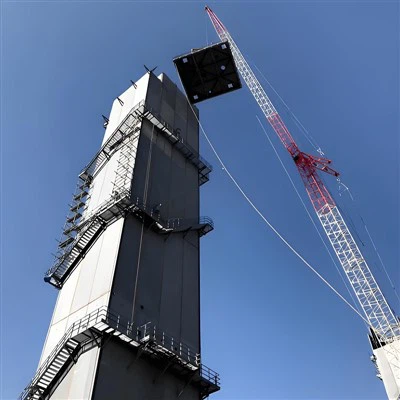
First off, what's cryogenic equipment anyway? Well, it's the stuff that deals with extremely low temperatures, typically below - 150°C. We're talking about things like Cryogenic Air Separation Plant, Cryogenic Equipment, and Cryogenic Air Separation Unit. These machines are used in a whole bunch of industries, from healthcare for storing biological samples to the energy sector for liquefying natural gas.
Now, pressure is a big deal in cryogenic applications. There are basically two main types of pressure we need to worry about: internal pressure and external pressure.
Internal pressure is generated within the cryogenic equipment itself. For example, when you're liquefying a gas, you need to compress it. As the gas gets compressed, the pressure inside the equipment goes up. This is a normal part of the process, but we've got to make sure the equipment can handle it. If the internal pressure gets too high, it can lead to some serious problems. We're talking about things like leaks, which are not only a waste of product but can also be dangerous, especially if we're dealing with flammable or toxic gases.
On the other hand, external pressure comes from the environment around the cryogenic equipment. In some industrial settings, the equipment might be installed in areas where there are high - pressure systems nearby. Or, if it's installed outdoors, it could be subject to changes in atmospheric pressure. For instance, at high altitudes, the atmospheric pressure is lower, which can affect how the equipment operates.
So, how do we make sure our cryogenic equipment can handle these pressures? Well, it all starts with the design. When we're designing cryogenic equipment, we use materials that are strong and can withstand the extreme conditions. Stainless steel is a popular choice because it's tough, resistant to corrosion, and can handle low temperatures without becoming brittle.
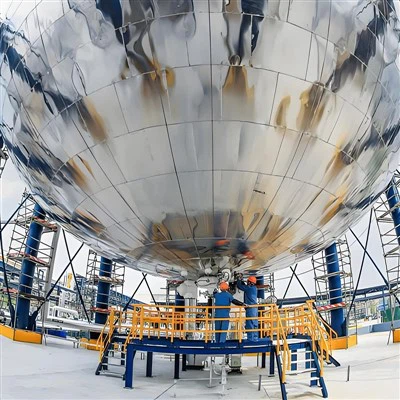
We also use advanced engineering techniques to calculate the maximum pressure the equipment can handle. This involves a lot of complex math and simulations. We look at things like the shape of the equipment, the thickness of the walls, and how different parts of the equipment are connected. For example, a spherical tank can handle internal pressure better than a cylindrical one because the stress is distributed more evenly across the surface.
In addition to the design, we also do a lot of testing. Before we send any cryogenic equipment out to our customers, we put it through a series of pressure tests. We'll gradually increase the pressure inside the equipment to see how it responds. We're looking for any signs of weakness, like deformation or leaks. If we find any problems, we go back to the drawing board and make the necessary changes.
Another important aspect of pressure handling is safety features. Our cryogenic equipment is equipped with pressure relief valves. These valves are like safety nets. If the pressure inside the equipment gets too high, the valve will open and release some of the pressure, preventing a potential disaster. We also have pressure sensors that constantly monitor the pressure inside the equipment. If the pressure goes outside of the normal range, an alarm will go off, and we can take action right away.
Let's talk a bit about the different types of cryogenic equipment and their pressure - handling capabilities.
Cryogenic storage tanks are one of the most common types of cryogenic equipment. These tanks are used to store liquefied gases like liquid nitrogen, liquid oxygen, and liquid argon. The pressure - handling capabilities of these tanks depend on their size and design. Smaller tanks might be able to handle pressures of up to a few hundred psi (pounds per square inch), while larger industrial - scale tanks can handle much higher pressures, sometimes up to several thousand psi.
Cryogenic pumps are another important piece of equipment. These pumps are used to move the liquefied gases from one place to another. They need to be able to handle the pressure changes that occur during the pumping process. The pressure - handling capabilities of cryogenic pumps are usually specified by the manufacturer. We need to make sure that the pump is rated for the pressure and flow rate required by the specific application.
Cryogenic heat exchangers are also crucial in cryogenic systems. They're used to transfer heat between different fluids. The pressure - handling capabilities of heat exchangers depend on their construction. Plate - type heat exchangers, for example, are designed to handle relatively low pressures, while shell - and - tube heat exchangers can handle higher pressures.
Now, I know all this technical stuff might seem a bit overwhelming, but it's really important to understand the pressure - handling capabilities of cryogenic equipment. It's not just about making sure the equipment works properly; it's also about keeping people safe.
If you're in the market for cryogenic equipment, whether it's a Cryogenic Air Separation Plant, Cryogenic Equipment, or Cryogenic Air Separation Unit, you want to make sure you're getting the best. At our company, we've got years of experience in designing, manufacturing, and testing cryogenic equipment. We understand the importance of pressure handling, and we go the extra mile to make sure our equipment is up to the task.


If you've got any questions or you're interested in purchasing cryogenic equipment, don't hesitate to reach out. We're here to help you find the right solution for your specific needs. Whether you're a small business or a large industrial corporation, we've got the expertise and the products to meet your requirements.
References
- "Cryogenic Engineering Handbook"
- "Principles of Cryogenic Equipment Design"
- Industry - specific technical papers on cryogenic pressure handling