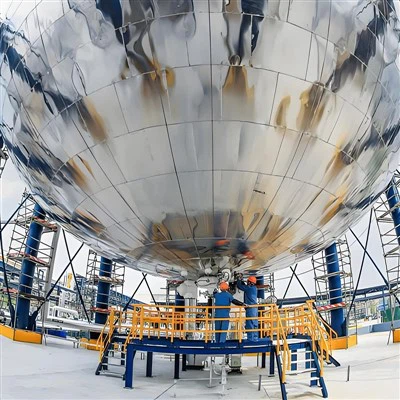
Hey there! As a supplier for a CO2 recycling plant, I've seen firsthand how crucial process optimization is. It's not just about making things run smoother; it's about maximizing efficiency, reducing costs, and being more environmentally friendly. So, let's dive into some of the process optimization techniques for a CO2 recycling plant.
1. Feedstock Pre - treatment
The first step in any CO2 recycling plant is dealing with the feedstock. The quality of the CO2 source can vary widely, and pre - treating it is essential. For instance, if the CO2 comes from industrial exhausts, it may contain impurities like particulate matter, sulfur compounds, and nitrogen oxides.
We can use filters to remove particulate matter. These filters can be made of different materials, such as activated carbon or ceramic. Activated carbon is great because it has a large surface area that can adsorb a variety of contaminants. Ceramic filters, on the other hand, are more durable and can handle high - temperature gases.
To remove sulfur and nitrogen compounds, we can use chemical scrubbers. These scrubbers work by reacting the impurities with chemicals in a liquid solution. For example, a sodium hydroxide solution can be used to react with sulfur dioxide to form sodium sulfite. By removing these impurities early on, we can prevent damage to the downstream equipment and improve the overall efficiency of the recycling process. You can learn more about our CO2 Recovery Unit that includes advanced pre - treatment features.
2. Capture and Separation
Once the feedstock is pre - treated, the next step is to capture and separate the CO2. There are several methods for this, and choosing the right one depends on factors like the volume of CO2, the concentration, and the available resources.
One common method is absorption. In this process, a liquid solvent is used to absorb the CO2 from the gas stream. Amine - based solvents are often used because they have a high affinity for CO2. After absorption, the solvent with the absorbed CO2 is heated to release the CO2, and the solvent can be reused.
Another method is adsorption. Here, a solid adsorbent material like zeolites or activated carbon is used to adsorb the CO2. The advantage of adsorption is that it can operate at lower temperatures compared to absorption, which can save energy. However, the adsorbent needs to be regenerated periodically to remove the adsorbed CO2.
Membrane separation is also an emerging technology. Membranes are designed to selectively allow CO2 to pass through while blocking other gases. This method is relatively simple and has low energy requirements, but the membranes can be expensive and may have limited lifespan.
3. Compression and Liquefaction
After capturing and separating the CO2, it needs to be compressed and liquefied for storage or further processing. Compression is usually done in multiple stages to reduce the energy consumption. Each stage increases the pressure of the CO2 gradually.
Liquefaction is achieved by cooling the compressed CO2 below its critical temperature. This requires a refrigeration system, and the choice of refrigerant can impact the efficiency of the process. For example, using a natural refrigerant like ammonia can be more environmentally friendly and energy - efficient compared to some synthetic refrigerants.
Proper insulation of the storage tanks is also crucial. Good insulation reduces heat transfer, which helps to maintain the low temperature of the liquefied CO2 and reduces the need for continuous refrigeration. Our Co2 Factory is equipped with state - of - the - art compression and liquefaction systems to ensure maximum efficiency.
4. Recycling and Utilization
The ultimate goal of a CO2 recycling plant is to reuse the CO2 in a productive way. There are many applications for recycled CO2, such as in the food and beverage industry, where it's used for carbonation, or in the oil and gas industry for enhanced oil recovery.
In the chemical industry, CO2 can be used as a raw material to produce chemicals like methanol or urea. This not only reduces the amount of CO2 released into the atmosphere but also creates valuable products. To optimize this process, we need to ensure a stable supply of high - quality CO2 and develop efficient conversion technologies.
For example, using catalysts can significantly improve the conversion rate of CO2 into useful chemicals. Catalysts lower the activation energy required for the chemical reactions, allowing them to occur at lower temperatures and pressures. Our Co2 Manufacturing Plant is designed to support a wide range of recycling and utilization processes.
5. Monitoring and Control
Continuous monitoring and control are essential for process optimization. We need to keep an eye on various parameters like temperature, pressure, flow rate, and composition at different stages of the process.
Sensors can be installed throughout the plant to collect data on these parameters. This data is then sent to a control system, which can adjust the operating conditions in real - time. For example, if the temperature in a reactor is too high, the control system can reduce the heat input or increase the cooling rate.
Automation can also play a big role in process optimization. Automated valves and pumps can be used to control the flow of fluids and gases, ensuring that the process operates at the optimal conditions. By using advanced control algorithms, we can minimize human error and improve the overall stability and efficiency of the plant.
6. Energy Management
Energy is one of the biggest costs in a CO2 recycling plant. Therefore, energy management is a key aspect of process optimization. We can implement several strategies to reduce energy consumption.


One strategy is to use waste heat recovery. In many parts of the plant, there is a significant amount of waste heat generated, such as in the compression and separation processes. This waste heat can be captured and used to pre - heat the feedstock or to power other parts of the plant.
Another approach is to use renewable energy sources. Solar panels or wind turbines can be installed to generate electricity for the plant. This not only reduces the reliance on fossil fuels but also makes the plant more sustainable.
7. Maintenance and Upgrades
Regular maintenance is crucial to keep the plant running smoothly. Equipment like pumps, compressors, and heat exchangers need to be inspected and serviced regularly to prevent breakdowns.
In addition to maintenance, periodic upgrades are also necessary. As new technologies become available, we can upgrade the plant to improve its performance. For example, replacing old membranes with new, more efficient ones or upgrading the control system to use more advanced algorithms.
Conclusion
Process optimization in a CO2 recycling plant is a multi - faceted task. It involves everything from feedstock pre - treatment to recycling and utilization, and each step requires careful consideration and continuous improvement. By implementing the techniques I've discussed, we can make the plant more efficient, cost - effective, and environmentally friendly.
If you're interested in setting up or optimizing a CO2 recycling plant, I'd love to have a chat with you. Whether you need a CO2 Recovery Unit, a Co2 Factory, or a Co2 Manufacturing Plant, we have the expertise and solutions to meet your needs. Let's work together to make the world a greener place!
References
- Smith, J. (2020). "Advances in CO2 Capture and Recycling Technologies". Journal of Environmental Science.
- Johnson, A. (2019). "Energy - Efficient Operation of CO2 Recycling Plants". Industrial Engineering Magazine.
- Brown, K. (2021). "Utilization of Recycled CO2 in the Chemical Industry". Chemical Engineering Journal.