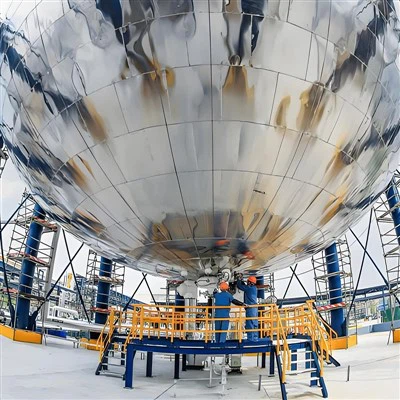
Hey there! I'm a supplier for a Co2 Recycling Plant Co2 Recycling Plant. In today's blog, I'm gonna chat about the product quality requirements in a CO2 recycling plant.
1. Purity of Recovered CO2
The purity of the recovered CO2 is like the gold standard in a CO2 recycling plant. You see, different applications have different purity needs. For instance, in the food and beverage industry, the CO2 used for carbonating drinks has to be extremely pure. Any impurities can mess with the taste and quality of the final product.
We're talking about a purity level of at least 99.9%. That means there should be hardly any other gases mixed in with the CO2. Even a tiny bit of contaminants like oxygen, nitrogen, or volatile organic compounds (VOCs) can cause problems. Oxygen, for example, can lead to oxidation in food products, shortening their shelf - life.
To achieve this high - purity level, a CO2 Recycling Plant uses a series of purification steps. The CO2 Recovery Unit CO2 Recovery Unit is a key player here. It typically includes processes like absorption, adsorption, and distillation. Absorption involves using a liquid solvent to selectively capture CO2 from a gas mixture. Adsorption, on the other hand, uses a solid material that can attract and hold CO2 molecules. Distillation then separates the CO2 from other components based on their boiling points.
2. Moisture Content
Moisture is another big deal when it comes to CO2 quality. High moisture content in CO2 can cause corrosion in pipelines and equipment. In a CO2 Gas Plant Co2 Gas Plant, where the CO2 is stored and transported, this can lead to leaks and even equipment failure.


The moisture content in recovered CO2 should be kept as low as possible. Usually, it's specified in parts per million (ppm). For most industrial applications, a moisture content of less than 100 ppm is desirable. To remove moisture, plants often use desiccant dryers. These are filled with materials that can absorb water vapor from the CO2 stream.
3. Particle Contamination
Particles in the CO2 stream can also pose problems. They can clog filters, valves, and other equipment, reducing the efficiency of the plant. In applications like laser cutting, where CO2 is used as a shielding gas, particles can affect the quality of the cut.
The product quality requirements state that the CO2 should be free from visible particles. To meet this standard, a Co2 Recycling Plant uses filtration systems. These filters are designed to trap particles of different sizes. There are pre - filters that catch larger particles, and then there are high - efficiency particulate air (HEPA) filters that can capture even the smallest particles.
4. Chemical Contaminants
Apart from the common gases and moisture, there are also chemical contaminants that need to be monitored. Substances like sulfur compounds, heavy metals, and halogenated hydrocarbons can be present in the CO2 stream, especially if the source of CO2 is from industrial processes.
Sulfur compounds, for example, can have a strong odor and can also be corrosive. Heavy metals like lead and mercury are toxic and can have serious environmental and health impacts. Halogenated hydrocarbons can be harmful to the ozone layer.
To detect and remove these chemical contaminants, advanced analytical techniques are used. Gas chromatography - mass spectrometry (GC - MS) is a powerful tool that can identify and quantify different chemical compounds in the CO2. Once identified, appropriate treatment methods are employed to remove these contaminants.
5. Odor and Color
Although odor and color might seem like minor aspects, they are still part of the product quality requirements. In some applications, like in the pharmaceutical industry, any strange odor or color in the CO2 can be a sign of contamination.
A pure CO2 gas should be odorless and colorless. If there are any detectable odors or colors, it means there are likely some impurities present. Specialized odor - removal processes and decolorization techniques can be used to meet these requirements.
6. Stability and Consistency
The quality of the recovered CO2 should be stable and consistent over time. Customers rely on a steady supply of high - quality CO2. Fluctuations in purity, moisture content, or other parameters can cause problems in their processes.
A Co2 Recycling Plant needs to have strict quality control measures in place. Regular sampling and testing are done to ensure that the product meets the specified requirements. The data from these tests are analyzed, and if there are any deviations, adjustments are made to the plant's operations.
7. Traceability
Traceability is becoming an increasingly important part of product quality requirements. Customers want to know where the CO2 comes from, how it was processed, and what quality control measures were taken.
A well - managed Co2 Recycling Plant keeps detailed records of every batch of CO2 produced. This includes information about the source of CO2, the processing steps, and the test results. This traceability helps in case of any quality issues, as it allows for easy identification of the root cause.
Why These Requirements Matter
Meeting these product quality requirements is not just about following the rules. It's also about building trust with customers. When a customer buys CO2 from a Co2 Recycling Plant, they expect it to work well in their processes. High - quality CO2 can improve the efficiency of their operations, reduce downtime, and enhance the quality of their end products.
As a supplier, we understand the importance of these requirements. We invest in the latest technology and equipment to ensure that our CO2 meets or exceeds the industry standards. Our team of experts is constantly working on improving our processes to deliver the best possible product.
Connect with Us for Your CO2 Needs
If you're in the market for high - quality CO2 from a reliable Co2 Recycling Plant, we'd love to talk to you. Whether you're in the food and beverage industry, the pharmaceutical sector, or any other industry that uses CO2, we can provide you with a product that meets your specific quality requirements. Reach out to us to start a conversation about your CO2 needs and how we can work together.
References
- "Handbook of Carbon Dioxide Utilization", edited by M. Aresta, A. Dibenedetto, and A. Angelini
- "Industrial Gas Processing: Technology and Engineering", by M. F. Doherty and M. F. Malone