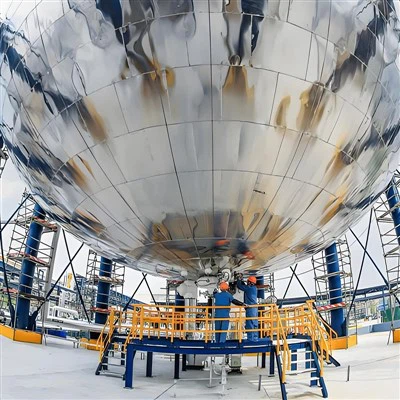
As a seasoned supplier of oxygen plants, I understand the critical importance of quality standards in the production of industrial oxygen. Industrial oxygen is widely used in various sectors, including metal fabrication, chemical production, and medical applications. Ensuring that the oxygen produced meets the highest quality standards is not only a matter of regulatory compliance but also a key factor in maintaining the efficiency and safety of our customers' operations.
Purity Requirements
The purity of industrial oxygen is one of the most important quality indicators. In general, industrial oxygen should have a purity level of at least 99.5%. This high level of purity is essential to ensure that the oxygen can effectively support combustion processes in metal fabrication and other industrial applications. For medical oxygen, the purity requirements are even more stringent, typically reaching 99.9%.
To achieve the desired purity levels, our oxygen plants are equipped with advanced purification systems. These systems use a combination of physical and chemical processes to remove impurities such as nitrogen, argon, and moisture from the raw air. For example, we use molecular sieve adsorption technology to selectively adsorb nitrogen and other impurities, leaving behind high-purity oxygen. Additionally, our plants are designed to operate under strict temperature and pressure conditions to optimize the purification process.
Moisture Content
Moisture can have a detrimental effect on the performance of industrial oxygen. High moisture content can lead to corrosion in pipelines and equipment, reduce the efficiency of combustion processes, and even pose a safety hazard in some applications. Therefore, the moisture content in industrial oxygen should be carefully controlled.
Our oxygen plants are equipped with moisture removal systems to ensure that the moisture content in the produced oxygen is within the acceptable range. These systems typically use desiccants or refrigeration techniques to remove moisture from the gas stream. By maintaining a low moisture content, we can ensure that our customers' equipment remains in good condition and that the oxygen performs as expected.
Particle Contamination
Particle contamination is another important quality parameter for industrial oxygen. Particles in the oxygen stream can cause damage to equipment, reduce the efficiency of processes, and even pose a risk to human health in medical applications. Therefore, the particle size and concentration in industrial oxygen should be strictly controlled.
Our oxygen plants are designed with high-efficiency filters to remove particles from the raw air and the produced oxygen. These filters are capable of removing particles as small as 0.01 microns, ensuring that the oxygen is virtually particle-free. Additionally, we conduct regular inspections and maintenance of our filtration systems to ensure their effectiveness.
Trace Gas Impurities
In addition to the main impurities such as nitrogen, argon, and moisture, industrial oxygen may also contain trace amounts of other gases, such as carbon dioxide, carbon monoxide, and hydrocarbons. These trace gas impurities can have a significant impact on the performance of industrial oxygen in certain applications.

Our oxygen plants are equipped with advanced analytical instruments to monitor the concentration of trace gas impurities in the produced oxygen. These instruments can detect trace gas impurities at very low levels, allowing us to take appropriate measures to ensure that the oxygen meets the required quality standards. For example, if the concentration of carbon monoxide exceeds the acceptable limit, we can adjust the purification process to remove the impurity.
Safety Standards
Safety is of utmost importance in the production and use of industrial oxygen. Oxygen is a highly reactive gas that can support combustion and cause explosions if not handled properly. Therefore, our oxygen plants are designed and operated in accordance with strict safety standards.
We implement a comprehensive safety management system that includes regular safety inspections, employee training, and emergency response plans. Our plants are equipped with safety devices such as pressure relief valves, flame arrestors, and oxygen sensors to prevent accidents and ensure the safety of our employees and customers.
Regulatory Compliance
In addition to the internal quality standards, our oxygen plants also comply with various national and international regulations. These regulations are designed to ensure the safety and quality of industrial oxygen and to protect the environment.
We stay up-to-date with the latest regulatory requirements and make sure that our oxygen plants are fully compliant. This includes obtaining the necessary permits and certifications, conducting regular audits, and implementing corrective actions as needed.
Quality Control and Assurance
To ensure that the industrial oxygen produced by our oxygen plants meets the highest quality standards, we have established a comprehensive quality control and assurance system. This system includes raw material testing, in-process monitoring, and final product inspection.
We source our raw materials from reliable suppliers and conduct strict quality checks before using them in our production process. During the production process, we monitor key parameters such as purity, moisture content, and particle contamination to ensure that the oxygen is being produced within the specified quality range. After the production is complete, we conduct a final inspection of the oxygen to ensure that it meets all the quality requirements.
Continuous Improvement
We are committed to continuous improvement in the quality of our industrial oxygen and the performance of our oxygen plants. We regularly review our production processes, equipment, and quality control systems to identify areas for improvement.
We also invest in research and development to explore new technologies and methods for producing high-quality industrial oxygen. By staying at the forefront of technological advancements, we can ensure that our customers receive the best possible products and services.
Conclusion
In conclusion, the quality standards for industrial oxygen produced by an oxygen plant are multifaceted and cover various aspects such as purity, moisture content, particle contamination, trace gas impurities, and safety. As a supplier of oxygen plants, we are dedicated to meeting these quality standards and providing our customers with high-quality industrial oxygen.
If you are in the market for an oxygen plant or need high-quality industrial oxygen, we invite you to [initiate a conversation with us to discuss your specific requirements]. Our team of experts is ready to assist you in finding the best solution for your needs. We can provide you with detailed information about our oxygen plants, the quality of our industrial oxygen, and the support services we offer.
References
- Perry, R. H., & Green, D. W. (1997). Perry's Chemical Engineers' Handbook. McGraw-Hill.
- American Society of Mechanical Engineers (ASME). (2019). Boiler and Pressure Vessel Code.
- International Organization for Standardization (ISO). (2017). ISO 13485:2016 - Medical devices -- Quality management systems -- Requirements for regulatory purposes.