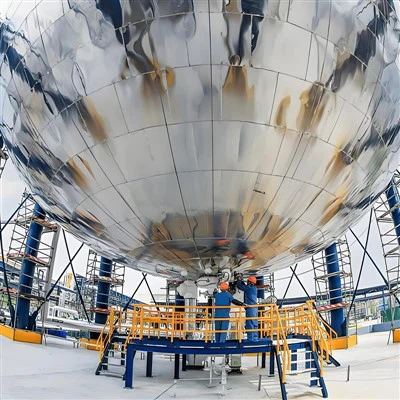
Hey there! I'm a supplier of Carbon Capture Plant, and I've been deeply involved in the carbon capture game for quite a while. In this blog, I'm gonna share with you what research institutions are focusing on when it comes to carbon capture plant technology.
The Big Picture of Carbon Capture
First off, let's talk about why carbon capture is such a big deal. With the increasing concerns about climate change, reducing carbon dioxide (CO2) emissions has become a global priority. Carbon capture plants play a crucial role in this fight. They are designed to capture CO2 from industrial processes and power generation, preventing it from being released into the atmosphere.
As a supplier, I've seen firsthand the growing demand for these plants. Industries are looking for ways to meet environmental regulations and reduce their carbon footprint. That's where research institutions come in. They're constantly working on improving the technology to make it more efficient, cost - effective, and scalable.
Research Focus Areas
1. Advanced Capture Materials
One of the main areas that research institutions are focusing on is the development of advanced capture materials. Traditional methods of carbon capture often use solvents like amines, but these have some drawbacks. They can be energy - intensive to regenerate, and they may also be corrosive to equipment.
Researchers are exploring new materials such as metal - organic frameworks (MOFs) and zeolites. These materials have high surface areas and can selectively adsorb CO2. For example, MOFs can be designed with specific pore sizes and chemical functionalities to capture CO2 more effectively. Some research groups are also looking into the use of ionic liquids, which are salts that are liquid at room temperature. Ionic liquids have unique properties that make them potentially good candidates for carbon capture.
2. Process Integration and Optimization
Another important focus is process integration and optimization. Carbon capture plants need to be integrated into existing industrial processes without causing too much disruption. Research institutions are working on developing innovative ways to integrate carbon capture with power plants, refineries, and other industrial facilities.
For instance, they're looking at how to use waste heat from industrial processes to power the carbon capture process. This can significantly reduce the energy requirements of the capture plant. Additionally, researchers are using advanced modeling and simulation techniques to optimize the operation of carbon capture plants. By simulating different scenarios, they can identify the best operating conditions to maximize capture efficiency and minimize costs.
3. Direct Air Capture (DAC)
Direct air capture is a relatively new but promising area of research. Unlike traditional carbon capture, which captures CO2 from industrial sources, DAC captures CO2 directly from the atmosphere. This has the potential to remove historical CO2 emissions from the atmosphere.
Research institutions are working on developing more efficient DAC technologies. One of the challenges with DAC is that the concentration of CO2 in the atmosphere is very low (around 400 parts per million). This means that large volumes of air need to be processed to capture a significant amount of CO2. To address this, researchers are looking at new ways to increase the contact between air and the capture material, such as using large - scale air - contacting devices.
4. CO2 Utilization and Storage
Once CO2 is captured, what do we do with it? Research institutions are also focusing on CO2 utilization and storage. Instead of just storing CO2 underground, they're exploring ways to convert it into useful products.


For example, CO2 can be used in the production of chemicals, fuels, and building materials. Some research is being done on using CO2 as a feedstock for the synthesis of methanol, which can be used as a fuel or a chemical intermediate. There's also interest in using CO2 to produce concrete, which could potentially reduce the carbon footprint of the construction industry.
In terms of storage, research is ongoing to ensure the long - term safety and integrity of CO2 storage sites. This includes studying the geology of potential storage sites and developing monitoring techniques to detect any leaks.
The Role of Carbon Capture Plant Suppliers
As a Carbon Capture Plant supplier, I'm closely following these research developments. We're always looking for ways to incorporate the latest research findings into our products. For example, if a new capture material is developed that is more efficient, we'll work on integrating it into our plant designs.
We also collaborate with research institutions to test new technologies in real - world settings. By working together, we can help to accelerate the commercialization of new carbon capture technologies.
Related Technologies: Co2 Air Separation Unit and Co2 Generation Plant
In addition to carbon capture plants, there are related technologies like Co2 Air Separation Unit and Co2 Generation Plant. These technologies are also being improved through research.
Co2 Air Separation Unit is used to separate CO2 from other gases in the air. Research is being done to make these units more energy - efficient and to increase their separation efficiency.
Co2 Generation Plant can be used to produce CO2 for various industrial applications. Researchers are looking at ways to make these plants more sustainable by using renewable energy sources and by reducing the emissions associated with CO2 production.
Conclusion
In conclusion, research institutions are playing a vital role in the development of carbon capture plant technology. Their focus on advanced capture materials, process integration, direct air capture, and CO2 utilization and storage is helping to make carbon capture more viable.
As a Carbon Capture Plant supplier, I'm excited about the future of this technology. We're committed to providing our customers with the best - in - class carbon capture solutions. If you're interested in learning more about our products or if you have a project that requires carbon capture technology, I encourage you to reach out for a procurement discussion. Let's work together to make a positive impact on the environment.
References
- Herzog, H. J. (2011). Technology and costs of carbon capture. Annual Review of Environment and Resources, 36, 111 - 133.
- IPCC. (2018). Special Report on Global Warming of 1.5°C.
- Sayari, A., Belmabkhout, Y., & Liu, J. (2011). Adsorbent materials for carbon dioxide capture from large anthropogenic point sources. Chemical Reviews, 111(2), 778 - 832.