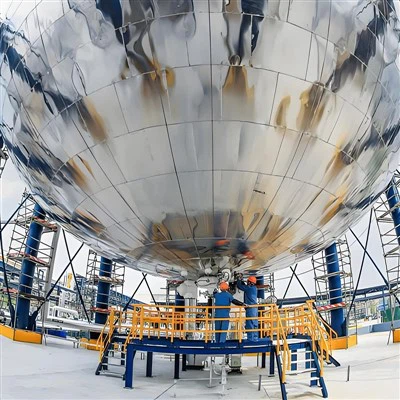
Waste heat recovery is a crucial aspect of modern industrial operations, especially in a CO2 production plant. As a leading supplier of CO2 production plants, we understand the significance of optimizing energy efficiency and reducing operational costs through effective waste heat recovery methods. In this blog, we will explore various waste heat recovery techniques employed in CO2 production plants and their benefits.
Understanding Waste Heat in a CO2 Production Plant
Before delving into the recovery methods, it's essential to understand the sources of waste heat in a CO2 production plant. CO2 production typically involves processes such as combustion, chemical reactions, and compression, all of which generate significant amounts of heat. This heat is often released into the environment, resulting in energy losses and increased operating costs. By recovering and reusing this waste heat, we can improve the overall energy efficiency of the plant and reduce its environmental impact.
Waste Heat Recovery Methods
1. Heat Exchangers
Heat exchangers are one of the most common waste heat recovery devices used in CO2 production plants. They work by transferring heat from a hot fluid (such as exhaust gases) to a cold fluid (such as water or air). There are several types of heat exchangers, including shell-and-tube, plate, and finned-tube heat exchangers.
- Shell-and-Tube Heat Exchangers: These are widely used in industrial applications due to their high efficiency and reliability. They consist of a bundle of tubes enclosed in a shell. The hot fluid flows through the tubes, while the cold fluid flows around the tubes, allowing for efficient heat transfer.
- Plate Heat Exchangers: Plate heat exchangers are compact and have a high heat transfer coefficient. They consist of a series of thin plates stacked together, with channels for the hot and cold fluids to flow through. Plate heat exchangers are suitable for applications where space is limited.
- Finned-Tube Heat Exchangers: Finned-tube heat exchangers are designed to increase the surface area available for heat transfer. They have fins attached to the tubes, which enhance the heat transfer rate between the hot and cold fluids. Finned-tube heat exchangers are commonly used in applications where the heat transfer fluid has a low thermal conductivity.
In a CO2 production plant, heat exchangers can be used to recover waste heat from exhaust gases, cooling water, or other hot process streams. The recovered heat can then be used for preheating feedwater, generating steam, or heating other process fluids.
2. Organic Rankine Cycle (ORC) Systems
The Organic Rankine Cycle (ORC) is a thermodynamic cycle that uses an organic fluid (such as a refrigerant) as the working fluid instead of water. ORC systems are particularly suitable for recovering low-temperature waste heat, which is often available in CO2 production plants.
- Working Principle: In an ORC system, the waste heat is used to vaporize the organic fluid in an evaporator. The vapor then expands through a turbine, generating electricity. The expanded vapor is then condensed back to a liquid in a condenser and pumped back to the evaporator to complete the cycle.
- Advantages: ORC systems have several advantages over traditional steam Rankine cycles. They can operate at lower temperatures, which makes them suitable for recovering waste heat from low-temperature sources. They also have a higher efficiency at low temperatures and can use a variety of organic fluids, depending on the application.
In a CO2 production plant, an ORC system can be used to recover waste heat from exhaust gases, cooling water, or other low-temperature process streams. The generated electricity can be used to power the plant's equipment or sold back to the grid.


3. Absorption Chillers
Absorption chillers are refrigeration systems that use heat instead of electricity to drive the cooling process. They are particularly suitable for applications where waste heat is available and cooling is required.
- Working Principle: In an absorption chiller, the waste heat is used to heat a solution of a refrigerant and an absorbent in a generator. The refrigerant vaporizes and is separated from the absorbent. The refrigerant vapor then flows through a condenser, where it is condensed back to a liquid. The liquid refrigerant then expands through an expansion valve and enters an evaporator, where it absorbs heat from the cooling load. The refrigerant vapor is then absorbed back into the absorbent in an absorber, and the cycle repeats.
- Advantages: Absorption chillers have several advantages over traditional vapor compression chillers. They can use waste heat as the energy source, which reduces the plant's electricity consumption and operating costs. They also have a lower environmental impact, as they do not use ozone-depleting refrigerants.
In a CO2 production plant, an absorption chiller can be used to recover waste heat from exhaust gases, cooling water, or other hot process streams. The recovered heat can then be used to provide cooling for the plant's equipment or for other process applications.
4. District Heating
District heating is a system that distributes heat from a central source to multiple buildings or facilities. In a CO2 production plant, the waste heat can be used to supply district heating to nearby buildings or industrial complexes.
- Working Principle: The waste heat is transferred from the CO2 production plant to a district heating network through a heat exchanger. The heat is then distributed to the end-users through a network of pipes. The end-users can use the heat for space heating, water heating, or other applications.
- Advantages: District heating has several advantages over individual heating systems. It can reduce the overall energy consumption and greenhouse gas emissions of the community. It also provides a reliable and cost-effective source of heat, especially for large buildings or industrial complexes.
By supplying waste heat to a district heating network, a CO2 production plant can not only reduce its energy losses but also contribute to the sustainable development of the community.
Benefits of Waste Heat Recovery in a CO2 Production Plant
Implementing waste heat recovery methods in a CO2 production plant offers several benefits, including:
- Energy Efficiency: Waste heat recovery reduces the plant's energy consumption by reusing the heat that would otherwise be wasted. This leads to lower operating costs and a more sustainable operation.
- Cost Savings: By reducing the energy consumption, waste heat recovery can result in significant cost savings for the plant. The recovered heat can be used to replace expensive fossil fuels or electricity, reducing the plant's energy bills.
- Environmental Impact: Waste heat recovery helps to reduce the plant's greenhouse gas emissions by reducing the energy consumption. This contributes to the plant's environmental sustainability and helps to meet regulatory requirements.
- Reliability and Flexibility: Waste heat recovery systems can improve the reliability and flexibility of the plant's operation. They can provide a backup source of energy in case of power outages or other disruptions, ensuring the continuous operation of the plant.
Conclusion
Waste heat recovery is an important aspect of modern industrial operations, especially in a CO2 production plant. By implementing effective waste heat recovery methods, such as heat exchangers, ORC systems, absorption chillers, and district heating, we can improve the plant's energy efficiency, reduce operating costs, and minimize its environmental impact.
As a leading supplier of Co2 Factory, Carbon Dioxide Capture Plant, and Co2 Processing Plant, we are committed to providing our customers with innovative and sustainable solutions for waste heat recovery. Our experienced team can help you design and implement a waste heat recovery system that meets your specific needs and requirements.
If you are interested in learning more about waste heat recovery methods in a CO2 production plant or would like to discuss your project with us, please contact us. We look forward to the opportunity to work with you and help you achieve your energy efficiency and sustainability goals.
References
- Smith, J. (2018). Waste Heat Recovery in Industrial Processes. Elsevier.
- Doe, R. (2019). Organic Rankine Cycle Systems for Waste Heat Recovery. Springer.
- Brown, A. (2020). Absorption Chillers: Principles and Applications. Wiley.