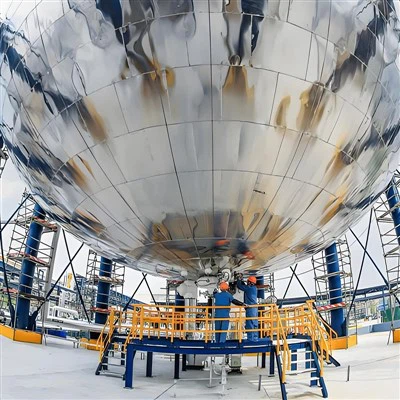
Hey there! I'm a supplier of Cryogenic Gas Plants, and today I wanna chat about the gases that can be produced in these awesome plants. Cryogenic gas plants are pretty nifty pieces of equipment that use super - low temperatures to separate and produce various gases. Let's dive right in and take a look at what gases we can get from them.
Nitrogen
Nitrogen is one of the most commonly produced gases in cryogenic gas plants. It's a colorless, odorless, and non - reactive gas that has a wide range of applications. In a cryogenic gas plant, nitrogen is separated from air through a process called cryogenic distillation. Air is first compressed and cooled to extremely low temperatures, and then different components of air start to liquefy at different temperatures. Nitrogen has a lower boiling point than oxygen, so it can be separated out as a gas.
There are two main types of nitrogen products that can be obtained from a cryogenic gas plant: gaseous nitrogen and liquid nitrogen. Gaseous nitrogen is used in many industries for inerting, blanketing, and purging processes. For example, in the food industry, it's used to prevent oxidation and spoilage of food products. You can check out our Cryogenic Nitrogen Generator if you're interested in getting high - purity gaseous nitrogen.
Liquid nitrogen, on the other hand, has a temperature of around - 196°C (- 321°F). It's used for cryopreservation, in the medical field for freezing and storing biological samples, and in the food industry for quick freezing of food items. Our Cryogenic Liquid Nitrogen Plant is designed to produce high - quality liquid nitrogen efficiently.
Oxygen
Oxygen is another important gas that can be produced in a cryogenic gas plant. Just like nitrogen, oxygen is separated from air using cryogenic distillation. Oxygen has a higher boiling point than nitrogen, so during the distillation process, it can be collected as a separate product.
In the medical industry, oxygen is a life - saving gas. It's used in hospitals to treat patients with respiratory problems. In the metal industry, oxygen is used for cutting, welding, and melting metals. High - purity oxygen is required for these applications, and our cryogenic gas plants can produce oxygen with a very high level of purity.
Argon
Argon is a noble gas that is also produced in cryogenic gas plants. It's obtained as a by - product during the separation of nitrogen and oxygen from air. Argon is colorless, odorless, and non - flammable. It has a very low reactivity, which makes it ideal for use in welding and electronics manufacturing.


In welding, argon is used as a shielding gas to protect the weld area from oxidation and contamination. In the electronics industry, it's used in the production of semiconductors and other electronic components. Our cryogenic gas plants are capable of producing high - purity argon to meet the strict requirements of these industries.
Neon, Krypton, and Xenon
These are also noble gases that can be produced in cryogenic gas plants, although in much smaller quantities compared to nitrogen, oxygen, and argon. Neon is well - known for its use in neon signs. Krypton and xenon are used in lighting applications, such as high - intensity discharge lamps and flashlights.
The production of these noble gases is a more complex process. They are present in air in very small concentrations, so special techniques are required to extract and purify them. Our cryogenic gas plants are equipped with advanced technology to handle the production of these rare gases.
Hydrogen
Some cryogenic gas plants are also capable of producing hydrogen. Hydrogen can be produced through a process called cryogenic separation from a hydrogen - containing gas mixture. Hydrogen is a clean - burning fuel and is used in fuel cells, the chemical industry for hydrogenation processes, and in the refining industry.
The production of hydrogen in a cryogenic gas plant requires careful control of the process parameters to ensure high - purity hydrogen is obtained. Our plants are designed with the latest technology to produce hydrogen efficiently and safely.
Helium
Helium is a light, non - flammable noble gas that is used in many applications, such as in balloons, airships, and in the cooling of superconducting magnets in MRI machines. Helium is often found in natural gas deposits, and cryogenic gas plants can be used to separate helium from natural gas.
The separation of helium is a challenging process due to its low boiling point and low concentration in natural gas. Our cryogenic gas plants are designed with advanced separation technology to extract helium with high efficiency.
Why Choose Our Cryogenic Gas Plants?
Now, you might be wondering why you should choose our cryogenic gas plants. Well, first of all, our plants are designed with the latest technology. We use advanced control systems to ensure the efficient and stable operation of the plants. This means you can get a continuous supply of high - purity gases.
Secondly, our plants are highly customizable. We understand that different industries have different requirements for gas production, so we can customize the plants according to your specific needs. Whether you need a small - scale plant for a laboratory or a large - scale plant for an industrial complex, we've got you covered.
Thirdly, we offer excellent after - sales service. Our team of experts is always ready to provide technical support and maintenance services to ensure your plant runs smoothly.
If you're in the market for a cryogenic gas plant or are interested in any of the gases produced by them, don't hesitate to reach out. We're here to help you find the best solution for your gas production needs. You can visit our Cryogenic Gas Plant page to learn more about our products. Whether you're a small business or a large corporation, we can work with you to meet your gas requirements. Contact us today to start the procurement and negotiation process, and let's find the perfect cryogenic gas plant for you.
References
- Perry, R. H., & Green, D. W. (Eds.). (1997). Perry's Chemical Engineers' Handbook. McGraw - Hill.
- Kohl, A. L., & Nielsen, R. B. (1997). Gas Purification. Gulf Publishing Company.