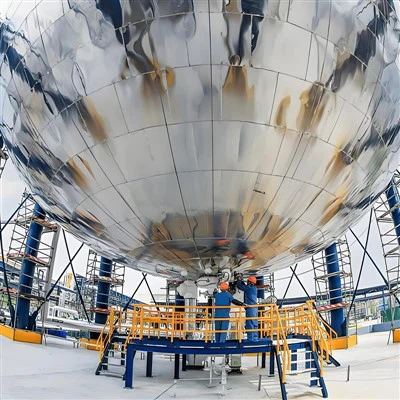
In the realm of industrial gas production, cryogenic oxygen plants stand as marvels of engineering, enabling the efficient separation and purification of oxygen from air. At the heart of these sophisticated systems lies a crucial component known as the expander. As a leading supplier of cryogenic oxygen plants, I am often asked about the purpose of the expander and its significance in the overall operation of the plant. In this blog post, I will delve into the intricacies of the expander, exploring its functions, benefits, and the pivotal role it plays in ensuring the optimal performance of cryogenic oxygen plants.
Understanding Cryogenic Oxygen Plants
Before we dive into the role of the expander, let's first gain a basic understanding of cryogenic oxygen plants. These plants utilize a process called cryogenic distillation to separate oxygen from other components of air, such as nitrogen and argon. The process involves cooling the air to extremely low temperatures, typically below -180°C, at which point the different components of air condense into liquids with different boiling points. The liquid air is then fed into a distillation column, where it is separated into its individual components through a series of vaporization and condensation steps.
The cryogenic distillation process requires a significant amount of energy to achieve and maintain the low temperatures necessary for separation. This is where the expander comes into play.
The Function of the Expander
The expander is a key component in the cryogenic oxygen plant's refrigeration cycle. Its primary function is to convert the high-pressure, high-temperature gas into low-pressure, low-temperature gas by expanding it through a turbine. This expansion process is an isentropic process, which means that it occurs without any heat transfer to or from the surroundings. As the gas expands, its temperature drops significantly, resulting in the production of cold energy.
The cold energy produced by the expander is used to cool the incoming air and maintain the low temperatures required for the cryogenic distillation process. By extracting energy from the high-pressure gas and converting it into cold energy, the expander helps to reduce the energy consumption of the cryogenic oxygen plant, making it more efficient and cost-effective.
Benefits of the Expander
The use of an expander in a cryogenic oxygen plant offers several significant benefits:
Energy Efficiency
One of the most significant advantages of the expander is its ability to improve the energy efficiency of the cryogenic oxygen plant. By converting the high-pressure gas into cold energy, the expander reduces the amount of energy required to cool the incoming air and maintain the low temperatures necessary for the distillation process. This results in lower energy consumption and operating costs for the plant.
Process Stability
The expander plays a crucial role in maintaining the stability of the cryogenic oxygen plant's refrigeration cycle. By providing a reliable source of cold energy, the expander helps to ensure that the temperature and pressure conditions within the plant remain consistent, which is essential for the efficient operation of the distillation process.
Increased Productivity
The improved energy efficiency and process stability provided by the expander can lead to increased productivity of the cryogenic oxygen plant. By reducing the energy consumption and operating costs, the plant can produce more oxygen at a lower cost, making it more competitive in the market.
Environmental Sustainability
The use of an expander in a cryogenic oxygen plant also has environmental benefits. By reducing the energy consumption of the plant, the expander helps to lower greenhouse gas emissions and minimize the environmental impact of the oxygen production process.
Types of Expanders
There are several types of expanders used in cryogenic oxygen plants, each with its own unique characteristics and advantages. The most common types of expanders include:
Turboexpanders
Turboexpanders are the most widely used type of expander in cryogenic oxygen plants. They consist of a turbine wheel that is driven by the high-pressure gas. As the gas expands through the turbine, it causes the turbine wheel to rotate, which in turn drives a generator or compressor. Turboexpanders are highly efficient and can achieve high levels of energy recovery, making them ideal for use in large-scale cryogenic oxygen plants.
Reciprocating Expanders
Reciprocating expanders are another type of expander that is commonly used in cryogenic oxygen plants. They consist of a piston that moves back and forth within a cylinder, expanding the gas as it moves. Reciprocating expanders are typically used in smaller-scale cryogenic oxygen plants or in applications where a high level of precision is required.
Scroll Expanders
Scroll expanders are a relatively new type of expander that is gaining popularity in the cryogenic oxygen plant industry. They consist of two spiral-shaped scrolls that mesh together to form a series of expanding chambers. As the gas expands through the chambers, it causes the scrolls to rotate, which in turn drives a generator or compressor. Scroll expanders are known for their high efficiency, reliability, and low maintenance requirements.
The Role of the Expander in the Overall Plant Operation
The expander is an integral part of the cryogenic oxygen plant's refrigeration cycle, working in conjunction with other components such as the compressor, heat exchanger, and distillation column to ensure the efficient operation of the plant.
The compressor is responsible for compressing the incoming air to a high pressure, which is then cooled by the heat exchanger before being fed into the expander. The expander expands the high-pressure gas, producing cold energy that is used to cool the incoming air and maintain the low temperatures required for the distillation process. The cooled air is then fed into the distillation column, where it is separated into its individual components.
The heat exchanger plays a crucial role in the refrigeration cycle by transferring heat between the incoming air and the cold energy produced by the expander. It helps to pre-cool the incoming air and recover the cold energy from the outgoing gas, further improving the energy efficiency of the plant.
The distillation column is the heart of the cryogenic oxygen plant, where the separation of oxygen from other components of air takes place. The cold energy produced by the expander is used to maintain the low temperatures necessary for the distillation process, ensuring the efficient separation of oxygen from nitrogen and argon.


Conclusion
In conclusion, the expander is a vital component in the cryogenic oxygen plant, playing a crucial role in the refrigeration cycle and the overall operation of the plant. By converting the high-pressure, high-temperature gas into low-pressure, low-temperature gas, the expander produces cold energy that is used to cool the incoming air and maintain the low temperatures required for the cryogenic distillation process. This results in improved energy efficiency, process stability, and productivity, making the cryogenic oxygen plant more cost-effective and environmentally sustainable.
As a leading supplier of Cryogenic Liquid Oxygen Gas Plant, Oxygen Production Plant, and Cryogenic Liquid Oxygen Plant, we understand the importance of the expander in the cryogenic oxygen plant's operation. We offer a wide range of high-quality expanders that are designed to meet the specific needs and requirements of our customers. Our expanders are known for their high efficiency, reliability, and low maintenance requirements, ensuring the optimal performance of your cryogenic oxygen plant.
If you are interested in learning more about our cryogenic oxygen plants or the role of the expander in the plant's operation, please do not hesitate to contact us. Our team of experts will be happy to assist you and provide you with the information you need to make an informed decision.
References
- Kohl, A. L., & Nielsen, R. B. (1997). Gas Purification. Gulf Publishing Company.
- Perry, R. H., & Green, D. W. (1997). Perry's Chemical Engineers' Handbook. McGraw-Hill.
- Stoecker, W. F. (1998). Refrigeration and Air Conditioning. McGraw-Hill.