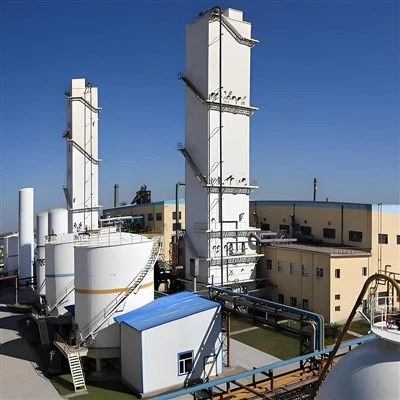
Why an Air Separation Unit (ASU) is Necessary
Air separation units (ASUs) are of irreplaceable importance in modern industrial systems. Many aspects of industrial production rely heavily on industrial gases such as oxygen, nitrogen, and argon. Air, as a natural source of these gases, requires specialized equipment to separate and purify them. Air separation units are the core equipment for this process.
In the metallurgical industry, processes such as blast furnace ironmaking and converter steelmaking rely on oxygen. Oxygen aids combustion, increases furnace temperatures, and accelerates smelting reactions. It also removes impurities such as carbon and sulfur from molten iron, improving the quality of steel. Without a stable supply of high-purity oxygen, smelting efficiency declines significantly, and product quality becomes difficult to guarantee.
In the chemical industry, nitrogen is often used as a protective gas due to its stable chemical properties. In processes such as synthetic ammonia and petrochemicals, nitrogen isolates the atmosphere, preventing oxidation of raw materials and products, and potentially preventing explosions and other safety incidents. Furthermore, some chemical reactions require a specific inert atmosphere, and a stable supply of nitrogen is essential for these reactions to proceed smoothly.
The food processing industry also uses gases produced by air separation units. For example, nitrogen can be used in food packaging to effectively inhibit the growth and reproduction of microorganisms, extending the shelf life of food. Oxygen is used to preserve fruits and vegetables, maintaining their respiration and freshness.
The medical field also relies on industrial gases. High-purity oxygen is crucial for rescuing critically ill patients and treating respiratory diseases. Hospitals require a continuous and stable supply of oxygen to ensure the smooth operation of medical services.
As can be seen, industrial gases are an indispensable and critical resource in the production and operations of many industries. Owning an air separation unit ensures that these industries have a continuous and stable supply of industrial gases, thereby ensuring smooth production and operations.
Benefits of Owning an Air Separation Unit (ASU)
Significant Cost Reduction: For companies that use a large amount of industrial gases, producing their own gases offers significant cost advantages over purchasing them. On the one hand, the raw material for industrial gas production is air, which has almost negligible costs. Purchasing gas requires paying for the gas itself as well as the supplier's profit. On the other hand, on-site production directly delivers gas to the production workshop, eliminating transportation costs associated with purchasing gas, including the purchase and maintenance of transport vehicles, as well as the energy and labor costs associated with transportation. This can significantly save companies significant costs and improve economic efficiency over the long term.
Greatly Improved Supply Reliability: Relying on external industrial gas suppliers is often affected by a variety of factors, such as supplier production capacity, transportation route traffic conditions, and weather changes, all of which can lead to interruptions or delays in gas supply. Companies with their own air separation units can flexibly adjust gas production and supply schedules based on their production plans and actual needs. This ensures a stable gas supply even when the external environment fluctuates, preventing production halts due to gas shortages and minimizing losses caused by production stoppages.
Easy and Efficient Operations: Modern air separation units utilize advanced automated control technology, enabling automated monitoring and adjustment of the production process. Operators can monitor the unit's operating status and make adjustments directly from a computer screen in the control room. The unit's design fully considers the need for unmanned operation and is equipped with a comprehensive fault detection and alarm system. When an abnormality occurs, prompt alerts are issued and appropriate protective measures are implemented. This not only reduces the number of operators required and labor costs, but also improves the stability and safety of the unit's operation, reducing the management burden on the enterprise.
Types of Air Separation Units
Non-Cryogenic Process Production Units
N₂ Membrane System: The core of the N₂ membrane system is a membrane module with selective permeability. When compressed air passes through the membrane module, gas molecules such as oxygen and carbon dioxide are more easily permeated by the membrane wall, while nitrogen molecules are less likely to pass through, thus separating nitrogen from other gases. This system features a small size, light weight, and compact structure, making it relatively simple to install and maintain. It is suitable for applications where nitrogen purity requirements are not particularly high (generally between 95% and 99.9%) and demand is low, such as electronic component packaging and small food packaging.
N₂ PSA System: The N₂ PSA system separates nitrogen by exploiting the difference in adsorption capacity between nitrogen and oxygen on an adsorbent. Under pressure, the adsorbent preferentially adsorbs impurities like oxygen, while nitrogen passes through the adsorption tower to become product gas. When the adsorbent reaches saturation, the pressure is reduced, and the adsorbed impurities are desorbed, allowing the adsorbent to be regenerated and recycled. This system starts quickly, typically producing qualified nitrogen within minutes. Nitrogen purity can be adjusted to meet demand, typically ranging from 95% to 99.999%. It is suitable for small- to medium-sized nitrogen needs, such as nitrogen replacement in chemical storage tanks and laboratory use.
O₂ PSA, VSA, or VPSA Systems: The operating principle of an O₂ PSA system is similar to that of an N₂ PSA system, except that the adsorbent used has a stronger oxygen adsorption capacity. During pressure application, the adsorbent adsorbs oxygen, while unabsorbed nitrogen and other gases are discharged as waste gas. During pressure reduction, the adsorbed oxygen is desorbed, resulting in product oxygen. The VSA system builds on the PSA system by using vacuum desorption, reducing the desorption pressure and improving oxygen recovery. VPSA systems further optimize the process, resulting in higher oxygen production efficiency. The oxygen produced by these systems generally has a purity of 90%-95%, making them suitable for small- to medium-sized oxygen needs, such as medical oxygen supply and small-scale welding and cutting.
Cryogenic Air Separation Unit
The operating process of a cryogenic air separation unit is relatively complex, primarily involving air compression, purification, liquefaction, and distillation. First, the air is compressed to a certain pressure, and then impurities such as moisture and carbon dioxide are removed to prevent ice formation and equipment blockage during the subsequent liquefaction process. The purified air enters a heat exchanger for cooling and gradual liquefaction. The liquid air enters a distillation tower. Due to the different boiling points of oxygen and nitrogen (oxygen boiling point is approximately -183°C, nitrogen boiling point is approximately -196°C), the liquid air is heated within the distillation tower. Nitrogen evaporates first, rising to the top of the tower to be collected, while oxygen remains at the bottom, achieving separation. This device can produce high-purity oxygen (over 99.6%), nitrogen (over 99.999%), and rare gases such as argon. It is suitable for large-scale industrial production, such as large steel mills and coal chemical plants, where demand for industrial gases is high and purity is critical. Although initial equipment investment and energy consumption are relatively high, it offers advantages such as high output, high product purity, and stable operation, resulting in good long-term economic efficiency.
New Air Separation Units
With the continuous advancement of technology, new air separation units have achieved numerous technological innovations. In terms of energy efficiency, they utilize more efficient compressors, heat exchangers, and other equipment, optimizing process flows and reducing energy consumption per unit of product. For example, new centrifugal compressors offer lower energy consumption and more stable operation than traditional piston compressors.
In terms of separation efficiency, the development and application of new adsorbents and membrane materials have improved the selectivity and efficiency of gas separation, resulting in higher product purity and improved recovery rates. At the same time, upgrades in automated control technology have enabled intelligent operation of the unit, enabling automatic adjustment of operating parameters based on changes in gas demand, improving its adaptability and stability.
New air separation units also prioritize environmental performance, reducing emissions of waste gas and wastewater during production, meeting the requirements of green development in modern industry. They can better meet the individual needs of different industries and have been widely used in emerging sectors such as new energy and semiconductors.
Used/Relocated Air Separation Units
Used/relocated air separation units are typically idle or retired equipment from companies due to production adjustments or technological upgrades. These equipment are then professionally inspected, repaired, and relocated before being put back into service. For startups or small and medium-sized enterprises with limited funds, purchasing a used/relocated air separation unit can significantly reduce initial investment costs and quickly establish gas production capacity.
When selecting a used/relocated air separation unit, it is important to thoroughly evaluate the equipment's operating condition, age, and maintenance records to ensure it can meet production needs. Furthermore, it is important to consider the costs of relocation, installation, and commissioning, as well as ongoing maintenance. While used/relocated units may not be as capable and technologically advanced as new units, they can save companies significant money and offer a significant cost-effectiveness advantage, provided they meet basic production needs.
NEWTEK's Services in Air Separation Unit Projects
NEWTEK has accumulated extensive expertise and experience in gas engineering and possesses strong resource integration capabilities. We offer a full range of services for air separation unit projects, including EPC (engineering, general contracting) and turnkey solutions for various industries, including textiles, metallurgy, and chemicals.
The metallurgical industry has a high demand for industrial gases and requires high purity. In air separation unit projects for the metallurgical industry, NEWTEK leverages its expertise in large and complex project management. We address communication, interface, and coordination issues across multiple disciplines and stages, such as gas pipeline connections between the unit and smelting equipment and control system compatibility. By establishing efficient communication mechanisms and coordination processes, we ensure smooth information flow and work coordination among all project participants, ensuring efficient project execution and on-time delivery.
The chemical industry's complex production environment places extremely high demands on equipment safety and stability. When providing EPC services for air separation units to chemical companies, NEWTEK strictly adheres to chemical industry safety regulations and standards, fully considering safety factors throughout every stage of the process, including design, construction, and equipment selection. For example, during equipment installation, we prioritize the implementation of explosion-proof and anti-corrosion measures. In the control system design, we incorporate multiple safety protection devices to ensure timely shutdown in the event of an abnormality, thus preventing safety incidents.
NEWTEK's comprehensive EPC services and turnkey engineering solutions, from project start-up to operation, free clients from the complexities of the project lifecycle. Clients simply submit their requirements, and NEWTEK will oversee all aspects of the project, including overall planning, design, procurement, construction, and commissioning, ensuring on-time delivery and reliable operation. This one-stop, worry-free service experience saves companies significant time and effort, allowing them to focus on their core production operations and improve overall operational efficiency.