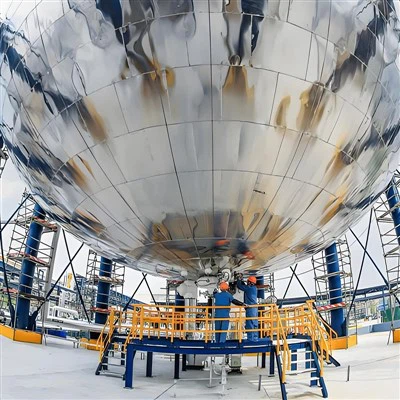
Hey there! I'm a supplier of cryogenic Air Separation Units (ASU). And today, I wanna have a chat about whether cryogenic ASU can be used in the metallurgical industry.
First off, let's get a basic understanding of what a cryogenic ASU is. A cryogenic ASU is a type of equipment that separates air into its components - mainly nitrogen, oxygen, and argon - by using the differences in their boiling points at extremely low temperatures. It's like a high - tech air - splitting machine. You can check out more about Cryogenic Equipment on our website.
Now, let's dive into the metallurgical industry. This industry is all about extracting metals from their ores, refining them, and processing them into useful products. Metals like steel, aluminum, and copper are the stars of this show. And it turns out, cryogenic ASUs have a lot to offer in this field.
Oxygen in Metallurgy
One of the key products of a cryogenic ASU is oxygen. In the metallurgical industry, oxygen plays a crucial role. For example, in steelmaking, the basic oxygen furnace (BOF) process uses high - purity oxygen. By blowing oxygen into the molten iron, impurities like carbon, silicon, and phosphorus are oxidized and removed. This not only speeds up the steel - making process but also improves the quality of the steel.
The oxygen produced by cryogenic ASUs can be customized to meet different purity requirements. High - purity oxygen means a more efficient oxidation process in the furnace. With our Cryogenic Air Separation Plant, we can provide a steady supply of oxygen with the right purity for various metallurgical applications.
Nitrogen in Metallurgy
Nitrogen is another important output of cryogenic ASUs. In the metallurgical industry, nitrogen has several uses. It can be used as a shielding gas during the welding and cutting of metals. When welding, nitrogen helps to prevent the oxidation of the metal surface, ensuring a clean and strong weld.


In the heat - treating process, nitrogen is used to create an inert atmosphere. This is crucial because it prevents the metal from reacting with the surrounding air at high temperatures, which could lead to surface defects and reduced mechanical properties. Our Cryogenic Air Separation Nitrogen system can produce nitrogen of different purities and flow rates to meet the specific needs of metallurgical heat - treating operations.
Argon in Metallurgy
Argon, a less - known but equally important component separated by cryogenic ASUs, also has its place in the metallurgical industry. In the production of specialty steels and non - ferrous metals, argon is used as a shielding gas. It is especially useful in processes like electric arc welding of aluminum and titanium. Since argon is heavier than air, it provides better coverage and protection of the weld area compared to other gases.
Advantages of Using Cryogenic ASU in Metallurgy
- Cost - effectiveness: In the long run, having an on - site cryogenic ASU can be more cost - effective for metallurgical plants. Instead of relying on external suppliers for oxygen, nitrogen, and argon, they can produce these gases themselves. This reduces transportation costs and the risk of supply disruptions.
- Quality control: With a cryogenic ASU, metallurgical companies have better control over the quality of the gases they use. They can adjust the purity and flow rate of the gases according to their specific production requirements, which ultimately leads to better - quality metal products.
- Environmental benefits: Cryogenic ASUs are relatively environmentally friendly. They use air as the raw material, which is an abundant and renewable resource. And the separation process is based on physical principles rather than chemical reactions, which means less waste and pollution.
Challenges and Considerations
Of course, using cryogenic ASUs in the metallurgical industry isn't without its challenges. The initial investment in a cryogenic ASU is relatively high. There are also requirements for proper installation, operation, and maintenance. Metallurgical plants need to have trained personnel to operate the equipment safely and efficiently.
However, the long - term benefits far outweigh these challenges. With the right planning and support, a cryogenic ASU can be a valuable asset for any metallurgical company.
Conclusion
So, can cryogenic ASUs be used in the metallurgical industry? The answer is a resounding yes! Oxygen, nitrogen, and argon produced by cryogenic ASUs have a wide range of applications in metal extraction, refining, and processing. They offer cost - effectiveness, quality control, and environmental benefits.
If you're in the metallurgical industry and are looking for a reliable supplier of cryogenic ASUs, we're here to help. We have years of experience in providing high - quality cryogenic ASU solutions. Whether you need a small - scale unit for a specialty metal workshop or a large - scale plant for a major steel mill, we can customize a solution for you. Don't hesitate to get in touch with us to start a discussion about your specific needs. Let's work together to take your metallurgical production to the next level.
References
- Perry, R. H., & Green, D. W. (1997). Perry's Chemical Engineers' Handbook. McGraw - Hill.
- ASM Handbook Committee. (2004). ASM Handbook Volume 4: Heat Treating. ASM International.