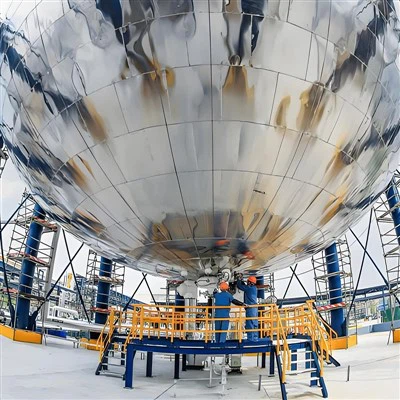
Hey there! As a supplier of CO2 liquefaction plants, I often get asked about the requirements for the raw materials used in these plants. In this blog post, I'll break down the key factors and criteria you need to consider when sourcing raw materials for a CO2 liquefaction plant.
1. Purity of CO2
The most crucial raw material for a CO2 liquefaction plant is, of course, carbon dioxide itself. The purity of the CO2 feedstock is super important. Generally, for a high - quality liquefaction process, the CO2 should have a purity of at least 95%. Why so high? Well, impurities can cause all sorts of problems. For example, water vapor in the CO2 can freeze during the liquefaction process and clog the pipes and valves. Other impurities like hydrocarbons, nitrogen, and oxygen can also affect the efficiency of the liquefaction and the quality of the final liquid CO2 product.


If you're looking for a reliable Liquid Co2 Plant, you need to ensure that the CO2 source meets these purity standards. We've seen cases where lower - purity CO2 led to increased maintenance costs and reduced plant performance.
2. Source of CO2
There are several sources of CO2 that can be used in a liquefaction plant. One common source is industrial waste gas. Many industrial processes, such as power generation, cement production, and fermentation in the food and beverage industry, produce large amounts of CO2 as a by - product. Using these waste gases not only provides a cost - effective source of CO2 but also helps in reducing greenhouse gas emissions.
However, when using industrial waste gas, you need to be extra careful about the impurities. Different industrial processes produce CO2 with different impurity profiles. For example, CO2 from a cement plant may contain high levels of particulate matter, while CO2 from a fermentation process may have traces of ethanol or other organic compounds.
Another source is natural CO2 deposits. These are underground reservoirs of CO2 that can be extracted. Natural CO2 is often relatively pure, but it still needs to be treated to remove any remaining impurities before liquefaction.
3. Pressure and Temperature of the Feedstock
The pressure and temperature of the incoming CO2 feedstock also play a significant role. Most CO2 liquefaction plants operate more efficiently when the feedstock is at a relatively high pressure. This reduces the amount of energy required to compress the gas further during the liquefaction process.
Typically, the feedstock should be at a pressure of around 2 - 5 bar. As for the temperature, a lower temperature is better as it reduces the energy needed for cooling during liquefaction. However, it's important to note that the feedstock temperature and pressure need to be within the design limits of the liquefaction plant.
4. Trace Components
Apart from the major impurities, trace components in the CO2 feedstock can also have an impact. For example, sulfur compounds can be corrosive to the plant equipment. Even in small amounts, they can cause long - term damage to pipes, valves, and heat exchangers. So, it's essential to monitor and control the levels of sulfur compounds in the feedstock.
Similarly, trace amounts of heavy metals like mercury can be a concern. Mercury can accumulate in the plant and contaminate the final liquid CO2 product. Therefore, the feedstock should be tested for heavy metals, and appropriate removal processes should be in place if necessary.
5. Flow Rate
The flow rate of the CO2 feedstock is another important consideration. The plant's design is based on a certain expected flow rate. If the actual flow rate is too low, the plant may not operate at its optimal efficiency, and the cost per unit of liquefied CO2 may increase. On the other hand, if the flow rate is too high, it can put excessive stress on the plant equipment and may even lead to safety issues.
It's important to have a stable and predictable flow rate of the feedstock. This may require proper management of the CO2 source, such as adjusting the production rate of the industrial process that generates the CO2 or controlling the extraction rate from a natural CO2 deposit.
6. Compatibility with Plant Materials
The raw materials, especially the CO2 feedstock, need to be compatible with the materials used in the construction of the liquefaction plant. For example, some metals may react with CO2 or the impurities in it under certain conditions. Stainless steel is a commonly used material in CO2 liquefaction plants because it is relatively resistant to corrosion.
But you also need to consider the seals, gaskets, and other non - metallic components. These materials should not be degraded by the CO2 or the impurities in the feedstock. Otherwise, it can lead to leaks and other operational problems.
7. Regulatory Requirements
There are also regulatory requirements that the raw materials must meet. Different countries and regions have different standards regarding the quality of CO2 used in various applications. For example, if the liquefied CO2 is going to be used in the food and beverage industry, it needs to meet strict food - grade standards. These standards often specify the maximum allowable levels of impurities, including biological contaminants.
As a supplier of Liquid CO2 Refinery Plant, we always make sure that our plants are designed to handle feedstocks that comply with the relevant regulations.
8. Cost - Effectiveness
Last but not least, cost - effectiveness is a major factor. You need to balance the quality of the raw materials with their cost. Sometimes, it may be possible to use a slightly lower - quality feedstock if you have the appropriate purification processes in place. However, this also means additional capital and operating costs for the purification equipment.
So, it's important to do a cost - benefit analysis when selecting the raw materials. Consider the long - term costs, including maintenance, energy consumption, and the quality of the final product.
In conclusion, the requirements for the raw materials of a CO2 liquefaction plant are quite complex. From purity and source to pressure, temperature, and regulatory compliance, there are many factors to consider. As a leading supplier of Carbon Dioxide Liquefaction Plant, we have the expertise and experience to help you navigate these requirements. If you're in the market for a CO2 liquefaction plant or need advice on raw material sourcing, don't hesitate to get in touch. We're here to assist you in setting up a successful and efficient CO2 liquefaction operation.
References
- Kohl, A. L., & Nielsen, R. B. (1997). Gas Purification (5th ed.). Gulf Publishing Company.
- Stoessel, F. (2008). Thermal Safety of Chemical Processes: Risk Assessment and Prevention. Wiley - VCH.
- Green, D. W., & Perry, R. H. (2007). Perry's Chemical Engineers' Handbook (8th ed.). McGraw - Hill.