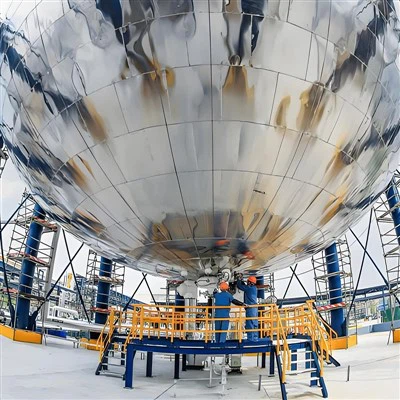
Hey there! I'm a supplier of Carbon Removal Plants, and I'm super stoked to chat with you about how these bad boys contribute to climate adaptation. In a world where climate change is hitting us hard, Carbon Removal Plants are like the unsung heroes in our fight to make the planet habitable again.
Let's start by getting the basics down. A Carbon Removal Plant is a facility designed to pull carbon dioxide (CO2) out of the atmosphere. You might be thinking, "Why do we need to do that?" Well, the deal is that human activities, like burning fossil fuels and deforestation, have pumped an insane amount of CO2 into the air. This extra CO2 traps heat in the Earth's atmosphere, leading to global warming and all the crazy weather events we've been seeing lately.
One of the key ways Carbon Removal Plants contribute to climate adaptation is by reducing the overall concentration of CO2 in the atmosphere. By sucking up that excess CO2, we can slow down the rate of global warming. This is crucial because even a small reduction in the rate of temperature increase can have a huge impact on our ability to adapt to climate change. For example, it can give us more time to build sea walls to protect coastal communities from rising sea levels, or to develop drought-resistant crops in areas facing water shortages.


Another important aspect is that Carbon Removal Plants can help restore the balance of ecosystems. Many plants and animals are struggling to keep up with the rapid changes in climate. By reducing CO2 levels, we can create a more stable environment for these species to thrive. This is not only good for biodiversity but also for the services that ecosystems provide us, like clean air, water purification, and pollination.
Now, let's talk about the different technologies used in Carbon Removal Plants. There are a few main ones, and each has its own pros and cons. One common method is direct air capture (DAC). This technology uses chemical reactions to capture CO2 directly from the air. It's like a big, high-tech vacuum cleaner for CO2. The captured CO2 can then be stored underground or used in other industrial processes.
Another method is bioenergy with carbon capture and storage (BECCS). This involves growing crops or other biomass, burning them to produce energy, and then capturing and storing the CO2 that is released during the combustion process. BECCS has the added benefit of producing renewable energy while also removing CO2 from the atmosphere.
There are also enhanced weathering techniques, where certain minerals are used to react with CO2 in the air and turn it into a solid form. This can be done on a large scale, for example, by spreading crushed minerals over agricultural fields.
As a supplier of Carbon Removal Plants, I've seen firsthand the potential of these technologies. We've been working hard to develop more efficient and cost-effective plants that can make a real difference. Our Carbon Capture Plant is designed to use the latest technologies to capture as much CO2 as possible with minimal energy consumption. And our Carbon Dioxide Factory can take the captured CO2 and turn it into useful products, like building materials or fuels.
But it's not all smooth sailing. There are still some challenges that need to be overcome. One of the biggest issues is the cost. Carbon removal technologies are currently quite expensive, which makes it difficult for many countries and companies to invest in them. However, as the technology improves and economies of scale come into play, the cost is expected to come down.
Another challenge is the scalability of these technologies. We need to be able to build and operate Carbon Removal Plants on a much larger scale if we want to have a significant impact on climate change. This requires a lot of resources, including land, water, and energy. We also need to make sure that the plants are located in areas where they can operate efficiently and where there is enough infrastructure to support them.
Despite these challenges, I'm really optimistic about the future of Carbon Removal Plants. I believe that with the right investment and support, these technologies can play a major role in our climate adaptation efforts. And as a supplier, I'm committed to doing my part to make that happen.
If you're interested in learning more about our Carbon Removal Plants or if you're thinking about investing in this technology, I'd love to have a chat with you. We can discuss your specific needs and how our plants can help you contribute to climate adaptation while also achieving your business goals. Whether you're a government agency looking to reduce your carbon footprint or a private company interested in sustainable development, we have solutions that can work for you.
In conclusion, Carbon Removal Plants are a powerful tool in our fight against climate change. They can help us reduce CO2 levels, slow down global warming, and restore the balance of ecosystems. While there are still some challenges to overcome, the potential benefits are huge. So, if you're ready to take action and be part of the solution, don't hesitate to reach out. Let's work together to create a more sustainable future for ourselves and for generations to come.
References
- IPCC (Intergovernmental Panel on Climate Change). "Climate Change 2022: Mitigation of Climate Change." Contribution of Working Group III to the Sixth Assessment Report of the Intergovernmental Panel on Climate Change.
- International Energy Agency. "Carbon Capture, Utilization and Storage." Annual report on the status and trends of carbon capture technologies.
- Nature. Various research articles on carbon removal technologies and their impact on climate change.