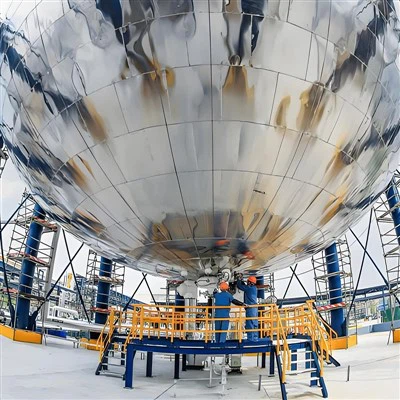
The process of CO2 recovery is a complex yet essential part of many industrial operations, offering environmental benefits and economic opportunities. As a leading CO2 Recovery Unit supplier, we understand the significance of proper pre-treatment of gas before it enters the CO2 Recovery Unit. This blog post will delve into the various pre-treatment requirements for gas, highlighting their importance and the impact they have on the overall efficiency and performance of the CO2 recovery process.
Importance of Pre - treatment
Before a gas stream can be effectively processed in a CO2 Recovery Unit, pre - treatment is crucial. Pre - treatment ensures that the gas meets the specific requirements of the recovery unit, protecting the equipment from damage, enhancing the purity of the recovered CO2, and improving the overall efficiency of the recovery process. Without proper pre - treatment, the CO2 Recovery Unit may face issues such as reduced performance, increased maintenance costs, and lower product quality.
Removal of Particulates
One of the primary pre - treatment steps is the removal of particulates from the gas stream. Particulates can include dust, dirt, and other solid or liquid particles that may be present in the gas. These particles can cause abrasion and erosion of the equipment in the CO2 Recovery Unit, leading to premature wear and tear. Additionally, particulates can clog filters and other components, reducing the flow rate of the gas and decreasing the efficiency of the recovery process.
To remove particulates, various filtration techniques can be employed. For example, mechanical filters such as bag filters and cartridge filters can be used to capture larger particles. These filters work by physically blocking the particles as the gas passes through them. For smaller particles, electrostatic precipitators or fabric filters may be more effective. Electrostatic precipitators use an electric field to charge the particles, causing them to be attracted to and collected on charged plates. Fabric filters, on the other hand, rely on a porous fabric material to trap the particles.
Reduction of Moisture
Moisture in the gas stream can also pose significant challenges to the CO2 Recovery Unit. Water vapor can react with CO2 to form carbonic acid, which can corrode the equipment and reduce the purity of the recovered CO2. Moreover, moisture can cause freezing in some parts of the recovery unit, especially in low - temperature processes, leading to blockages and operational issues.
To reduce moisture content, dehydration processes are commonly used. One of the most common methods is the use of desiccants, such as silica gel or activated alumina. These desiccants have a high affinity for water and can adsorb the moisture from the gas as it passes through a bed of the desiccant material. Another approach is the use of refrigeration systems to cool the gas, causing the water vapor to condense and be removed as liquid water. This method is often used in combination with desiccant drying for more effective moisture removal.
Elimination of Contaminants
In addition to particulates and moisture, the gas may contain various contaminants that need to be removed before entering the CO2 Recovery Unit. These contaminants can include sulfur compounds, nitrogen oxides, hydrocarbons, and other trace gases. Sulfur compounds, for example, can cause environmental pollution if released into the atmosphere and can also damage the catalysts used in some CO2 recovery processes.
The removal of contaminants depends on the specific type of contaminant. For sulfur compounds, processes such as amine scrubbing can be used. Amine scrubbing involves contacting the gas with an amine solution, which selectively absorbs the sulfur compounds. Nitrogen oxides can be removed through catalytic reduction processes, where a catalyst is used to convert the nitrogen oxides into nitrogen and water. Hydrocarbons can be removed by processes such as adsorption on activated carbon or oxidation in a catalytic oxidizer.
Adjustment of Temperature and Pressure
The temperature and pressure of the gas also need to be adjusted to meet the requirements of the CO2 Recovery Unit. Different recovery processes operate at specific temperature and pressure ranges, and deviations from these ranges can affect the efficiency and performance of the unit.
For temperature adjustment, heat exchangers can be used. Heat exchangers transfer heat between the gas and a heating or cooling medium, such as water or steam. If the gas is too hot, it can be cooled down using a cooling heat exchanger. Conversely, if the gas is too cold, it can be heated up using a heating heat exchanger.
Pressure adjustment can be achieved using compressors or pressure regulators. Compressors are used to increase the pressure of the gas, while pressure regulators are used to control and maintain the pressure at a desired level. Proper pressure adjustment is important for ensuring the proper flow of the gas through the recovery unit and for optimizing the separation of CO2 from other gases.
Impact on CO2 Recovery Unit Performance
Proper pre - treatment of the gas has a direct impact on the performance of the CO2 Recovery Unit. By removing particulates, moisture, contaminants, and adjusting the temperature and pressure, the equipment in the recovery unit is protected from damage, and the efficiency of the recovery process is improved. This results in higher purity of the recovered CO2, lower maintenance costs, and longer equipment lifespan.
For instance, a well - pre - treated gas stream will have fewer particulates and contaminants, which means that the filters and other components in the recovery unit will not clog as easily. This allows for a more consistent flow of gas through the unit, increasing the overall recovery rate of CO2. Additionally, by reducing moisture and adjusting the temperature and pressure, the chemical reactions and separation processes in the recovery unit can occur more efficiently, leading to better product quality.
Related Products and Their Significance
As a CO2 Recovery Unit supplier, we offer a range of products that are related to the pre - treatment and recovery of CO2. Our Co2 Production Plant is designed to produce high - quality CO2 from various gas sources. The pre - treatment steps ensure that the input gas is suitable for the production process, resulting in a pure and valuable CO2 product.
Our Co2 Recycling Plant focuses on recycling CO2 from industrial waste gases. Proper pre - treatment of the waste gas is essential for the successful operation of the recycling plant, as it allows for the efficient separation and purification of CO2.
The Co2 Manufacturing Plant is another important product in our portfolio. The manufacturing process requires a carefully pre - treated gas stream to ensure the quality and consistency of the manufactured CO2.
Conclusion
In conclusion, the pre - treatment requirements for gas before entering a CO2 Recovery Unit are diverse and essential. Removing particulates, reducing moisture, eliminating contaminants, and adjusting temperature and pressure are all critical steps in ensuring the efficient and effective operation of the recovery unit. As a leading CO2 Recovery Unit supplier, we are committed to providing high - quality pre - treatment solutions and recovery units that meet the specific needs of our customers.
If you are interested in learning more about our CO2 Recovery Units or have specific requirements for gas pre - treatment, we invite you to contact us for a detailed discussion. Our team of experts is ready to assist you in finding the best solutions for your CO2 recovery needs.


References
- Kohl, A. L., & Nielsen, R. B. (1997). Gas Purification. Gulf Publishing Company.
- Perry, R. H., & Green, D. W. (1997). Perry's Chemical Engineers' Handbook. McGraw - Hill.
- Speight, J. G. (2011). Handbook of Petroleum Processing. Taylor & Francis.