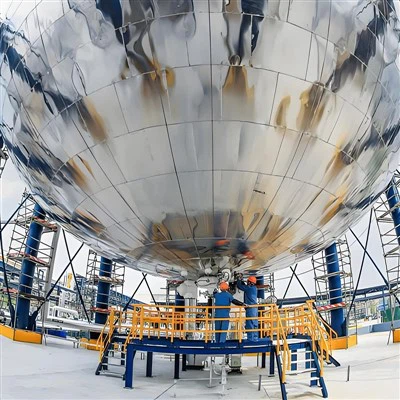
Carbon removal has emerged as a crucial strategy in the global fight against climate change. As a supplier of Carbon Removal Plants, I've witnessed firsthand how these innovative facilities contribute significantly to energy efficiency. In this blog, I'll delve into the mechanisms, benefits, and real - world impacts of carbon removal plants on energy efficiency.
The Basics of Carbon Removal Plants
Carbon removal plants, also known as Carbon Removal Plant, are designed to capture carbon dioxide (CO2) from the atmosphere or industrial emissions. There are different types of carbon removal technologies, including direct air capture (DAC) and carbon capture from point sources such as power plants and industrial facilities.
Direct air capture involves using chemical processes to extract CO2 directly from the ambient air. This technology typically uses large fans to draw air through a system where CO2 binds to a sorbent material. Once the sorbent is saturated with CO2, it can be heated to release the captured gas, which can then be stored or used for other purposes.
On the other hand, carbon capture from point sources targets CO2 emissions at the source. For example, in a coal - fired power plant, a Carbon Capture Plant can be installed to capture CO2 before it is released into the atmosphere. This is often done using solvents that absorb CO2 from the flue gas.
How Carbon Removal Plants Contribute to Energy Efficiency
1. Reducing the Need for Energy - Intensive Mitigation Strategies
One of the primary ways carbon removal plants contribute to energy efficiency is by reducing the need for more energy - intensive climate mitigation strategies. For instance, instead of relying solely on large - scale renewable energy installations to offset high - carbon emissions, carbon removal can provide a complementary solution. By capturing and storing CO2, these plants can help to balance the carbon footprint of existing energy systems without requiring a complete overhaul of the infrastructure.
In some cases, industries that are difficult to decarbonize, such as cement and steel production, can use carbon removal plants to manage their emissions. These industries are energy - intensive and rely on processes that produce significant amounts of CO2. Carbon removal can help them to continue operating while reducing their overall carbon impact, rather than investing in highly disruptive and energy - consuming alternative production methods.
2. Energy Recovery from Captured CO2
Another important aspect is the potential for energy recovery from the captured CO2. Once CO2 is captured, it can be used in various industrial processes, some of which can generate energy. For example, CO2 can be used in enhanced oil recovery (EOR), where it is injected into oil wells to increase oil production. This process not only helps to extract more oil but also recovers some of the energy that would otherwise be lost.
In addition, there are emerging technologies that can convert captured CO2 into valuable fuels and chemicals. For example, through a process called electrochemical reduction, CO2 can be converted into methane, methanol, or other hydrocarbons. These fuels can then be used to power vehicles, generate electricity, or serve as feedstocks for the chemical industry. This not only reduces the reliance on fossil fuels but also provides a way to recycle the captured carbon and recover energy in the process.
3. Improving the Efficiency of Existing Energy Systems
Carbon removal plants can also improve the efficiency of existing energy systems. In power plants, for example, the integration of a carbon capture system can sometimes lead to better overall performance. By removing CO2 from the flue gas, the heat transfer characteristics of the gas can be improved, which can enhance the efficiency of the boiler and the power generation process.
Moreover, in industrial facilities, the capture of CO2 can be integrated with other energy - saving measures. For example, waste heat from the industrial process can be used to power the carbon capture system, reducing the need for additional energy input. This synergy between carbon capture and energy management can lead to significant energy savings and a more efficient use of resources.
Real - World Examples
1. Climeworks' Direct Air Capture Plant
Climeworks, a Swiss company, operates several direct air capture plants around the world. Their plants use a modular design that can be scaled up or down depending on the demand. These plants capture CO2 from the air and then transport it to a storage site where it is permanently sequestered underground.
One of the key features of Climeworks' technology is its relatively low energy consumption compared to other carbon removal methods. The company has optimized its process to use waste heat from nearby industrial facilities or geothermal energy sources to power the CO2 release process. This not only reduces the overall energy demand of the plant but also makes use of otherwise wasted energy, contributing to energy efficiency.
2. Petra Nova Carbon Capture Project
The Petra Nova project in Texas, USA, is a large - scale carbon capture project at a coal - fired power plant. The project captures CO2 from the flue gas of the power plant and then uses it for enhanced oil recovery. By capturing and utilizing the CO2, the project reduces the power plant's carbon emissions while also generating additional oil production.
The project has demonstrated that carbon capture can be integrated into an existing power generation system without a significant loss of efficiency. In fact, the use of CO2 for EOR has provided an economic incentive for the power plant to continue operating while reducing its carbon footprint, showing the potential for carbon removal to contribute to both energy efficiency and economic viability.
Challenges and Future Outlook
While carbon removal plants offer significant potential for energy efficiency, there are still several challenges that need to be addressed. One of the main challenges is the high energy demand of some carbon removal technologies. For example, direct air capture currently requires a relatively large amount of energy to operate, which can offset some of the energy - saving benefits.
However, ongoing research and development efforts are focused on improving the energy efficiency of these technologies. New materials are being developed for sorbents that can capture CO2 more effectively with less energy input. In addition, advancements in process engineering are making it possible to optimize the overall operation of carbon removal plants.
In the future, carbon removal plants are likely to play an increasingly important role in the global energy transition. As the demand for carbon neutrality grows, these plants will be needed to complement renewable energy sources and help industries reduce their carbon emissions. By continuing to invest in research and development, we can further improve the energy efficiency of carbon removal plants and make them a more viable and sustainable solution for climate change mitigation.
Conclusion
As a supplier of Carbon Removal Plant, I am excited about the potential of these technologies to contribute to energy efficiency. Carbon removal plants offer a range of benefits, from reducing the need for energy - intensive mitigation strategies to recovering energy from captured CO2 and improving the efficiency of existing energy systems.
Real - world examples have shown that these plants can be successfully integrated into various industries and energy systems. While there are challenges to overcome, the future looks promising for carbon removal as a key component of the global effort to combat climate change and achieve energy efficiency.
If you are interested in learning more about our carbon removal plants or are considering implementing a carbon removal solution in your facility, I encourage you to reach out for a procurement discussion. We are committed to providing high - quality, energy - efficient carbon removal solutions that can meet your specific needs.


References
- IPCC Special Report on Global Warming of 1.5°C.
- International Energy Agency (IEA) reports on carbon capture and storage.
- Scientific research papers on direct air capture and carbon capture technologies from journals such as Nature and Science.