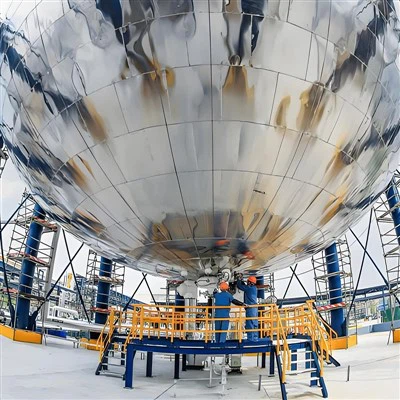
Hey there! As a supplier of cryogenic equipment, I've had the chance to deal with all sorts of cool (pun intended) stuff in this field. Cryogenic equipment is used in a bunch of industries, like healthcare, food processing, and energy. It's super important to know the performance indicators of this equipment so you can make the right choice when it comes to buying. In this blog, I'll chat about the key performance indicators of cryogenic equipment that you should keep an eye on.
Temperature Control
One of the most crucial performance indicators of cryogenic equipment is temperature control. Cryogenic systems are designed to operate at extremely low temperatures, often below -150°C. The ability to maintain a stable and precise temperature is essential for the proper functioning of the equipment and the processes it supports.
Think about it. In a Gas Cryogenic Air Separation Plant, precise temperature control is needed to separate different gases from the air. If the temperature fluctuates too much, the separation process won't work as efficiently, and you might end up with lower - quality products.
When evaluating cryogenic equipment, you should look at the temperature range it can achieve and how accurately it can maintain that temperature. A good cryogenic system will have a tight temperature tolerance, meaning it can stay within a narrow temperature band. For example, a system might be able to maintain a temperature of -180°C ± 1°C. This kind of precision is vital for applications where even a small temperature change can have a big impact.
Cooling Capacity
Another important indicator is cooling capacity. This refers to the amount of heat that the cryogenic equipment can remove from a system in a given period. Cooling capacity is usually measured in watts or British thermal units per hour (BTU/hr).
The cooling capacity you need depends on the specific application. In a Liquid Air Separation Plant, for instance, a large - scale plant will require a high cooling capacity to quickly cool and liquefy the air. If the cooling capacity is too low, the process will be slow, and it might not be able to meet the production demands.
When choosing cryogenic equipment, you should calculate the heat load of your system. This includes factors like the initial temperature of the material to be cooled, the rate at which heat is generated in the process, and any heat losses to the surrounding environment. Once you know the heat load, you can select equipment with an appropriate cooling capacity.
Energy Efficiency
Energy efficiency is a big deal these days. Running cryogenic equipment can be energy - intensive, so you want to make sure you're getting the most bang for your buck. Energy - efficient cryogenic equipment can save you a lot of money in the long run.
There are a few ways to measure energy efficiency in cryogenic systems. One common metric is the coefficient of performance (COP). The COP is the ratio of the cooling capacity to the power input. A higher COP means that the equipment is more energy - efficient. For example, if a cryogenic cooler has a COP of 2, it means that for every unit of energy it consumes, it can remove two units of heat.
Manufacturers are constantly working on improving the energy efficiency of cryogenic equipment. New technologies, like advanced insulation materials and more efficient compressors, are being used to reduce energy consumption. When shopping for cryogenic equipment, look for models with high COP values and energy - saving features.
Reliability and Maintenance
Reliability is key when it comes to cryogenic equipment. You don't want your equipment breaking down in the middle of an important process. A reliable cryogenic system should have a long service life and a low failure rate.
Maintenance is also an important aspect. Some cryogenic equipment requires regular maintenance to keep it running smoothly. This might include tasks like checking the seals, lubricating moving parts, and replacing filters. The easier it is to maintain the equipment, the less downtime you'll have.
Look for equipment that has a good track record of reliability. Read reviews from other users and ask the manufacturer about their maintenance requirements. A manufacturer that offers good after - sales support and spare parts availability is also a plus.
Safety Features
Safety is non - negotiable when dealing with cryogenic equipment. The extremely low temperatures and the use of gases can pose significant risks if not handled properly.
Good cryogenic equipment should have a range of safety features. For example, it should have pressure relief valves to prevent over - pressurization. It should also have temperature sensors that can shut down the system if the temperature goes out of the safe range.
In addition, the equipment should be designed to prevent leaks. Leaks of cryogenic fluids can be extremely dangerous, as they can cause frostbite and asphyxiation. Look for equipment with high - quality seals and leak - detection systems.
Purity of Output
In applications where cryogenic equipment is used for gas separation or purification, the purity of the output is a critical performance indicator. For example, in a Cryogenic Air Separation Plant, the purity of the separated gases, like oxygen and nitrogen, is very important.
The purity of the output is usually expressed as a percentage. For medical and industrial applications, high - purity gases are often required. If the purity is not high enough, it can affect the quality of the end - product. When evaluating cryogenic equipment, ask about the purity levels it can achieve and how it maintains those levels over time.
Flow Rate
Flow rate is another factor to consider, especially in applications where cryogenic fluids or gases need to be transported. The flow rate refers to the volume of fluid or gas that can pass through the equipment in a given time.
In a cryogenic pipeline system, for example, the flow rate needs to be sufficient to meet the demands of the process. If the flow rate is too low, it can cause delays and inefficiencies. On the other hand, if the flow rate is too high, it can put extra stress on the equipment and increase the risk of leaks.


When selecting cryogenic equipment, make sure it can handle the required flow rate. You may need to consult with an engineer to calculate the appropriate flow rate for your specific application.
Conclusion
So, there you have it - the main performance indicators of cryogenic equipment. Temperature control, cooling capacity, energy efficiency, reliability, safety features, purity of output, and flow rate are all important factors to consider when choosing cryogenic equipment.
If you're in the market for cryogenic equipment, I'd love to have a chat with you. We've got a wide range of high - quality cryogenic products that can meet your needs. Whether you're looking for a small - scale cooler or a large - scale Gas Cryogenic Air Separation Plant, we've got you covered. Reach out to us to start the procurement process and let's find the perfect solution for you.
References
- "Cryogenic Engineering" by R. Barron
- Industry reports on cryogenic equipment performance