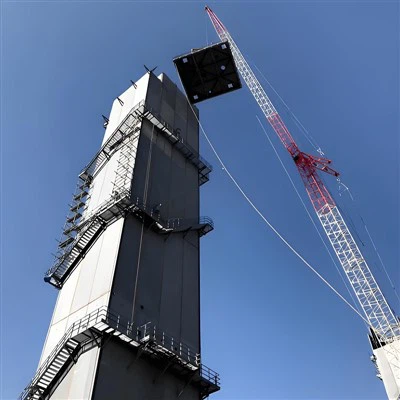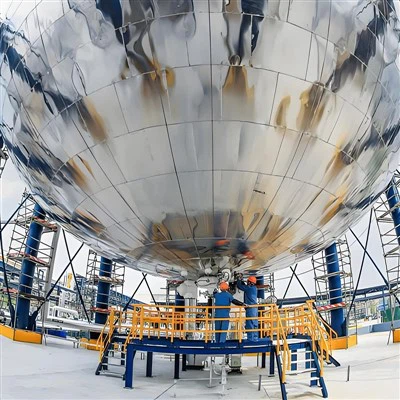
As a dedicated supplier in the field of cryogenic Air Separation Units (ASUs), I've witnessed firsthand the incredible complexity and sophistication of the control systems that make these plants operate efficiently and safely. In this blog post, I'll delve into the inner workings of the control systems in cryogenic ASUs, exploring their key components, functions, and the importance of precise control in this high - tech industrial process.
Understanding Cryogenic ASUs
Before we dive into the control systems, let's briefly understand what a cryogenic ASU is. A Cryogenic Air Separation Unit is a large - scale industrial plant that separates atmospheric air into its primary components, such as nitrogen, oxygen, and argon, through a cryogenic distillation process. These components have a wide range of applications in industries like steelmaking, chemical production, healthcare, and food processing.
A Liquid Air Separation Plant is a type of cryogenic ASU that produces liquid oxygen, liquid nitrogen, and liquid argon, which can be stored and transported more easily than their gaseous counterparts. The heart of these plants lies in their ability to achieve extremely low temperatures, often below - 170°C, to liquefy and separate the air components based on their different boiling points.
Key Components of Control Systems in Cryogenic ASUs
Sensors
Sensors are the eyes and ears of the control system in a cryogenic ASU. They are responsible for collecting real - time data on various parameters such as temperature, pressure, flow rate, and composition. For example, temperature sensors are crucial for monitoring the cryogenic temperatures within the distillation columns. These sensors need to be highly accurate and reliable, as even a small deviation in temperature can significantly affect the separation efficiency.
Pressure sensors are used to measure the pressure at different points in the system, including the inlet of the air compressor, the pressure within the distillation columns, and the outlet of the product storage tanks. Flow sensors, on the other hand, monitor the flow rate of air, oxygen, nitrogen, and argon, ensuring that the right amount of each component is being produced and delivered.
Controllers
Controllers are the brains of the control system. They receive the data from the sensors and compare it with the setpoints, which are the desired values for each parameter. Based on this comparison, the controllers calculate the appropriate actions to be taken to maintain the process within the desired range.
There are different types of controllers used in cryogenic ASUs, such as proportional - integral - derivative (PID) controllers. PID controllers are widely used because they can adjust the control output based on the current error (the difference between the setpoint and the actual value), the accumulated error over time, and the rate of change of the error. This allows for precise and stable control of the process variables.
Actuators
Actuators are the muscles of the control system. They receive signals from the controllers and perform physical actions to adjust the process parameters. For example, control valves are actuators that can regulate the flow rate of fluids in the system. By adjusting the opening of the valve, the flow of air, oxygen, or nitrogen can be increased or decreased as needed.
Compressors and expanders are also important actuators in a cryogenic ASU. Compressors increase the pressure of the incoming air, while expanders reduce the pressure and temperature of the gas, helping to achieve the cryogenic conditions required for the separation process.
Functions of Control Systems in Cryogenic ASUs
Process Control
The primary function of the control system is to maintain the stability and efficiency of the cryogenic distillation process. This involves controlling the temperature, pressure, and flow rate at each stage of the process. For example, in the distillation columns, the control system ensures that the temperature gradient is maintained within a narrow range to achieve optimal separation of the air components.
The control system also manages the start - up and shut - down procedures of the ASU. During start - up, it gradually brings the plant up to the operating conditions, ensuring a smooth transition. During shut - down, it safely reduces the pressure and temperature, preventing any damage to the equipment.
Safety Control
Safety is of utmost importance in cryogenic ASUs due to the extreme operating conditions and the flammable and asphyxiating nature of some of the gases involved. The control system continuously monitors for any abnormal conditions, such as over - pressure, over - temperature, or gas leaks.
In case of an emergency, the control system can trigger safety mechanisms, such as shutting down the plant, activating alarms, and opening safety valves to release excess pressure. For example, if a pressure sensor detects an over - pressure situation in a storage tank, the control system will immediately open a safety valve to prevent the tank from rupturing.
Quality Control
The control system also plays a crucial role in ensuring the quality of the produced gases. It monitors the composition of the oxygen, nitrogen, and argon products using sensors such as gas analyzers. If the composition deviates from the desired specifications, the control system can adjust the process parameters to correct the problem.
For instance, if the oxygen purity is lower than the required level, the control system can adjust the reflux ratio in the distillation column, which is the ratio of the liquid returned to the column to the vapor leaving the column. By increasing the reflux ratio, more oxygen can be separated from the other components, improving the purity of the product.
Importance of Precise Control in Cryogenic ASUs
Energy Efficiency
Precise control of the process parameters in a cryogenic ASU can significantly improve energy efficiency. By maintaining the optimal temperature and pressure conditions, the compressors and expanders can operate more efficiently, reducing the overall energy consumption of the plant.
For example, if the pressure in the distillation column is too high, the compressor will have to work harder to maintain the flow, consuming more energy. On the other hand, if the pressure is too low, the separation efficiency will be reduced, leading to a lower production rate and potentially more energy - intensive re - processing.
Product Quality
As mentioned earlier, precise control is essential for ensuring the quality of the produced gases. In industries such as healthcare and electronics manufacturing, where high - purity gases are required, even a small deviation in the product quality can have serious consequences.
For example, in the healthcare industry, oxygen used for medical purposes must have a purity of at least 99.5%. The control system in a cryogenic ASU ensures that the oxygen produced meets these strict quality standards by continuously monitoring and adjusting the process parameters.
Equipment Longevity
Precise control also helps to extend the lifespan of the equipment in a cryogenic ASU. By maintaining the operating conditions within the design limits, the wear and tear on the compressors, valves, and other components are reduced.


For example, if the temperature within the distillation column is too high, it can cause thermal stress on the column walls, leading to cracks and leaks over time. The control system prevents such situations by keeping the temperature within the safe range.
Integration with Cryogenic Equipment
The control system in a cryogenic ASU needs to be seamlessly integrated with the various cryogenic equipment in the plant. This includes the air compressor, distillation columns, heat exchangers, and storage tanks.
For example, the control system communicates with the air compressor to adjust its speed and output based on the demand for air. It also coordinates the operation of the heat exchangers to ensure efficient heat transfer between the different streams of gas and liquid.
The integration of the control system with the cryogenic equipment also allows for remote monitoring and control. Operators can access the control system from a central control room or even remotely via the internet, enabling them to make real - time adjustments to the process parameters and respond quickly to any issues.
Conclusion
The control systems in cryogenic ASUs are a marvel of modern engineering. They are responsible for ensuring the safe, efficient, and high - quality operation of these complex industrial plants. From sensors that collect data to controllers that make decisions and actuators that perform actions, every component of the control system plays a vital role in the overall process.
If you are in the market for a cryogenic ASU or need to upgrade your existing control system, we are here to help. Our team of experts has extensive experience in designing, installing, and maintaining control systems for cryogenic ASUs. We can provide you with customized solutions that meet your specific requirements and ensure the optimal performance of your plant. Contact us today to start a discussion about your project and explore how we can work together to achieve your goals.
References
- Perry, R. H., & Green, D. W. (1997). Perry's Chemical Engineers' Handbook. McGraw - Hill.
- Kohl, A. L., & Nielsen, R. B. (1997). Gas Purification. Gulf Publishing Company.
- Schweitzer, P. A. (2004). Handbook of Separation Techniques for Chemical Engineers. McGraw - Hill.