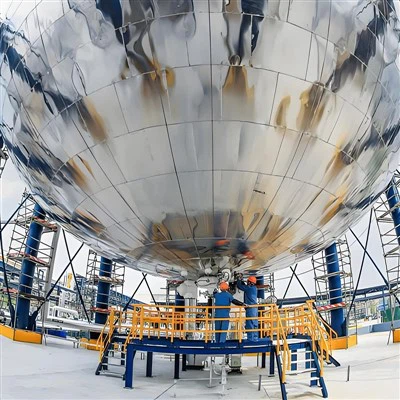
Hey there! As a supplier of oxygen plants, I often get asked about the power requirements for these essential pieces of equipment. In this blog post, I'll break down the factors that influence the power needs of an oxygen plant and give you a better understanding of what to expect.
First off, let's talk about the types of oxygen plants. There are mainly two types: cryogenic oxygen plants and non - cryogenic oxygen plants. Cryogenic oxygen plants are large - scale facilities that use a process of liquefying air and then separating oxygen from other components by distillation. Non - cryogenic oxygen plants, on the other hand, typically use technologies like pressure swing adsorption (PSA) or membrane separation.
Cryogenic Oxygen Plants
Cryogenic oxygen plants are power - hungry beasts. They need a significant amount of electricity to run the compressors, refrigeration systems, and other equipment involved in the cryogenic process.
Compressors
The compressors in a cryogenic oxygen plant are used to compress air to high pressures. This compression process requires a large amount of energy. The power consumption of the compressor depends on the capacity of the plant. For example, a small - scale cryogenic oxygen plant with a production capacity of around 50 tons per day might require a compressor that consumes several hundred kilowatts of power. Larger plants with capacities of several hundred tons per day could have compressors that use thousands of kilowatts.
Refrigeration Systems
After the air is compressed, it needs to be cooled down to extremely low temperatures in the refrigeration system. This cooling process is energy - intensive as well. The refrigeration system has to maintain a very low temperature to separate oxygen from nitrogen and other gases effectively. A well - designed cryogenic oxygen plant's refrigeration system can consume a substantial portion of the total power requirements, sometimes up to 30 - 40% of the overall energy used by the plant.
Overall, a cryogenic oxygen plant with a medium - sized capacity (say, 100 - 200 tons per day) can have a total power requirement in the range of 1 - 2 megawatts. This high power demand makes these plants suitable for large - scale industrial applications where a continuous and high - volume supply of oxygen is needed, such as in steelmaking and chemical industries.
Non - Cryogenic Oxygen Plants
Non - cryogenic oxygen plants, such as those using PSA technology, have relatively lower power requirements compared to cryogenic plants.
Pressure Swing Adsorption (PSA) Plants
In a PSA oxygen plant, the air is passed through a bed of adsorbent material that selectively adsorbs nitrogen, leaving oxygen as the product gas. The main power - consuming components in a PSA plant are the air compressor and the vacuum pump (in some cases).

The air compressor is used to pressurize the air before it enters the adsorption beds. The power consumption of the compressor depends on the flow rate and pressure required for the process. A small - to - medium - sized PSA oxygen plant with a production capacity of 1 - 10 cubic meters per hour might have an air compressor that consumes around 5 - 20 kilowatts.
The vacuum pump, if present, is used to desorb the nitrogen from the adsorbent material during the regeneration cycle. Its power consumption is usually much lower than that of the compressor. Overall, a PSA oxygen plant can be a great choice for smaller applications like hospitals or small - scale manufacturing units, where the power availability might be limited.
Factors Affecting Power Requirements
There are several other factors that can influence the power requirements of an oxygen plant, regardless of its type.
Production Capacity
This is one of the most obvious factors. The higher the production capacity of the oxygen plant, the more power it will need. For example, a plant that produces 100 cubic meters of oxygen per hour will require more power than a plant that produces 10 cubic meters per hour. This is because more air needs to be processed, compressed, and separated to meet the higher production demand.
Efficiency of Equipment
The efficiency of the compressors, refrigeration systems, and other components in the oxygen plant plays a crucial role. Modern, energy - efficient equipment can significantly reduce the power consumption of the plant. For instance, a high - efficiency compressor can use less electricity to achieve the same level of compression compared to an older, less efficient model.
Operating Conditions
The ambient temperature, humidity, and altitude can also affect the power requirements. In hot and humid environments, the air compressor has to work harder to compress the air, which increases the power consumption. Similarly, at high altitudes, the air density is lower, so the compressor might need to operate at a higher capacity to process the same amount of air.
Power Sources for Oxygen Plants
When it comes to powering an oxygen plant, there are several options.
Grid Power
Most oxygen plants are connected to the electrical grid. This is a convenient and reliable source of power, especially for large - scale plants. However, the cost of grid power can vary depending on the location and the electricity tariff.
On - Site Generation
Some oxygen plants, especially those in remote areas or where the grid power is unreliable, use on - site power generation. This can be in the form of diesel generators or natural gas generators. While on - site generation provides more control over the power supply, it also comes with its own set of challenges, such as fuel storage and maintenance.
The Role of Energy Management
Energy management is crucial for reducing the power requirements and operating costs of an oxygen plant. By implementing energy - saving measures such as regular equipment maintenance, optimizing the process parameters, and using energy - efficient technologies, the power consumption of the plant can be significantly reduced.
For example, proper insulation of the cryogenic equipment can reduce the heat leakage and thus lower the energy consumption of the refrigeration system. In PSA plants, optimizing the adsorption and desorption cycles can improve the overall efficiency and reduce the power used by the compressor and vacuum pump.
Related Technologies and Their Impact on Power
If you're interested in related technologies, check out the LNG Process Plant. LNG process plants are involved in the liquefaction of natural gas, and some of the technologies used in these plants, such as cryogenic processes, have similarities with oxygen plants. Understanding the power requirements and energy - saving measures in LNG process plants can also provide insights for oxygen plant operation.
Conclusion
In conclusion, the power requirements for an oxygen plant depend on its type, production capacity, equipment efficiency, and operating conditions. Cryogenic oxygen plants are more power - intensive and are suitable for large - scale industrial applications, while non - cryogenic plants like PSA plants are more energy - efficient and better for smaller applications.
If you're in the market for an oxygen plant and want to know more about the power requirements based on your specific needs, don't hesitate to get in touch. We can provide you with detailed information and help you choose the right oxygen plant that meets your production requirements while keeping the power consumption in check. Let's start a conversation about your oxygen plant needs and find the best solution for you.
References
- Perry, R. H., & Green, D. W. (Eds.). (1997). Perry's Chemical Engineers' Handbook. McGraw - Hill.
- Seader, J. D., & Henley, E. J. (1998). Separation Process Principles. Wiley.