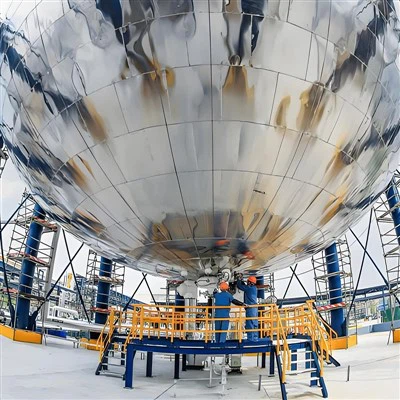
In the dynamic and ever - evolving landscape of industrial production, a CO2 production plant stands as a crucial entity, contributing significantly to various sectors. As a supplier to a CO2 production plant, I have witnessed the intricate processes involved in managing the inventory of raw materials. This blog aims to delve into the strategies and best practices employed by these plants to ensure a seamless supply chain and efficient production.
Understanding the Raw Materials in CO2 Production
Before delving into inventory management, it's essential to understand the raw materials typically used in a Co2 Production Plant. The primary source of carbon dioxide is often industrial waste gases from processes such as ammonia production, fermentation, and combustion. These waste gases contain varying concentrations of CO2, and the plant's role is to capture, purify, and liquefy it.
Other raw materials may include chemicals for purification processes, such as activated carbon for removing impurities, and various catalysts to enhance the separation and purification efficiency. Additionally, energy sources like natural gas or electricity are required to power the plant's operations, which can also be considered part of the raw material inventory in a broader sense.
Forecasting Demand
One of the first steps in effective inventory management is accurate demand forecasting. A CO2 production plant needs to predict the quantity of CO2 it will need to produce in the coming weeks, months, or even years. This prediction is based on several factors, including historical sales data, market trends, and customer contracts.
For example, if a large beverage company has a long - term contract with the plant to supply CO2 for carbonating their drinks, the plant can use the terms of this contract to estimate a significant portion of its future production. Market trends also play a vital role. The growing demand for CO2 in the food and beverage industry, as well as in the emerging field of enhanced oil recovery, can influence the plant's production plans.
The plant's sales and marketing team often collaborate closely with the production and inventory management departments to gather and analyze this data. They use advanced analytics tools and software to generate forecasts, which are then adjusted regularly based on new information.
Supplier Relationships
As a supplier to a CO2 production plant, I understand the importance of strong supplier relationships. The plant relies on a network of suppliers to provide the raw materials it needs. These relationships are built on trust, reliability, and mutual benefit.
The plant's procurement team works to identify reliable suppliers who can provide high - quality raw materials at competitive prices. They negotiate long - term contracts with these suppliers to ensure a stable supply. For instance, a contract with a natural gas supplier may guarantee a fixed price for a certain volume of gas over a specified period, protecting the plant from price fluctuations in the market.
Regular communication is also crucial. The plant keeps its suppliers informed about its production plans and any changes in demand. In return, suppliers can provide the plant with early warnings about potential shortages or price changes, allowing the plant to adjust its inventory management strategies accordingly.
Inventory Monitoring and Control
Once the raw materials are procured, the plant needs to monitor and control its inventory effectively. This involves keeping track of the quantity, quality, and location of each raw material.
Modern CO2 production plants use inventory management software that integrates with their production systems. This software provides real - time data on inventory levels, allowing the plant's operators to make informed decisions. For example, if the inventory of activated carbon is running low, the system can automatically generate a purchase order to replenish it.
The plant also conducts regular physical inventory audits to verify the accuracy of the software data. These audits help identify any discrepancies, such as theft, spoilage, or incorrect recording. Based on the audit results, the plant can take corrective actions, such as improving security measures or adjusting its inventory management processes.
Safety Stock and Buffer Inventory
In addition to the regular inventory, a CO2 production plant maintains a safety stock or buffer inventory. This is an extra quantity of raw materials kept on hand to protect against unexpected events, such as supply disruptions, sudden increases in demand, or quality issues with incoming materials.
The size of the safety stock depends on several factors, including the reliability of the suppliers, the lead time for procuring new materials, and the potential impact of a supply disruption on the plant's operations. For example, if a particular raw material has a long lead time and a high probability of supply disruptions, the plant may keep a larger safety stock.
The safety stock is carefully managed to avoid over - stocking, which can tie up capital and increase storage costs. The plant uses statistical models to determine the optimal level of safety stock, which is then adjusted based on changing conditions.
Just - in - Time (JIT) Inventory Management
Some CO2 production plants also adopt a Just - in - Time (JIT) inventory management approach. The goal of JIT is to minimize inventory levels by receiving raw materials exactly when they are needed in the production process.
This approach can significantly reduce inventory holding costs and the risk of inventory obsolescence. However, it requires a high level of coordination between the plant and its suppliers. The plant needs to have accurate production schedules and reliable suppliers who can deliver materials on time.
For example, if the plant has a production run scheduled for a specific day, the suppliers need to ensure that all the necessary raw materials arrive at the plant just in time for the start of the production. Any delay in the delivery can disrupt the entire production process.
Waste Management and Recycling
Inventory management in a CO2 production plant also involves waste management and recycling. During the production process, some raw materials may be wasted or left over. The plant needs to find ways to minimize this waste and, if possible, recycle the materials.
For example, the purification process may generate waste products that contain small amounts of CO2 or other valuable substances. The plant can invest in recycling technologies to extract these substances and reuse them in the production process. This not only reduces the plant's raw material costs but also has environmental benefits.
Conclusion
Effective inventory management is crucial for the success of a CO2 production plant. By accurately forecasting demand, building strong supplier relationships, monitoring and controlling inventory, maintaining safety stocks, and adopting appropriate inventory management strategies like JIT, the plant can ensure a stable supply of raw materials, reduce costs, and improve its overall efficiency.
As a supplier to Co2 Factory and Co2 Processing Plant, I am committed to providing high - quality raw materials and supporting the plant's inventory management efforts. If you are involved in the procurement or management of a CO2 production plant and are looking for reliable raw material suppliers, I encourage you to reach out to discuss your specific needs. We can work together to develop customized solutions that meet your production requirements and help you achieve your business goals.


References
- "Inventory Management in the Chemical Industry" by John Smith, Chemical Engineering Journal, 20XX
- "Demand Forecasting Techniques for Industrial Production" by Jane Doe, Production and Operations Management Review, 20XX
- "Supplier Relationship Management Best Practices" by Robert Johnson, Supply Chain Management Magazine, 20XX