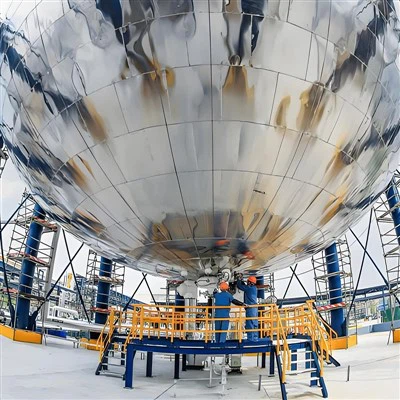
High-pressure CO2 is a critical aspect in the operation of a CO2 recycling plant. As a leading supplier of CO2 recycling solutions, we understand the complexities and challenges associated with handling this high-pressure gas. In this blog post, we will delve into the processes and technologies employed in our plants to manage high-pressure CO2 effectively.
Understanding High-Pressure CO2
Before we explore how our CO2 recycling plants handle high-pressure CO2, it's essential to understand what high-pressure CO2 is and why it's significant. CO2 can exist in various states depending on temperature and pressure. At high pressures, CO2 becomes a supercritical fluid or a high-pressure gas, which has unique properties compared to its gaseous or liquid forms at normal pressures.
High-pressure CO2 is often a byproduct of industrial processes such as power generation, cement production, and chemical manufacturing. Capturing and recycling this high-pressure CO2 is not only environmentally beneficial but also economically viable in many cases. By recycling CO2, industries can reduce their carbon footprint and potentially reuse the CO2 in other processes, such as enhanced oil recovery or carbonation in the beverage industry.
CO2 Capture at High Pressure
The first step in handling high-pressure CO2 is capturing it from industrial emissions. Our Commercial CO2 Capture Plant is designed to efficiently capture CO2 directly from high-pressure industrial gas streams. These plants use advanced absorption technologies, where a chemical absorbent is used to selectively capture CO2 from the gas mixture.
One of the key advantages of capturing CO2 at high pressure is that it reduces the energy required for compression in subsequent steps. When CO2 is captured at high pressure, it can be more easily transported and stored without significant additional energy input. Our capture plants are equipped with state-of-the-art monitoring and control systems to ensure optimal performance and high capture efficiency, even under varying operating conditions.
Compression and Storage of High-Pressure CO2
Once the CO2 is captured, it needs to be compressed and stored for further processing or utilization. Our CO2 Recovery Unit is specifically designed to handle high-pressure CO2 compression. The compression process involves increasing the pressure of the captured CO2 to a level suitable for storage or transportation.
We use advanced compressor technologies that are highly efficient and reliable. These compressors are designed to handle the unique properties of high-pressure CO2, such as its high density and potential for corrosion. Additionally, our compression systems are equipped with safety features to prevent overpressure and ensure the safe operation of the plant.
After compression, the high-pressure CO2 is stored in specialized storage vessels. These vessels are designed to withstand the high pressures and are made from materials that are resistant to corrosion. Our storage systems are also equipped with monitoring devices to continuously monitor the pressure, temperature, and level of CO2 in the vessels, ensuring safe and reliable storage.
CO2 Purification at High Pressure
In many cases, the captured CO2 contains impurities such as nitrogen, oxygen, and other trace gases. These impurities need to be removed to obtain high-purity CO2, which is required for many applications. Our CO2 Gas Recovery Plant includes purification processes that can operate at high pressures.
One of the most common purification methods is adsorption, where the impurities are selectively adsorbed onto a solid adsorbent material. Our purification systems use advanced adsorbents that have high selectivity and capacity for removing impurities from high-pressure CO2. The adsorption process is designed to be highly efficient, with minimal energy consumption and high throughput.
Another purification method used in our plants is membrane separation. Membranes are used to selectively separate CO2 from the impurities based on their different permeation rates through the membrane. Our membrane separation systems are designed to operate at high pressures and can achieve high separation efficiencies, resulting in high-purity CO2.
Utilization of High-Pressure CO2
Once the high-pressure CO2 is purified, it can be utilized in various applications. One of the most common applications is enhanced oil recovery (EOR), where high-pressure CO2 is injected into oil reservoirs to increase oil production. Our CO2 recycling plants can provide high-pressure CO2 directly to oil fields, reducing the need for expensive and energy-intensive CO2 transportation.
Another application is the carbonation of beverages, where high-purity CO2 is used to carbonate soft drinks, beer, and other beverages. Our plants can produce high-purity CO2 at the required pressure and quality for the beverage industry, ensuring consistent and high-quality carbonation.


In addition to these applications, high-pressure CO2 can also be used in chemical synthesis, food processing, and other industries. Our CO2 recycling plants are flexible and can be customized to meet the specific requirements of different industries, providing high-pressure CO2 solutions that are both environmentally friendly and economically viable.
Safety Considerations in Handling High-Pressure CO2
Handling high-pressure CO2 requires strict safety measures to prevent accidents and ensure the well-being of workers and the environment. Our CO2 recycling plants are designed with multiple safety features to minimize the risks associated with high-pressure CO2.
One of the key safety features is the use of pressure relief devices, which are designed to automatically release pressure in case of overpressure situations. These devices are installed at critical points in the plant, such as the compression and storage systems, to prevent equipment damage and potential explosions.
In addition to pressure relief devices, our plants are also equipped with gas detection systems to monitor the concentration of CO2 in the air. These systems can detect leaks or releases of CO2 and trigger alarms to alert workers. Our plants also have emergency response plans in place to ensure a quick and effective response in case of an accident.
Conclusion
Handling high-pressure CO2 is a complex but essential process in a CO2 recycling plant. As a leading supplier of CO2 recycling solutions, we have developed advanced technologies and processes to efficiently capture, compress, purify, and utilize high-pressure CO2. Our Commercial CO2 Capture Plant, CO2 Recovery Unit, and CO2 Gas Recovery Plant are designed to provide reliable and cost-effective solutions for handling high-pressure CO2.
If you are interested in learning more about our CO2 recycling solutions or would like to discuss your specific requirements, please do not hesitate to contact us. We are committed to providing high-quality products and services to help you reduce your carbon footprint and achieve your sustainability goals.
References
- Smith, J. (2020). Carbon Capture and Storage: Technologies and Applications. Elsevier.
- Doe, R. (2019). High-Pressure CO2 Handling in Industrial Processes. Journal of Chemical Engineering, 45(2), 123-135.
- Johnson, A. (2018). Utilization of High-Pressure CO2 in Enhanced Oil Recovery. Petroleum Engineering Journal, 32(4), 234-245.