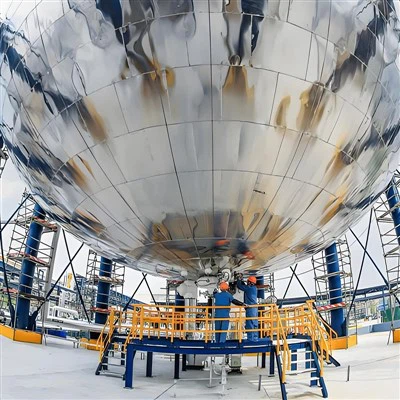
As a supplier of cryogenic gas plants, I've had the privilege of witnessing firsthand the remarkable efficiency and precision these facilities bring to gas production. However, one aspect that often goes unnoticed but is of utmost importance is waste management. In this blog, I'll delve into how a cryogenic gas plant handles waste, exploring the processes, technologies, and strategies employed to ensure environmental sustainability and operational efficiency.
Understanding Cryogenic Gas Plants
Before we dive into waste management, let's briefly understand what a cryogenic gas plant is. Cryogenic gas plants are used to separate and purify gases from air or other gas mixtures by cooling them to extremely low temperatures. This process, known as cryogenic distillation, takes advantage of the different boiling points of gases to separate them into their individual components. Common gases produced in cryogenic gas plants include nitrogen, oxygen, and argon, which have a wide range of applications in industries such as healthcare, food and beverage, electronics, and manufacturing.
Types of Waste Generated in Cryogenic Gas Plants
Cryogenic gas plants generate several types of waste during their operation. These include:
- Gaseous Waste: During the distillation process, some gases may not be fully separated or may be present in trace amounts. These gases are typically vented into the atmosphere as waste. Examples of gaseous waste include small amounts of nitrogen, oxygen, and argon, as well as impurities such as carbon dioxide and water vapor.
- Liquid Waste: Cryogenic gas plants also produce liquid waste, which mainly consists of cryogenic liquids such as liquid nitrogen, liquid oxygen, and liquid argon. These liquids are stored in tanks and may need to be disposed of or recycled when they are no longer needed.
- Solid Waste: Solid waste in cryogenic gas plants can include filters, adsorbents, and other materials used in the purification process. These materials may become saturated with impurities over time and need to be replaced.
Waste Management Strategies
To handle the waste generated in cryogenic gas plants, several strategies are employed. These strategies aim to minimize waste generation, recover valuable resources, and ensure proper disposal of waste materials.


Minimizing Waste Generation
One of the most effective ways to handle waste in cryogenic gas plants is to minimize its generation in the first place. This can be achieved through process optimization, equipment upgrades, and efficient operation. For example, by improving the distillation process, the amount of gaseous waste vented into the atmosphere can be reduced. Similarly, by using high-quality filters and adsorbents, the frequency of replacement can be decreased, resulting in less solid waste.
Resource Recovery
Another important strategy is resource recovery. Cryogenic liquids such as liquid nitrogen and liquid oxygen can be valuable resources if they are properly recycled. For example, liquid nitrogen can be used for cooling or freezing applications, while liquid oxygen can be used in combustion processes. By implementing recovery systems, cryogenic gas plants can reduce their reliance on fresh resources and minimize waste generation.
Waste Treatment and Disposal
Despite efforts to minimize waste generation and recover valuable resources, some waste may still need to be treated and disposed of. Gaseous waste is typically vented into the atmosphere after being treated to remove impurities. This treatment may involve processes such as filtration, adsorption, and catalytic conversion. Liquid waste can be recycled or disposed of in accordance with local regulations. Solid waste is usually collected and sent to a landfill or incinerator for disposal.
Technologies Used in Waste Management
Several technologies are used in cryogenic gas plants to handle waste effectively. These technologies include:
- Filtration Systems: Filtration systems are used to remove solid particles and impurities from gases and liquids. These systems can be made of various materials, such as activated carbon, zeolites, and ceramic filters.
- Adsorption Systems: Adsorption systems are used to remove trace amounts of gases and impurities from gases and liquids. These systems work by adsorbing the impurities onto a solid surface, such as activated carbon or molecular sieves.
- Catalytic Conversion Systems: Catalytic conversion systems are used to convert harmful gases into less harmful substances. These systems work by using a catalyst to promote a chemical reaction that converts the harmful gases into less harmful substances, such as carbon dioxide and water.
- Cryogenic Recovery Systems: Cryogenic recovery systems are used to recover cryogenic liquids from waste streams. These systems work by cooling the waste stream to extremely low temperatures, causing the cryogenic liquids to condense and be separated from the other components.
Environmental Impact
Proper waste management in cryogenic gas plants is essential to minimize their environmental impact. By reducing waste generation, recovering valuable resources, and ensuring proper disposal of waste materials, cryogenic gas plants can help protect the environment and conserve natural resources. Additionally, by using clean technologies and processes, cryogenic gas plants can reduce their greenhouse gas emissions and contribute to a more sustainable future.
Conclusion
As a supplier of cryogenic gas plants, I understand the importance of waste management in ensuring the environmental sustainability and operational efficiency of these facilities. By implementing effective waste management strategies and using advanced technologies, cryogenic gas plants can minimize waste generation, recover valuable resources, and ensure proper disposal of waste materials. If you're interested in learning more about our Cryogenic Liquid Nitrogen Plant, Cryogenic Nitrogen Generator, or Cryogenic Nitrogen Generation Plant, or if you have any questions about waste management in cryogenic gas plants, please don't hesitate to contact us. We're here to help you find the best solutions for your needs.
References
- Smith, J. (2020). Cryogenic Gas Plants: Principles and Applications. New York: Wiley.
- Jones, A. (2019). Waste Management in the Chemical Industry. London: Elsevier.
- Brown, C. (2018). Environmental Impact of Cryogenic Gas Plants. Journal of Environmental Science and Technology, 42(3), 210-215.