Hey there! As a supplier of liquid nitrogen plants, I often get asked about how these plants actually produce liquid nitrogen. It's a fascinating process, and I'm stoked to share the ins and outs with you.
The Basics: Why Liquid Nitrogen?
Before we dive into the production process, let's quickly touch on why liquid nitrogen is so important. Liquid nitrogen has a wide range of applications. In the medical field, it's used for cryosurgery, storing biological samples, and even in some cosmetic procedures. In the food industry, it's used for flash-freezing food to preserve its quality. It's also used in the electronics industry for cooling and in research labs for various experiments. Because of its incredibly low temperature (-196°C or -321°F), it can make things happen that other substances simply can't.
The Raw Material: Air
The first step in producing liquid nitrogen is to look at the raw material: air. Air is made up of about 78% nitrogen, 21% oxygen, and small amounts of other gases like argon, carbon dioxide, and neon. Our liquid nitrogen plants are like high - tech air - transformers that take this readily available air and turn it into pure liquid nitrogen.
Air Intake and Pretreatment
The process starts with the intake of air. The air is drawn into the plant through large filters. These filters are super important because they remove dust, dirt, and other particulates from the air. Think of it like a big - scale vacuum cleaner for air. After the initial filtering, the air goes through a pretreatment process. This involves removing water vapor and carbon dioxide. Water vapor can freeze and block the pipes in the plant, and carbon dioxide can also cause problems during the cooling process. Specialized adsorbents are used to trap these unwanted substances.
Compression
Once the air is clean and dry, it's time for compression. The air is compressed to a high pressure. This compression increases the temperature of the air, so it then has to go through a cooling process. Heat exchangers are used to cool the compressed air back down. During compression, we're essentially packing the air molecules closer together, which sets the stage for the next steps.
Cryogenic Air Separation
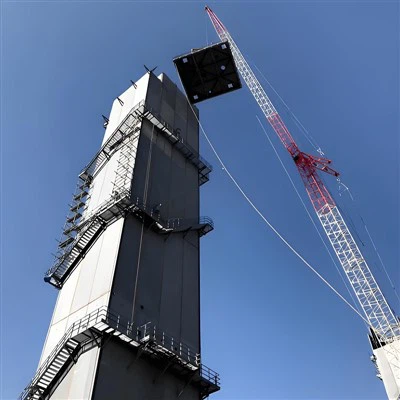
Now, we're getting to the heart of the process: cryogenic air separation. This is where the magic really happens. The compressed and cooled air is sent into a distillation column. The distillation column is like a tall, high - tech tower. Inside this tower, the air is gradually cooled to extremely low temperatures. Because different gases have different boiling points, they start to separate at different levels in the column.
Oxygen has a higher boiling point (-183°C or -297°F) compared to nitrogen (-196°C or -321°F). So, as the air cools down, the oxygen condenses first and collects at the bottom of the column. The nitrogen, being lighter and having a lower boiling point, remains in a gaseous state for longer and can be collected higher up in the column.
Liquefaction
The gaseous nitrogen collected from the distillation column still needs to be turned into a liquid. This is done through a process called liquefaction. The gaseous nitrogen is further cooled using a refrigeration system. The refrigeration system uses a cycle of compression and expansion to lower the temperature of the nitrogen gas until it liquefies.
Storage and Distribution
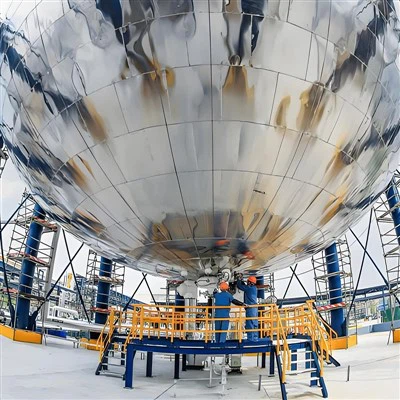
Once the nitrogen is in liquid form, it's stored in large, insulated tanks. These tanks are designed to keep the liquid nitrogen at its extremely low temperature. From these storage tanks, the liquid nitrogen can be distributed to customers. We use specialized trucks with insulated containers to transport the liquid nitrogen safely.
Our Liquid Nitrogen Plants
At our company, we offer a variety of liquid nitrogen plants to meet different needs. If you're looking for a plant that can produce high - purity nitrogen, check out our High Purity 99.6% Cryogenic Air Separation Plant. This plant is designed to produce nitrogen with a purity of 99.6%, which is perfect for applications that require very clean nitrogen, like in some high - tech manufacturing processes.
For those who need a large amount of liquid nitrogen, our Large Size Liquid Nitrogen Plant is a great option. It can produce a significant volume of liquid nitrogen, making it suitable for big - scale industries such as food processing plants or large medical facilities.


And if you're interested in a comprehensive solution for liquid nitrogen production, our Liquid Nitrogen Generation Plant is the way to go. It's a complete system that can handle all aspects of liquid nitrogen production, from air intake to final storage.
Why Choose Us?
We've been in the business of supplying liquid nitrogen plants for a long time. Our plants are built with high - quality components and advanced technology. We also offer excellent after - sales service, so you can be sure that your plant will run smoothly for years to come. Whether you're a small business just starting out or a large corporation, we can find the right liquid nitrogen plant solution for you.
Let's Talk!
If you're interested in purchasing a liquid nitrogen plant for your business, we'd love to hear from you. We can provide you with more detailed information about our products, answer any questions you might have, and even offer a customized solution based on your specific needs. Don't hesitate to reach out and start a conversation about how we can help you with your liquid nitrogen production requirements.
References
- Perry, R. H., & Green, D. W. (1997). Perry's Chemical Engineers' Handbook. McGraw - Hill.
- Kohl, A. L., & Nielsen, R. B. (1997). Gas Purification. Gulf Publishing Company.