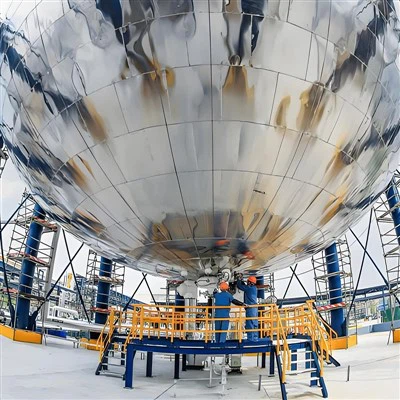
Hey there! I'm a supplier of liquid oxygen plants, and today I'm gonna take you through how a liquid oxygen plant purifies oxygen. Oxygen is super important in a bunch of industries, from healthcare to manufacturing, and getting it pure is crucial.
The Basics of Oxygen Source
First off, where does the oxygen come from? Well, the most common source is the air we breathe every day. Air is made up of about 78% nitrogen, 21% oxygen, and small amounts of other gases like argon, carbon dioxide, and neon. To get pure oxygen from this mix, we've gotta separate it from the rest.
Initial Filtration
The purification process starts with filtration. The air is sucked into the plant through big intake systems. Before it goes any further, it passes through a series of filters. These filters are like big sieves that catch all the dirt, dust, and other solid particles in the air. It's like cleaning your house before you start cooking - you wanna get rid of all the junk first. This step is really important because those solid particles could mess up the later purification steps and damage the equipment.
Compression and Cooling
After the air is filtered, it's time to compress it. Compression is like squeezing a sponge - you make the air take up less space. This is done using compressors, which are basically big pumps. As the air gets compressed, its temperature goes up. But we don't want hot air for the next steps, so we use coolers to bring the temperature back down. This cooling process is crucial because it helps us control the physical properties of the air and makes it easier to separate the different gases.
Removal of Water and Carbon Dioxide
Now, the air still has water vapor and carbon dioxide in it, and we need to get rid of those. Water vapor can freeze in the later stages of the process and block the pipes, and carbon dioxide can also cause problems. To remove water vapor, we use adsorbent beds filled with materials like silica gel or molecular sieves. These materials are like little magnets for water molecules. They attract and hold onto the water, leaving the air dry. For carbon dioxide removal, we use a similar process. The air passes through another adsorbent bed that's designed to trap carbon dioxide molecules. This way, we're left with a cleaner mix of nitrogen, oxygen, and a little bit of argon.
Cryogenic Distillation
This is the heart of the oxygen purification process - cryogenic distillation. Cryogenic means really, really cold. We cool the air down to extremely low temperatures, below -180°C. At these temperatures, the air turns into a liquid. Different gases have different boiling points, and that's what we use to separate them. Nitrogen has a lower boiling point (-196°C) than oxygen (-183°C). So, when we heat the liquid air gently, the nitrogen boils off first and turns back into a gas. We collect this nitrogen gas and can use it for other purposes. The remaining liquid is mostly oxygen, but it still has a little bit of argon in it.
Argon Removal
To get pure oxygen, we need to remove the argon. Argon has a boiling point between nitrogen and oxygen (-186°C). We use a second distillation column to separate the argon from the oxygen. In this column, the liquid mixture is heated again, and the argon boils off and is collected. What's left is highly pure liquid oxygen.
Final Purification and Quality Control
Even after all these steps, we still do a final purification to make sure the oxygen is as pure as possible. We use various methods like catalytic oxidation to remove any remaining trace impurities. And then, it's time for quality control. We test the oxygen to make sure it meets the required purity standards. This involves using sophisticated analytical equipment to measure the levels of different gases and impurities. Only when the oxygen passes all these tests is it considered pure enough for use.
Applications of Purified Oxygen
The purified liquid oxygen has a wide range of applications. In the medical field, it's used in hospitals to help patients breathe. Medical Liquid Oxygen Plant are specifically designed to produce oxygen that meets the strict quality standards for medical use. In the manufacturing industry, oxygen is used in processes like metal cutting and welding. It helps the metal burn at a higher temperature and makes the cutting and welding more efficient. And in the chemical industry, oxygen is used as an oxidizing agent in various chemical reactions.
Why Choose Our Liquid Oxygen Plants
If you're in the market for a liquid oxygen plant, we've got you covered. Our Oxygen Liquid Plant are state - of the - art. They're designed to be energy - efficient, which means you'll save money on your operating costs. We use the latest technology and high - quality materials to ensure reliable and long - lasting performance. And our Liquid Oxygen Production Plant can be customized to meet your specific production needs, whether you need a small plant for a local hospital or a large one for an industrial complex.


Contact Us for Purchase
If you're interested in learning more about our liquid oxygen plants or are ready to make a purchase, don't hesitate to reach out. We've got a team of experts who can answer all your questions and help you choose the right plant for your needs. Whether you're in the medical, manufacturing, or chemical industry, we have the solution for you. Let's start a conversation and see how we can work together to meet your oxygen purification requirements.
References
- Perry, R. H., & Green, D. W. (1997). Perry's Chemical Engineers' Handbook. McGraw - Hill.
- Kohl, A. L., & Nielsen, R. B. (1997). Gas Purification. Gulf Publishing Company.