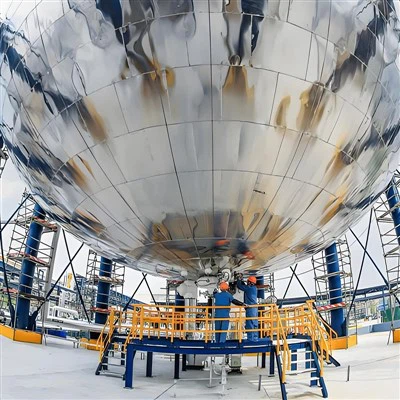
As a reputable supplier of CO2 gas plants, I understand the significance of efficient CO2 storage methods in the operation of a Co2 Processing Plant, Co2 Production Plant, and Co2 Manufacturing Plant. In this blog post, I will delve into the various storage methods for CO2 in a CO2 gas plant, exploring their advantages, disadvantages, and suitability for different applications.
Compressed Gas Storage
One of the most common methods of storing CO2 in a CO2 gas plant is in the form of compressed gas. In this method, CO2 is compressed to high pressures and stored in specialized cylinders or tanks. Compressed gas storage is relatively simple and cost - effective, making it a popular choice for small - to medium - scale CO2 gas plants.
The process of compressing CO2 involves using compressors to increase the pressure of the gas. Once compressed, the CO2 can be stored in steel cylinders or large storage tanks. These storage vessels are designed to withstand high pressures and are equipped with safety features such as pressure relief valves to prevent over - pressurization.
Advantages of compressed gas storage include its simplicity and flexibility. Compressed CO2 cylinders can be easily transported and used in a variety of applications, such as in food and beverage industries for carbonation, or in fire extinguishers. Additionally, the initial investment for compressed gas storage systems is relatively low compared to other storage methods.
However, there are also some disadvantages. Compressed gas storage has a limited storage capacity due to the high pressures involved. As the pressure increases, the risk of leakage and potential safety hazards also rises. Moreover, the energy required for compression can be significant, which can increase the operating costs of the CO2 gas plant.
Liquid CO2 Storage
Liquid CO2 storage is another widely used method in CO2 gas plants. CO2 can be liquefied by cooling it to a temperature below - 78.5°C at atmospheric pressure or by increasing the pressure while cooling it. Once liquefied, CO2 has a much higher density than in its gaseous state, allowing for a larger amount of CO2 to be stored in a given volume.
Liquid CO2 is typically stored in insulated storage tanks. These tanks are designed to maintain the low temperatures required to keep the CO2 in a liquid state. They are often double - walled with insulation materials in between to minimize heat transfer from the surroundings.
The main advantage of liquid CO2 storage is its high storage density. A large amount of CO2 can be stored in a relatively small space, which is ideal for large - scale CO2 gas plants. Liquid CO2 is also easier to handle and transport compared to compressed gas, as it can be pumped through pipelines.
In industries such as the dry ice manufacturing industry, liquid CO2 is the preferred form of storage. When liquid CO2 is released into the atmosphere, it rapidly expands and cools, forming dry ice.
However, liquid CO2 storage also has its drawbacks. The process of liquefying CO2 requires significant energy input for cooling. The storage tanks need to be well - insulated to prevent heat ingress, which can cause the CO2 to vaporize. Additionally, the infrastructure for handling liquid CO2, such as pumps and pipelines, needs to be carefully designed and maintained to ensure safe operation.
Solid CO2 (Dry Ice) Storage
Solid CO2, commonly known as dry ice, is another storage option. Dry ice is produced by rapidly expanding liquid CO2, which causes a portion of the CO2 to freeze into a solid state. Dry ice has a temperature of - 78.5°C and sublimates directly from a solid to a gas at atmospheric pressure.
Dry ice is often used for short - term storage and transportation of perishable goods, as it provides a cold source without leaving any liquid residue. It is also used in some industrial processes, such as in blast cleaning for removing contaminants from surfaces.
Advantages of dry ice storage include its portability and the fact that it can be used as a cooling agent without the need for additional refrigeration equipment. Dry ice can be easily molded into different shapes, which makes it suitable for various applications.
On the other hand, dry ice has a relatively high cost of production. It sublimates at a rate of about 5 - 10% per day, which means that long - term storage is not practical. Also, handling dry ice requires special safety precautions due to its extremely low temperature, which can cause frostbite if it comes into contact with skin.
Geological Storage
Geological storage is a large - scale and long - term storage option for CO2. This method involves injecting CO2 into underground geological formations, such as depleted oil and gas reservoirs, deep saline aquifers, or unmineable coal seams.
The process of geological storage starts with capturing CO2 from the CO2 gas plant. The captured CO2 is then compressed and transported via pipelines to the injection site. At the injection site, wells are drilled into the geological formation, and the CO2 is injected deep underground.
Once injected, the CO2 is trapped in the pores of the rock formations. In depleted oil and gas reservoirs, the CO2 can also enhance oil recovery by displacing the remaining oil. In deep saline aquifers, the CO2 dissolves in the brine and can be stored for thousands of years.
The main advantage of geological storage is its large storage capacity. It can store vast amounts of CO2, which is crucial for reducing greenhouse gas emissions on a large scale. Geological storage also has the potential to be a permanent solution for CO2 storage.
However, geological storage is a complex and expensive process. It requires extensive geological surveys to identify suitable storage sites. There are also concerns about the potential for CO2 leakage from the geological formations, which could have environmental impacts such as groundwater contamination or increased greenhouse gas emissions.
Selection of Storage Method
The choice of CO2 storage method in a CO2 gas plant depends on several factors. These include the scale of the plant, the intended use of the CO2, the available infrastructure, and the cost - effectiveness of the storage method.
For small - scale plants with a need for flexibility and easy transportation, compressed gas storage may be the best option. Medium - scale plants that require a larger storage capacity and are involved in applications such as food and beverage carbonation may find liquid CO2 storage more suitable.
Large - scale CO2 gas plants, especially those aiming to reduce greenhouse gas emissions, may consider geological storage as a long - term solution. However, the high initial investment and complex regulatory requirements associated with geological storage need to be carefully evaluated.


Conclusion
In conclusion, there are several storage methods available for CO2 in a CO2 gas plant, each with its own advantages and disadvantages. As a supplier of CO2 gas plants, we understand the importance of helping our customers choose the most appropriate storage method based on their specific needs.
Whether you are looking for a simple and flexible compressed gas storage system for a small - scale operation, or a large - scale geological storage solution for a major industrial project, we can provide you with the expertise and equipment to meet your requirements.
If you are interested in purchasing a CO2 gas plant or need more information about CO2 storage methods, please feel free to contact us for a detailed consultation. Our team of experts will be happy to assist you in making the right decisions for your business.
References
- "Carbon Dioxide Capture and Storage" by IPCC (Intergovernmental Panel on Climate Change)
- "Handbook of Industrial Gases" by Norman A. Lieberman and Aladar A. Tirpak
- "The Technology and Economics of CO2 Storage" by the International Energy Agency