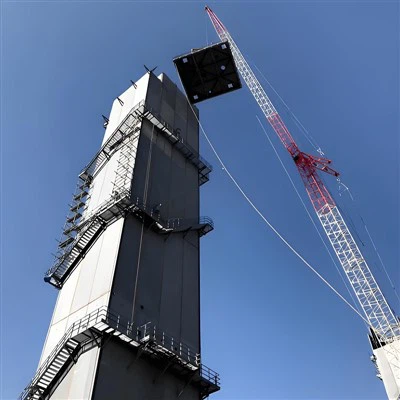
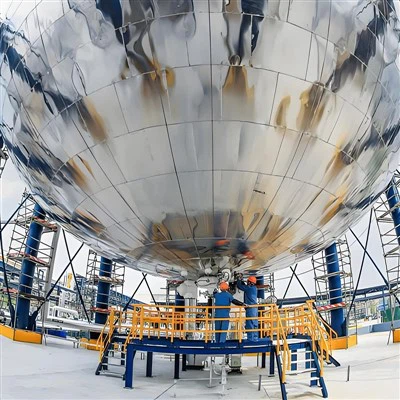
Hey there! As a supplier of Cryogenic Gas Plants, I often get asked about how we ensure the purity of gases in these plants. Well, let's dive right into it.
First off, what exactly is a cryogenic gas plant? A cryogenic gas plant, like the ones you can learn more about on Cryogenic Gas Plant, is a facility that uses extremely low temperatures to separate and purify gases. These plants are crucial in industries where high - purity gases are required, such as electronics, healthcare, and food processing.
The process of ensuring gas purity in a cryogenic gas plant starts right at the intake. The raw gas source, which could be air in the case of producing nitrogen or oxygen, contains various contaminants. These contaminants include water vapor, carbon dioxide, hydrocarbons, and particulate matter. Before the gas can enter the main cryogenic separation process, it has to go through a pre - treatment stage.
One of the key steps in pre - treatment is the removal of water vapor. Water can freeze at the low temperatures used in cryogenic processes and cause blockages in the pipes and equipment. We use adsorption dryers to remove water from the gas. These dryers contain adsorbent materials, like activated alumina or molecular sieves, which attract and hold the water molecules. As the gas passes through the dryer, the water is removed, and the gas becomes dry.
Carbon dioxide is another major contaminant that needs to be removed. Similar to water, carbon dioxide can freeze and cause problems in the cryogenic system. We use a process called temperature swing adsorption (TSA) or pressure swing adsorption (PSA) to remove carbon dioxide. In TSA, the adsorbent material adsorbs carbon dioxide at a low temperature and then releases it when heated. PSA works on a similar principle but uses pressure changes instead of temperature changes.
Hydrocarbons are also a concern, especially in the production of high - purity gases. Hydrocarbons can react with oxygen at high pressures and low temperatures, creating a safety hazard. To remove hydrocarbons, we use activated carbon filters. These filters trap the hydrocarbon molecules, allowing the clean gas to pass through.
Particulate matter is removed using high - efficiency particulate air (HEPA) filters. These filters can capture very small particles, ensuring that the gas entering the cryogenic separation process is clean and free from solid contaminants.
Once the gas has been pre - treated, it enters the main cryogenic separation process. In a Cryogenic Nitrogen Generation Plant, for example, the air is cooled to extremely low temperatures, around - 196°C for nitrogen. At these temperatures, the different components of the air, such as nitrogen, oxygen, and argon, liquefy at different temperatures.
The liquefied air is then fed into a distillation column. In the distillation column, the different components are separated based on their boiling points. Nitrogen, which has a lower boiling point than oxygen and argon, rises to the top of the column, while oxygen and argon collect at the bottom. This process is highly efficient and can produce nitrogen with a purity of up to 99.999%.
To further ensure the purity of the separated gases, we use a process called catalytic purification. In catalytic purification, the gas passes over a catalyst, which promotes chemical reactions that remove any remaining impurities. For example, in the production of high - purity nitrogen, a catalyst can be used to react any remaining oxygen with hydrogen to form water, which can then be removed.
We also have a comprehensive quality control system in place. Throughout the entire process, we continuously monitor the gas purity using various analytical instruments. These instruments can detect even trace amounts of impurities. If the purity of the gas does not meet the required standards, we can adjust the process parameters, such as the temperature, pressure, or flow rate, to improve the purity.
In addition to the technical processes, we also pay great attention to the design and construction of our cryogenic gas plants. We use high - quality materials that are resistant to corrosion and can withstand the extreme temperatures and pressures involved in the cryogenic process. The equipment is carefully installed and maintained to ensure its proper functioning.
Another important aspect is the training of our staff. Our operators are highly trained and experienced in operating and maintaining cryogenic gas plants. They are familiar with all the processes involved in ensuring gas purity and can quickly respond to any issues that may arise.
Now, if you're in the market for a Cryogenic Nitrogen Generator or any other cryogenic gas plant, we're here to help. We offer high - quality, reliable cryogenic gas plants that can meet your specific purity requirements. Whether you need a small - scale plant for a laboratory or a large - scale plant for an industrial facility, we have the expertise and the technology to provide you with the right solution.
If you're interested in learning more about our products or have any questions about gas purity in cryogenic gas plants, don't hesitate to reach out. We're always happy to have a chat and discuss how we can meet your needs.


In conclusion, ensuring the purity of gases in a cryogenic gas plant is a complex but well - controlled process. It involves pre - treatment, cryogenic separation, catalytic purification, quality control, and proper equipment design and maintenance. With our state - of - the - art technology and experienced staff, we can guarantee that the gases produced in our cryogenic gas plants meet the highest purity standards. So, if you're looking for a reliable supplier of cryogenic gas plants, give us a chance to serve you.
References:
- Perry, R. H., & Green, D. W. (Eds.). (1997). Perry's Chemical Engineers' Handbook. McGraw - Hill.
- Kohl, A. L., & Nielsen, R. B. (1997). Gas Purification. Gulf Publishing Company.