As a reputable supplier of CO2 gas plants, I understand the critical importance of temperature control within these facilities. Maintaining the right temperature is not just a matter of operational efficiency; it's a fundamental requirement for ensuring the quality of the CO2 gas produced, the safety of the plant, and the longevity of the equipment. In this blog, I will share some insights on how to effectively control the temperature in a CO2 gas plant.
Understanding the Temperature Requirements in a CO2 Gas Plant
Before delving into the control methods, it's essential to understand why temperature control is so crucial in a CO2 gas plant. CO2 exists in different states depending on the temperature and pressure conditions. In a typical CO2 gas plant, the process involves capturing, purifying, and liquefying CO2. Each of these stages has specific temperature requirements.
During the capture phase, CO2 is usually extracted from flue gases or other industrial emissions. The temperature of these source gases can vary widely, and it's necessary to adjust the temperature to a suitable range for the subsequent purification steps. If the temperature is too high, it can affect the efficiency of the purification process, as some of the impurities may not be effectively removed. On the other hand, if the temperature is too low, it can cause condensation and blockages in the pipes.
The purification process often involves using various separation techniques, such as absorption, adsorption, and distillation. These processes are highly sensitive to temperature. For example, in an absorption process, the absorption rate of CO2 by the absorbent is significantly influenced by the temperature. A higher temperature can reduce the solubility of CO2 in the absorbent, leading to lower absorption efficiency.
Once the CO2 is purified, it needs to be liquefied for storage and transportation. CO2 liquefies at a temperature of approximately -78.5°C at atmospheric pressure. However, in a gas plant, the liquefaction process is usually carried out at higher pressures, which allows for a higher liquefaction temperature. Controlling the temperature during the liquefaction process is crucial to ensure that the CO2 is completely liquefied and that the quality of the liquid CO2 meets the required standards.
Temperature Control Methods in a CO2 Gas Plant
Cooling Systems
One of the most common methods of temperature control in a CO2 gas plant is the use of cooling systems. Cooling systems can be used at various stages of the plant, including the capture, purification, and liquefaction processes.
Refrigeration Systems: Refrigeration systems are often used to cool the CO2 gas during the liquefaction process. These systems work by removing heat from the CO2 gas using a refrigerant. The refrigerant absorbs the heat from the CO2 gas and then releases it to the environment through a condenser. There are different types of refrigeration systems available, such as vapor compression refrigeration systems and absorption refrigeration systems. Vapor compression refrigeration systems are the most commonly used in CO2 gas plants due to their high efficiency and reliability.
Cooling Towers: Cooling towers are used to cool the water used in the plant's cooling systems. The water is circulated through the cooling tower, where it is exposed to air. The heat from the water is transferred to the air through evaporation, and the cooled water is then returned to the cooling system. Cooling towers are an effective way to reduce the temperature of the water and improve the efficiency of the cooling systems.
Insulation
Insulation is another important aspect of temperature control in a CO2 gas plant. Insulation helps to reduce heat transfer between the different parts of the plant and the environment. By insulating the pipes, tanks, and equipment, the temperature inside the plant can be better maintained.
Pipe Insulation: Pipes are one of the main components of a CO2 gas plant, and they are often exposed to different temperatures. Insulating the pipes can prevent heat loss or gain, depending on the temperature requirements of the process. For example, in the liquefaction process, insulating the pipes can help to maintain the low temperature of the liquid CO2 and prevent it from vaporizing.
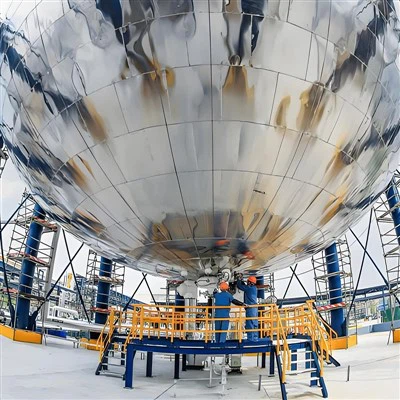
Tank Insulation: Tanks are used to store the CO2 gas or liquid CO2. Insulating the tanks can help to maintain the temperature of the stored CO2 and prevent it from being affected by the external environment. This is especially important for liquid CO2 storage tanks, as any increase in temperature can cause the liquid CO2 to vaporize, leading to an increase in pressure inside the tank.
Temperature Monitoring and Control Systems
Temperature monitoring and control systems are essential for ensuring that the temperature in a CO2 gas plant is maintained within the required range. These systems consist of temperature sensors, controllers, and actuators.
Temperature Sensors: Temperature sensors are used to measure the temperature at different points in the plant. These sensors can be placed in the pipes, tanks, and equipment to provide real-time temperature data. The data is then transmitted to the controllers.
Controllers: Controllers receive the temperature data from the sensors and compare it with the setpoint temperature. If the measured temperature is different from the setpoint temperature, the controller sends a signal to the actuators to adjust the temperature.
Actuators: Actuators are devices that are used to adjust the temperature in the plant. For example, if the temperature is too high, the actuator can increase the cooling capacity of the refrigeration system or open the valves to allow more cooling water to flow through the pipes.
Importance of Regular Maintenance and Calibration
Regular maintenance and calibration of the temperature control systems are crucial for ensuring their proper functioning. Over time, the temperature sensors may become inaccurate, and the refrigeration systems may experience wear and tear. By conducting regular maintenance and calibration, any potential problems can be identified and resolved before they cause significant issues.
Sensor Calibration: Temperature sensors need to be calibrated regularly to ensure their accuracy. Calibration involves comparing the readings of the sensors with a known standard temperature. If the readings are found to be inaccurate, the sensors need to be adjusted or replaced.


Equipment Maintenance: The refrigeration systems, cooling towers, and other equipment used for temperature control need to be maintained regularly. This includes checking the refrigerant levels, cleaning the condensers and evaporators, and lubricating the moving parts.
Conclusion
Controlling the temperature in a CO2 gas plant is a complex but essential task. By understanding the temperature requirements of the different processes, using appropriate temperature control methods, and conducting regular maintenance and calibration, the temperature in the plant can be effectively maintained. This not only ensures the quality of the CO2 gas produced but also improves the safety and efficiency of the plant.
If you are interested in learning more about our Co2 Factory, CO2 Gas Recovery Plant, or CO2 Recovery Unit, or if you have any questions about temperature control in a CO2 gas plant, please feel free to contact us for a detailed discussion and procurement negotiation.
References
- Perry, R. H., & Green, D. W. (1997). Perry's Chemical Engineers' Handbook. McGraw-Hill.
- Coulson, J. M., & Richardson, J. F. (1999). Chemical Engineering Volume 6: Chemical Engineering Design. Butterworth-Heinemann.
- Stoecker, W. F., & Jones, J. W. (1982). Refrigeration and Air Conditioning. McGraw-Hill.