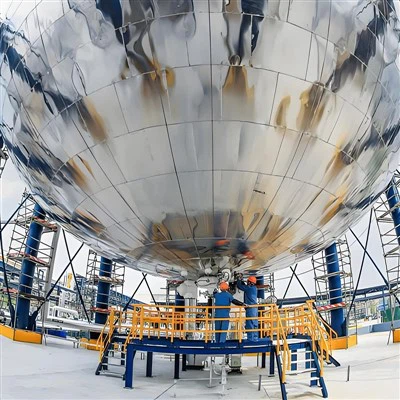
Hey there! As a supplier of a CO2 gas plant, I know how crucial it is to ensure the top - notch quality of CO2 production. In this blog, I'll share some key points on how to achieve that.
First off, let's talk about the raw materials. The quality of the raw materials used in the Co2 Production Plant is the foundation of high - quality CO2 production. The source of carbon dioxide can vary, such as flue gas from industrial processes, fermentation gases from the food and beverage industry, or natural CO2 sources.
If we're using flue gas, we need to make sure that the industrial processes generating it are well - controlled. For example, in a power plant, proper combustion management is essential. When coal or natural gas is burned, the ratio of fuel to air should be carefully adjusted. An improper ratio can lead to incomplete combustion, which may result in the presence of other unwanted substances like carbon monoxide, soot, and volatile organic compounds (VOCs) in the flue gas. These impurities can make their way into the final CO2 product and degrade its quality.
When it comes to fermentation gases, we have to pay attention to the fermentation process itself. The type of microorganisms used, the fermentation conditions such as temperature, pH, and nutrient availability, all play a role. For instance, if the pH is not maintained within the optimal range for the fermenting microorganisms, it can affect their metabolic activities and lead to the production of by - products that can contaminate the CO2.
Next, the purification process is a game - changer. A well - designed CO2 Recovery Unit is essential for removing impurities from the raw CO2 stream. There are several purification methods available, and often, a combination of these methods is used for the best results.
One common method is adsorption. Adsorbents like activated carbon can be used to trap organic impurities and some trace gases. Activated carbon has a large surface area with many pores, which can adsorb molecules of different sizes. However, the effectiveness of adsorption depends on factors such as the type of adsorbent, the contact time between the gas and the adsorbent, and the temperature and pressure conditions.
Another important purification technique is distillation. Distillation takes advantage of the different boiling points of substances. CO2 has a specific boiling point, and by carefully controlling the temperature and pressure in a distillation column, we can separate CO2 from other components in the gas mixture. For example, if there are small amounts of nitrogen or oxygen in the CO2 stream, distillation can be used to separate them because their boiling points are different from that of CO2.


Membrane separation is also becoming more popular. Membranes are designed to allow certain molecules to pass through while blocking others. For CO2 purification, membranes can be selected based on their selectivity for CO2 over other gases. The advantage of membrane separation is that it is a continuous process and can be energy - efficient compared to some other methods.
Monitoring and control systems are vital for ensuring the quality of CO2 production. In a Co2 Manufacturing Plant, we need to have real - time monitoring of various parameters. For example, we should monitor the composition of the raw materials entering the plant. Using gas analyzers, we can quickly detect any changes in the concentration of CO2 and impurities in the incoming gas stream.
Inside the plant, we need to monitor the operating conditions of different units. For the purification units, we should keep an eye on parameters like temperature, pressure, and flow rate. If the temperature in a distillation column deviates from the optimal value, it can affect the separation efficiency and the quality of the purified CO2. By having automated control systems, we can adjust these parameters in real - time to maintain the desired quality.
Quality control checks at different stages of production are also necessary. We can take samples at various points in the production process and analyze them in a laboratory. For example, we can check for the presence of contaminants such as sulfur compounds, heavy metals, and bacteria. Sulfur compounds can cause corrosion in equipment that uses the CO2, and heavy metals can be harmful if the CO2 is used in food or beverage applications. Bacteria can also pose a risk in food - grade CO2.
Training the staff is another key aspect. The operators in the CO2 gas plant need to be well - trained. They should understand the entire production process, from the handling of raw materials to the operation of purification units and the use of monitoring and control systems. A trained operator can quickly identify and address any issues that may arise during production. For example, if there is a sudden drop in the pressure in a purification unit, a trained operator will know how to troubleshoot the problem, whether it's a blockage in the pipeline or a malfunction in a valve.
Maintenance of the plant equipment is equally important. Regular maintenance ensures that all the equipment in the Co2 Production Plant is in good working condition. For example, the filters in the purification units need to be replaced regularly to maintain their efficiency. Pumps and compressors should be inspected for wear and tear, and their lubrication systems should be properly maintained. If equipment breaks down during production, it can disrupt the process and may lead to a decrease in the quality of the CO2 product.
Now, let's talk about regulatory compliance. Different industries have different standards for the quality of CO2. For example, the food and beverage industry has strict regulations regarding the purity of CO2 used in carbonated drinks. The CO2 used in this industry should be free from harmful substances and meet specific quality criteria. We need to make sure that our CO2 production process complies with all the relevant regulations. This may involve getting certifications from regulatory bodies, which can also enhance the marketability of our product.
In conclusion, ensuring the quality of CO2 production in a CO2 gas plant is a multi - faceted task. It involves careful selection of raw materials, effective purification processes, real - time monitoring and control, quality control checks, well - trained staff, proper equipment maintenance, and regulatory compliance.
If you're in the market for high - quality CO2 and are interested in discussing a potential purchase, I'd love to have a chat with you. Reach out and let's start the conversation about how we can meet your CO2 needs.
References
- Industrial Gas Processing Handbook, various authors
- Journal of Carbon Dioxide Utilization, multiple research papers
- Standards and regulations from relevant industry bodies